Looking for a new car in the UAE? Here's what you need to know.
Chinese cars are gaining ground in the UAE, offering modern features and lower prices compared to Japanese cars. While Japanese brands like Toyota and Nissan are known for reliability, durability, and strong resale value, Chinese brands such as BYD and Geely attract buyers with advanced technology and up to 50% lower prices.
Key Takeaways:
-
Quality: Japanese cars excel in reliability; Chinese cars focus on tech and luxury.
-
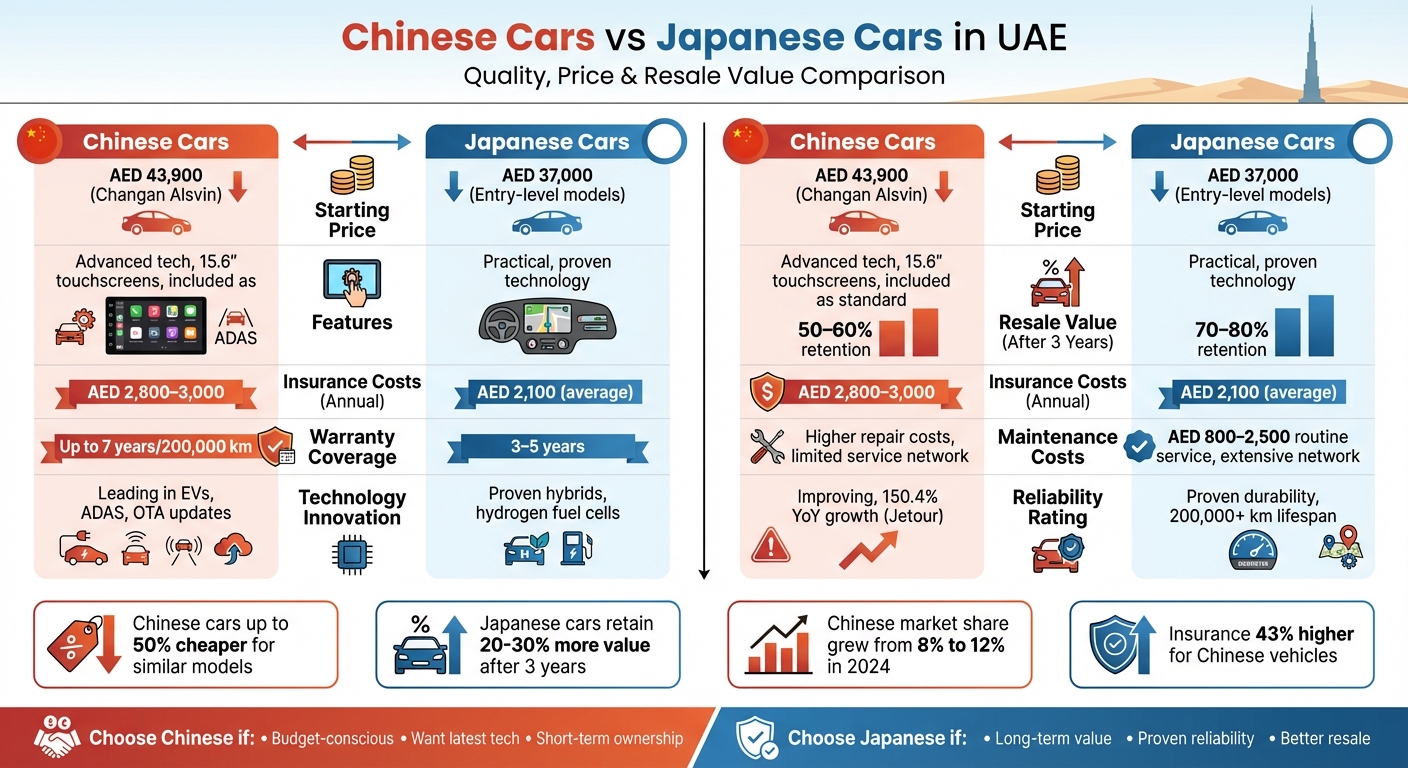
Price: Chinese cars are more affordable, starting from AED 43,900, while Japanese models often exceed AED 100,000.
-
Resale Value: Japanese cars retain 70–80% of their value after 3 years, compared to 50–60% for Chinese cars.
-
Insurance & Maintenance: Japanese cars have lower insurance and maintenance costs, while Chinese cars may have higher premiums and limited repair options.
Quick Comparison:
|
Criteria |
Chinese Cars |
Japanese Cars |
|---|---|---|
|
Starting Price |
AED 43,900 (Changan Alsvin) |
AED 37,000 (Entry-level models) |
|
Features |
Advanced tech, included as standard |
Practical, proven technology |
|
Resale Value |
50–60% after 3 years |
70–80% after 3 years |
|
Insurance Costs |
AED 2,800–3,000 |
AED 2,100 (on average) |
|
Warranty |
Up to 7 years/200,000 km |
3–5 years |
Bottom Line: Choose Chinese cars for affordability and features, or Japanese cars for reliability and long-term value.
Chinese vs Japanese Cars in UAE: Complete Comparison Guide
Why We Chose a Chinese Car in Dubai| Full Buying Journey + Brands Compared | #Jetour X50 #Geely
Quality: Chinese vs Japanese Cars
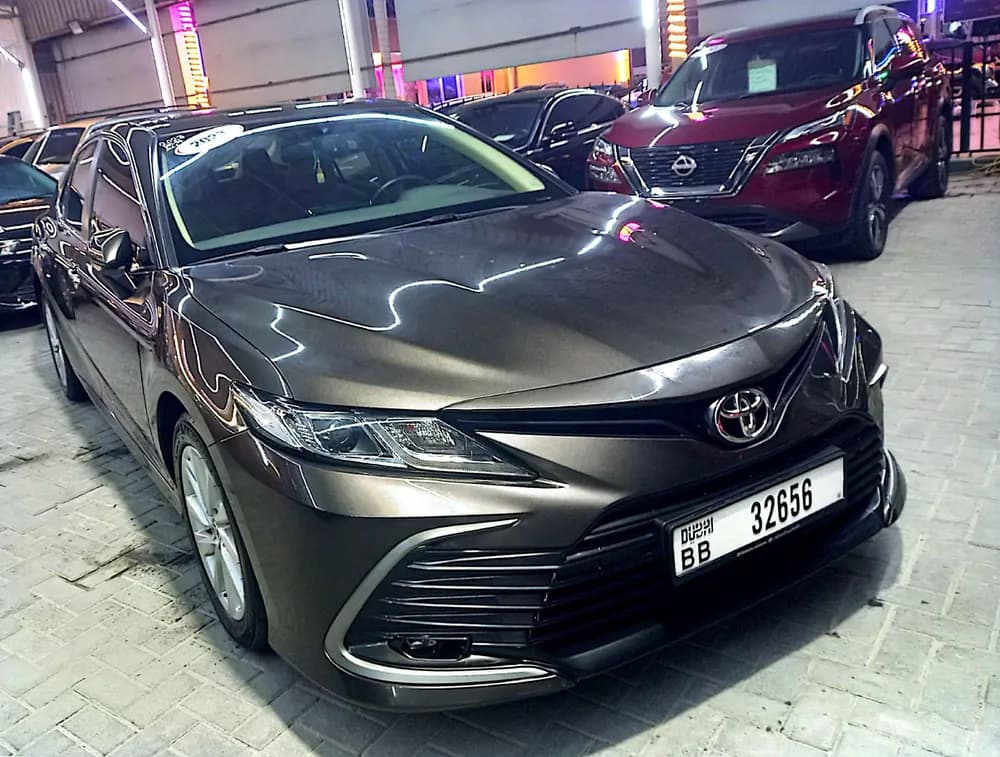
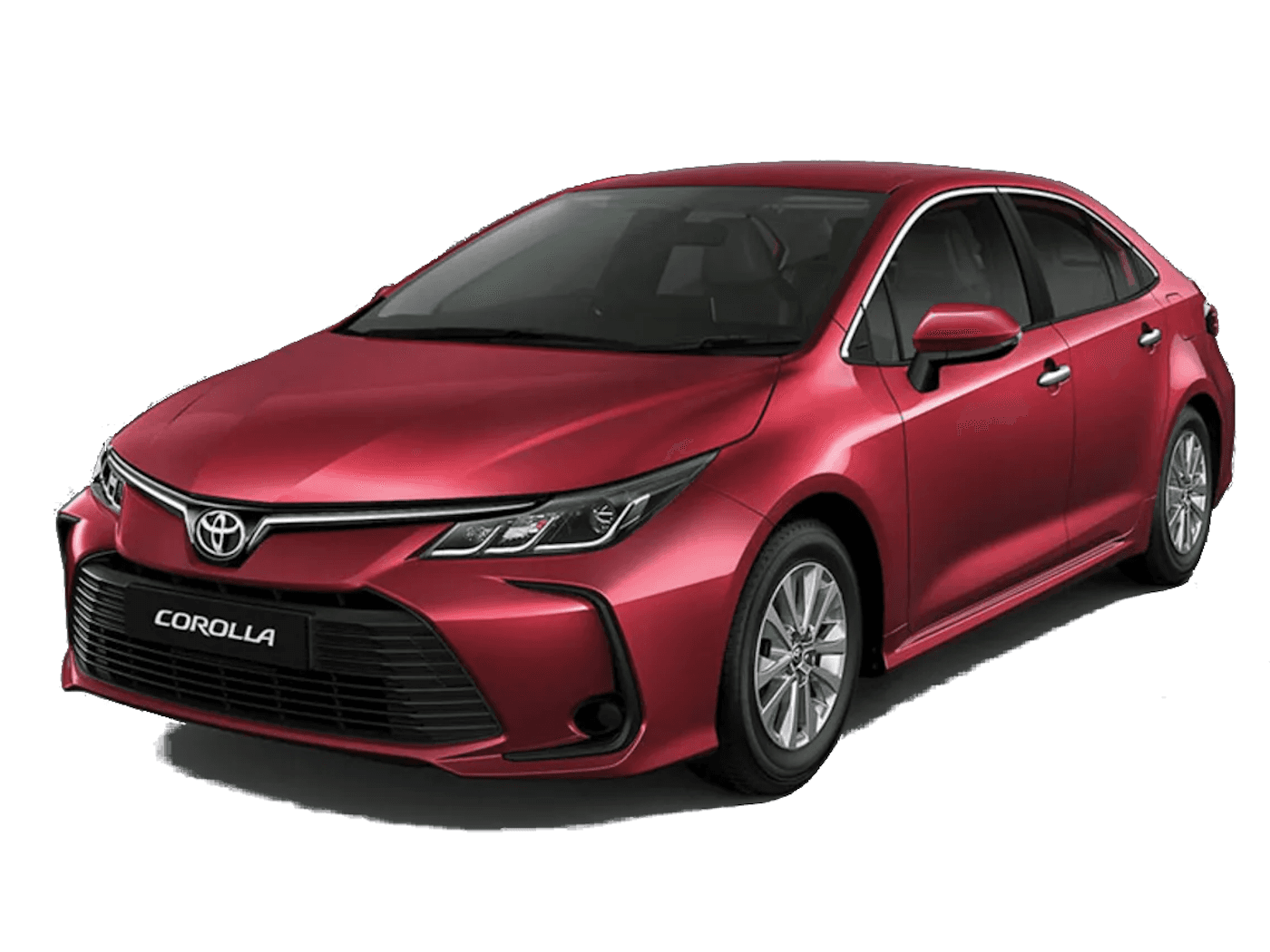
Japanese carmakers like Toyota, Nissan, and Honda are known for their meticulous engineering. Their vehicles are designed to handle the UAE's harsh conditions, including scorching temperatures above 50°C and frequent sandstorms. Models such as the Toyota Corolla and Honda Accord often surpass 200,000 kilometres in the UAE when properly maintained.
Chinese automakers, on the other hand, focus on delivering vehicles with a luxurious feel and cutting-edge technology. Their cars often feature high-end materials, expansive digital displays (up to 15.6 inches), and advanced infotainment systems, elements typically associated with premium brands. However, questions remain about how well these materials will withstand prolonged exposure to intense UV rays and extreme heat. While Chinese brands are improving their cooling systems and adding dust-proof filters tailored for Gulf conditions, they are still establishing their reputation in this challenging environment.
Technology Features
Technology plays a key role in distinguishing these brands. Chinese manufacturers lead in digital innovation, offering features like large touchscreen interfaces, over-the-air updates, and advanced Driver Assistance Systems (ADAS) at competitive prices. They are also gaining ground in the electric vehicle (EV) market, with innovations like ultra-fast charging and state-of-the-art batteries from suppliers such as CATL. For instance, the BYD Han EV provides a driving range of over 500 kilometres on a single charge.
Japanese brands take a more cautious approach, focusing on tried-and-tested technologies. They excel in hybrid powertrain systems and hydrogen fuel cell technology, appealing to drivers who value fuel efficiency and mechanical dependability. Their vehicle controls are designed to be intuitive and practical, prioritising functionality over flashy aesthetics.
Reliability and Maintenance
In the UAE, Japanese cars are synonymous with reliability. They benefit from an extensive network of independent garages and readily available spare parts across the country, which helps keep maintenance costs manageable over time.
Chinese brands are quickly catching up, thanks to strategic moves like Geely’s acquisition of Volvo and heavy investments in research and development. However, spare parts for Chinese cars are typically sourced through authorised dealerships, which might limit repair options and increase costs. These differences in service networks play a significant role in shaping after-sales experiences and maintenance considerations.
After-Sales Service and Warranty
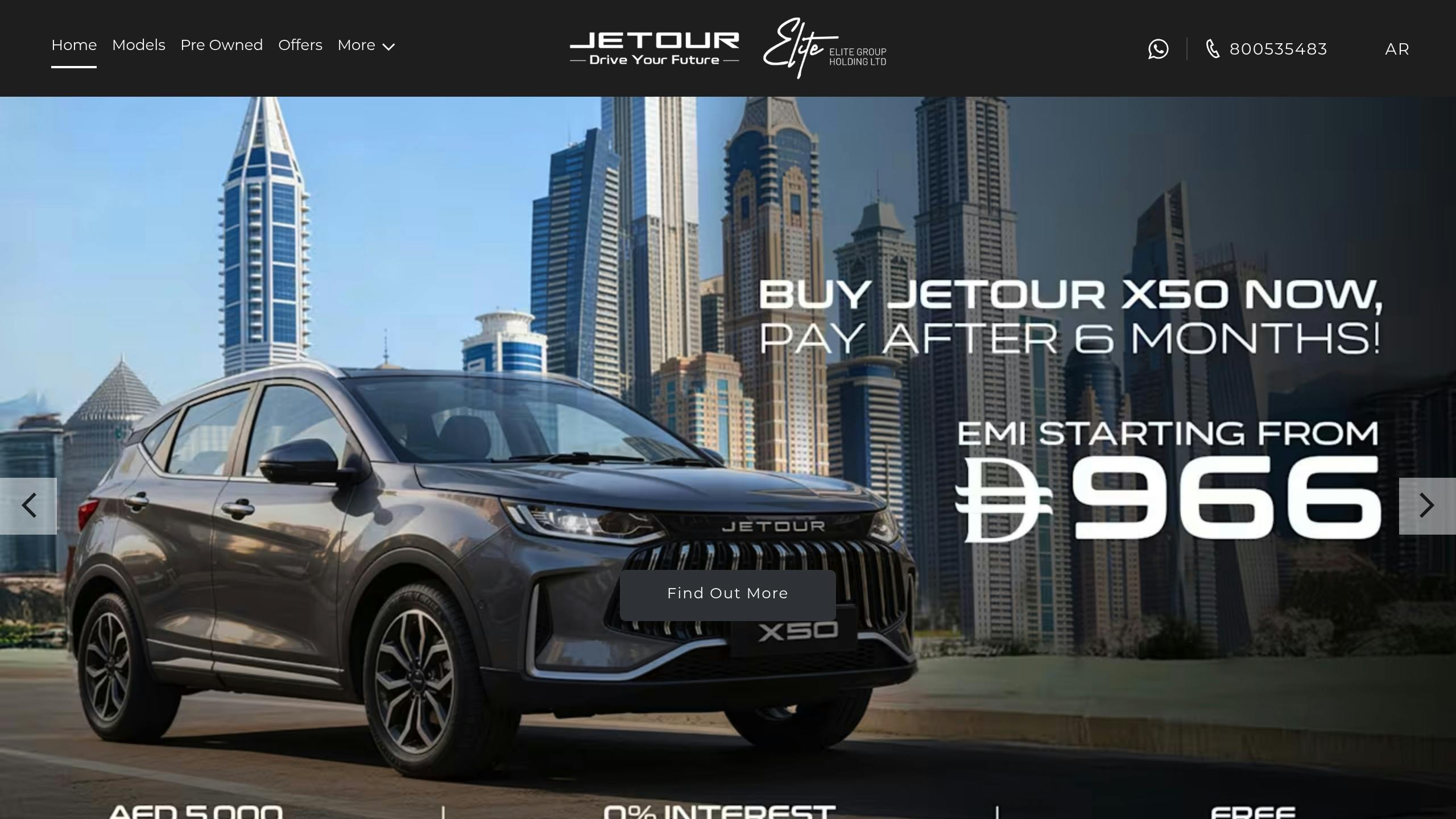
To address concerns about reliability, many Chinese brands now offer generous warranties, with coverage extending up to 7 years or 200,000 kilometres. In contrast, Japanese manufacturers typically provide warranties ranging from 3 to 5 years. For example, Jetour achieved a 150.4% year-over-year growth in the UAE by mid-2025, partly driven by their extended warranty offerings.
Japanese brands leverage their well-established service networks and long-standing reputations for dependability. For those considering a Chinese car, it’s crucial to check the availability of authorised service centres nearby, as Japanese brands currently offer a more widespread network across the UAE.
Price: Chinese vs Japanese Cars
Purchase Price Ranges
Chinese car manufacturers have carved out a niche in the UAE by offering budget-friendly options. For instance, entry-level models like the Changan Alsvin are priced at AED 43,900, while the Geely Coolray starts at AED 60,000. Even electric vehicles remain within reach, with the MG ZS EV priced at AED 80,000 and the BYD Atto 3 at AED 120,000. For those seeking something more premium, models like the Changan UNI-K, priced at AED 181,000, still manage to be more affordable than comparable Japanese vehicles.
"Chinese manufacturers offer their vehicles at significantly lower prices compared to their Japanese counterparts, sometimes even up to 50% cheaper for similar models." - Martin Alva, Carprices.ae
On the other hand, Japanese cars come with a heftier price tag, largely due to their reputation for reliability in the region. While some entry-level models start at AED 37,000, the more popular family sedans and SUVs generally begin at AED 100,000, with premium variants exceeding AED 350,000. This price difference makes Chinese cars especially appealing to first-time buyers or those looking for immediate cost savings. However, these upfront savings may be offset by higher ongoing expenses.
Beyond the sticker price, insurance and maintenance costs further highlight the differences between these brands.
Insurance and Maintenance Costs
Despite their lower purchase prices, Chinese cars often come with higher insurance premiums. UAE motorists pay up to 43% more to insure Chinese vehicles compared to Japanese or Korean brands. For example, comprehensive insurance for a Chinese sedan or crossover typically costs between AED 2,800–3,000, whereas Japanese models average around AED 2,100.
"The average comprehensive premium for a Chinese vehicle is around Dh2,800 to Dh3,000 for a sedan or crossover compared to Dh2,100 for Japanese and Korean brands. This is typically due to uncertainty in repair timelines, limited historical claims data and higher perceived repair costs." - Hitesh Motwani, Deputy CEO, Insurancemarket.ae
Maintenance expenses also tend to favour Japanese brands. Routine service costs for Japanese cars range from AED 800 to AED 2,500. In contrast, Chinese vehicles often face higher repair bills and longer wait times for parts, adding to their overall maintenance costs. Interestingly, interest in Chinese car insurance has grown significantly - from just 2% of enquiries in early 2023 to over 10% by mid-2025, indicating a growing acceptance despite these added expenses.
Resale Value: Chinese vs Japanese Cars
Market Trends in Resale Values
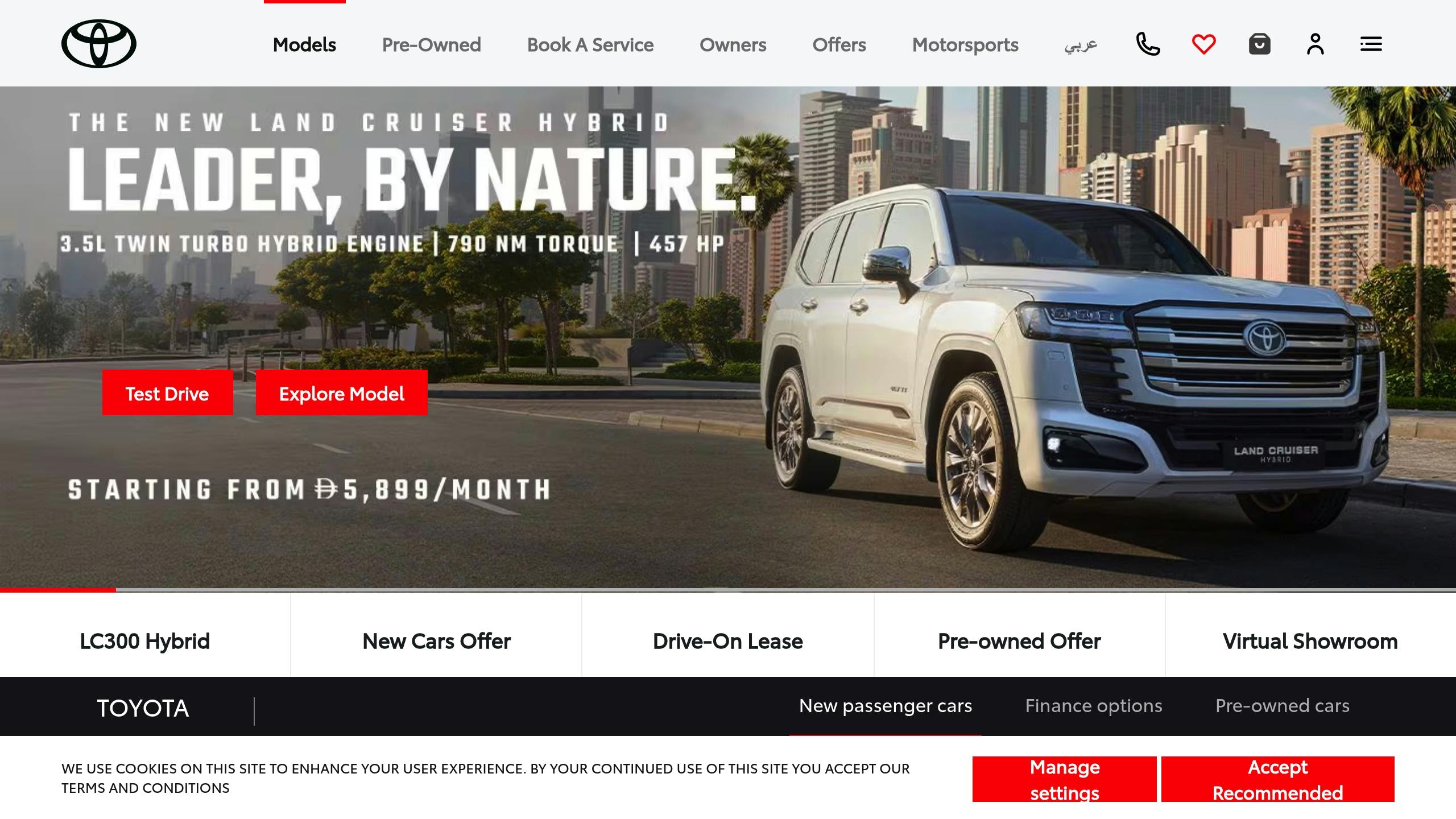
In the UAE, Japanese cars have long been the leaders in the resale market, maintaining higher retention rates than their Chinese counterparts. After three years, Japanese vehicles generally hold onto 70–80% of their original value, while Chinese cars retain closer to 50–60%. This difference becomes even more apparent when looking at popular models. For instance, the Toyota Land Cruiser loses only 15–20% of its value over three years, and the Nissan Patrol retains about 70–75%.
That said, the gap is narrowing. Chinese carmakers are stepping up with better build quality and attractive warranty options. A standout example is the Jetour X70S STD, which retains an impressive 88% of its value after one year and 82% by year three, putting it on par with some of the top Japanese models.
"Chinese brands have notably accelerated, with Jetour growing 150.4 per cent YoY... the Jetour X70S STD stands out with 88 per cent retention after one year and 82 per cent by year three." - Sebastian Fuchs, Managing Director, AutoData Middle East
On average, new cars in the UAE depreciate by 20–30% within the first year. However, Japanese brands consistently outperform this trend. By the fifth year, most vehicles experience up to 60% depreciation, but Japanese SUVs like the Toyota Hilux (20–25% depreciation) and Lexus LX (25–30% depreciation) continue to hold their value significantly better. These trends can be traced back to several key factors.
Factors Affecting Resale
The reputation of a brand is a major factor influencing resale value in the UAE. Japanese manufacturers have a long history of delivering reliable vehicles that perform well in the region's extreme heat and desert conditions. In contrast, Chinese brands, while improving, are still earning the trust of buyers. Models like the Toyota Land Cruiser and Nissan Patrol are particularly sought after in the second-hand market because they are built to withstand the UAE’s harsh environment.
Another critical factor is the availability of spare parts. Japanese cars benefit from a well-established service network and affordable, easily accessible parts throughout the Emirates.
Warranty offerings have also become a game-changer. Chinese manufacturers now provide extended warranties of up to 7 years or 200,000 km, helping to build buyer confidence.
A proper maintenance record from RTA-approved centres can add thousands of dirhams to a car’s resale value. Similarly, vehicles built to GCC specifications depreciate more slowly than imports, as they are designed to handle local heat and dust conditions. On the other hand, excessive modifications can hurt resale value, while neutral colours like white, black, or silver tend to attract more buyers.
Model Comparisons
Building on the insights about quality, pricing, and resale value, here’s a closer look at how some key models compare, highlighting practical differences.
Jetour T2 vs Toyota Fortuner
The Jetour T2 is priced between AED 95,000 and AED 146,000, while the Toyota Fortuner falls in the range of AED 135,000 to AED 180,000. The T2 boasts a tech-forward cabin, complete with a 15.6-inch touchscreen, a 540-degree camera, and a premium audio system. Its 2.0L turbo engine generates 254 HP, paired with a 7-speed dual-clutch transmission. It also comes with an impressive 10-year/1-million-km warranty and has service costs that are 20–30% lower than the Fortuner. By contrast, the Fortuner offers 2.7L and 4.0L engine options and standard 5-year coverage. In UAE driving conditions, the T2 delivers a fuel economy of about 11–13 km/L.
"AC cools the cabin instantly, even in 45°C summers." - Khalid, Abu Dhabi Resident
When it comes to resale, Chinese cars like the T2 typically depreciate by 24–33% over three years, while the Fortuner holds its value better, with less than a 20% drop. The T2 is ideal for those prioritising modern tech and lower upfront costs. On the other hand, the Fortuner is a better choice for buyers focused on resale value and access to a well-established spare parts network.
Next, let’s see how Geely’s Monjaro compares to Nissan’s Patrol in value and durability.
Geely Monjaro vs Nissan Patrol
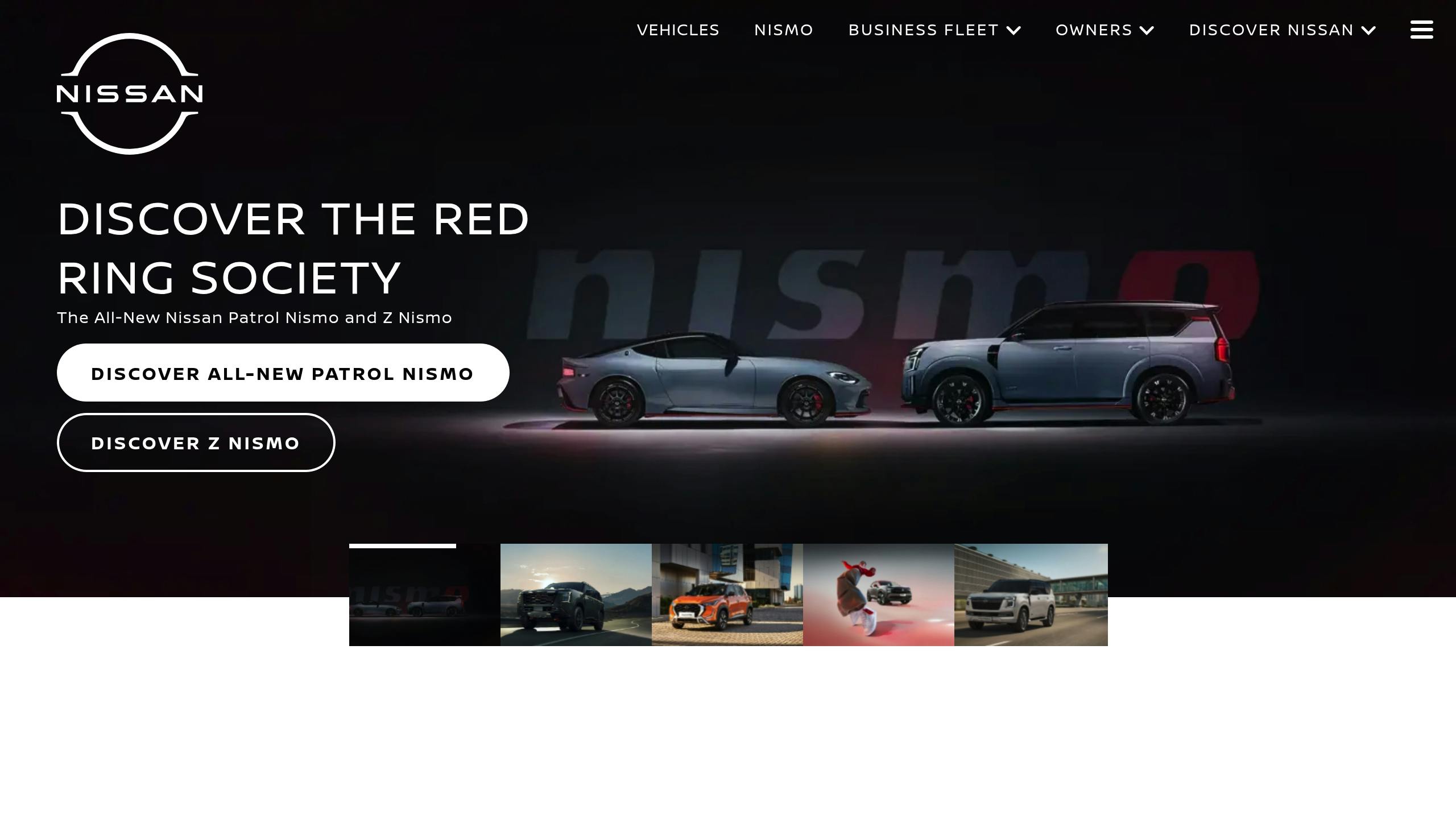
The Nissan Patrol ranks as the second-best vehicle in the UAE for resale value in 2025, with depreciation rates below 20% over three years. In comparison, Chinese SUVs like the Monjaro typically see a 24–33% drop in the same period. The Patrol benefits from Nissan’s extensive service network and a reputation for durability, while the Monjaro offsets this with advanced technology and a price tag that’s 20–40% lower.
The Monjaro features high-tech interiors, large screens, and advanced driver assistance systems as standard - features that are often optional on the Patrol. However, insurance premiums for Chinese vehicles can be higher, partly due to limited historical data and potentially costlier specialised parts.
"Japanese cars are known for their decades of reliability and longevity, while Chinese cars are symbols of a new age with their technological innovations." - Beno
If cutting-edge technology and a lower purchase price matter most, the Monjaro is an attractive option. However, for those prioritising strong resale value and proven reliability in desert conditions, the Patrol remains a solid choice.
Now, let’s explore how BYD’s Atto 3 stacks up against Honda’s CR-V in the electric and hybrid segment.
BYD Atto 3 vs Honda CR-V
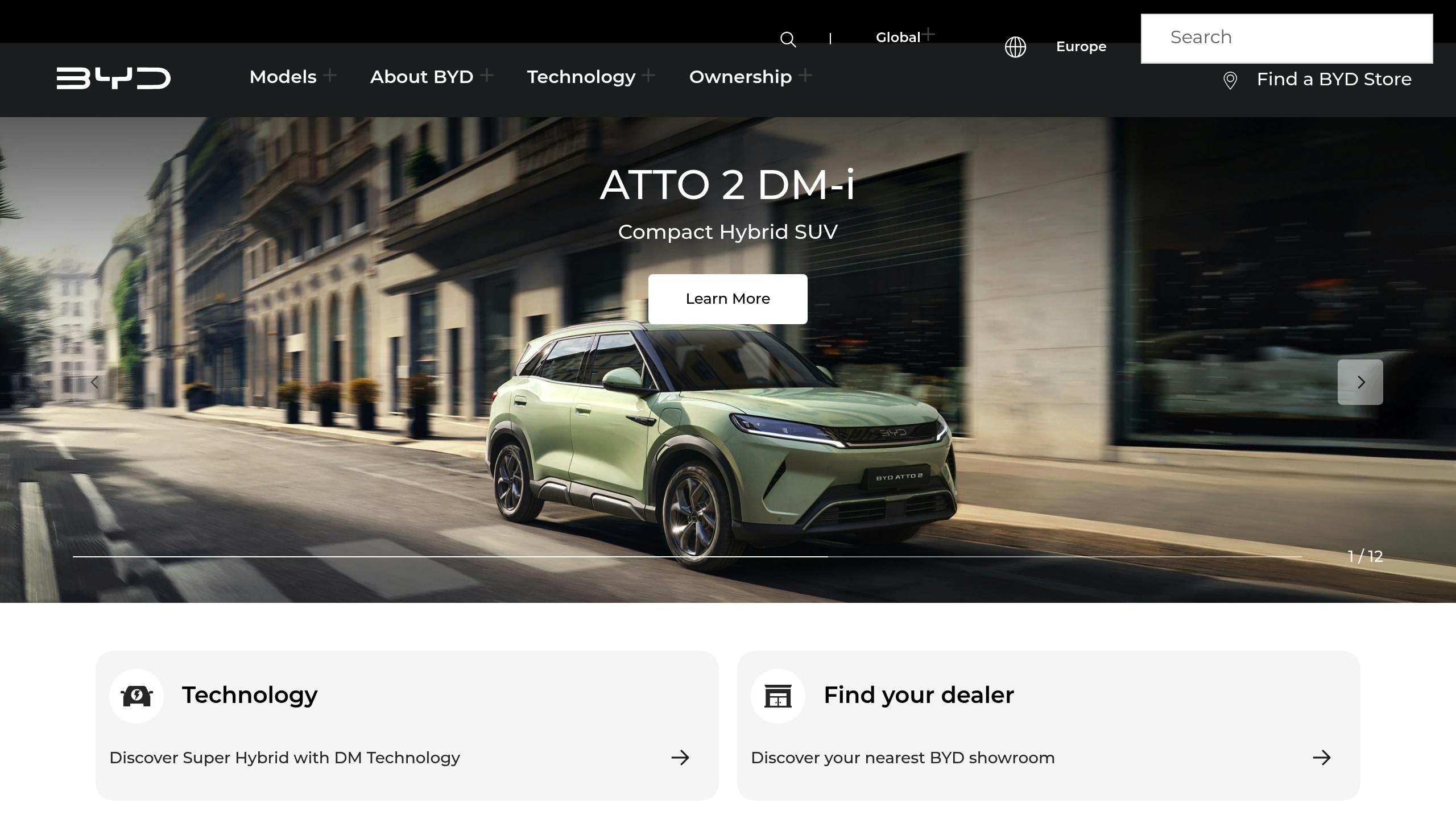
Both the BYD Atto 3 and Honda CR-V are priced competitively at AED 120,000 and AED 129,900, respectively. The Atto 3 offers a 420 km WLTP range and features a durable 'Blade Battery' that loses only 5% of its range in extreme Gulf heat. It also comes with a 6-year/150,000 km warranty, a 15.6-inch rotating screen, and DiPilot systems, delivering 30–40% more features than the CR-V. Meanwhile, the CR-V relies on Honda’s reputation for reliability and boasts stronger resale value, retaining 70% or more of its value over three years, compared to 60–65% for Chinese models.
"It might have been the case Chinese cars were seen as cheaper knock-offs about 10 years ago, but that is not the case anymore. People are associating Chinese products with the best in advanced technology." - Hasan Nergiz, Managing Director, Al-Futtaim Electric Mobility Company
With Dubai’s push for 50% electric vehicles by 2050, interest in Chinese EVs has surged, with online searches increasing by 64%. If advanced features and low daily running costs are priorities, the Atto 3 offers great value. However, for long-term investment security, the CR-V provides better peace of mind.
Finally, let’s compare the MG ZS and Toyota Corolla Cross in the entry-level segment.
MG ZS vs Toyota Corolla Cross
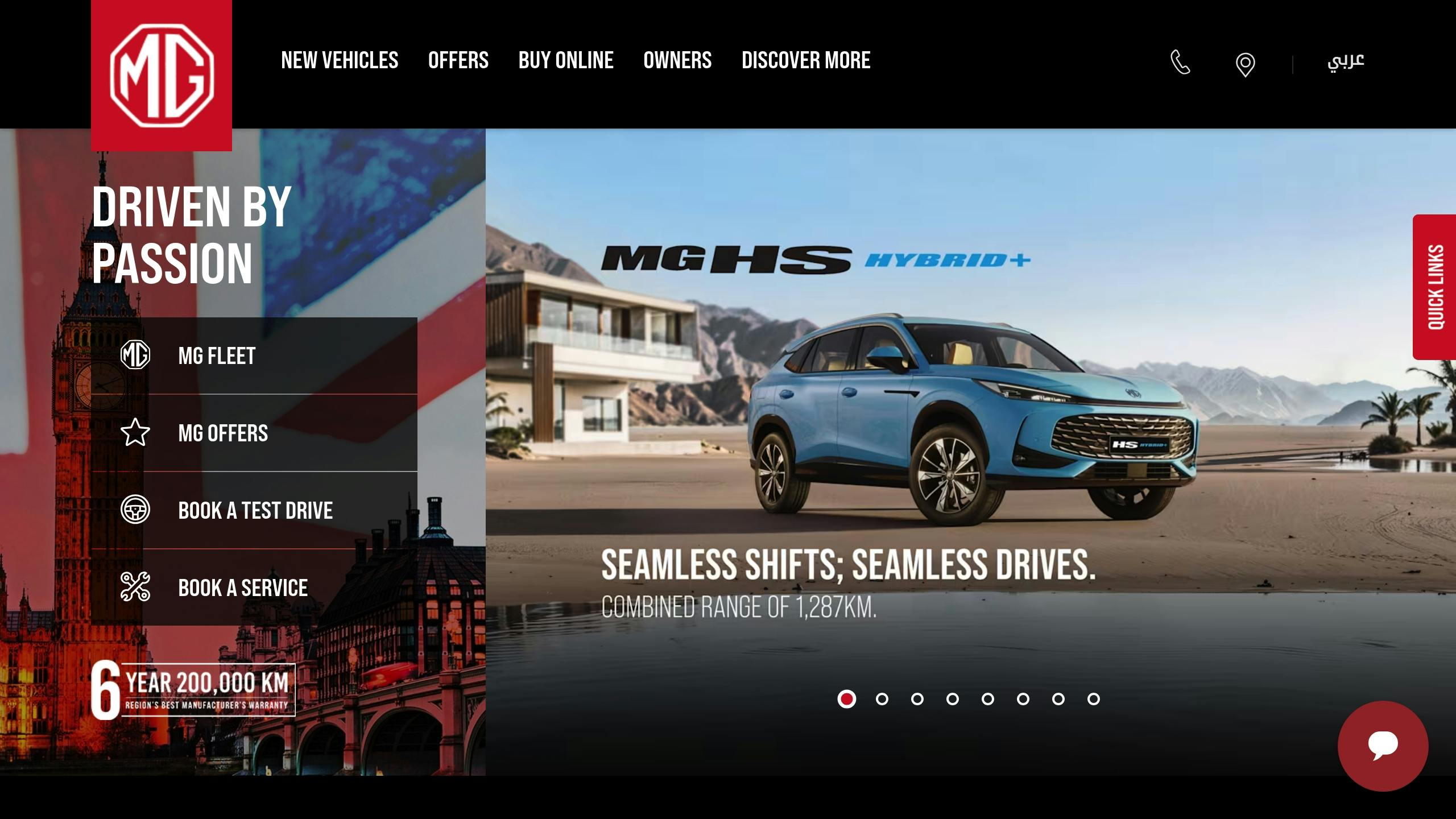
The MG ZS is 20–40% cheaper than the Toyota Corolla Cross, while offering a range of advanced tech and safety features. The Corolla Cross, however, builds on Toyota’s reputation for reliability and retains more of its value, with Japanese brands typically holding 70–80% of their value after three years, compared to 50–60% for Chinese models. Additionally, the Corolla Cross benefits from Toyota’s extensive service network and the availability of affordable, high-quality parts across the UAE.
While the MG ZS delivers more features at a lower price, the Corolla Cross is a better option for protecting your investment, thanks to its lower depreciation and easier resale. Both models are well-suited for daily commutes and family use, but Toyota’s proven reliability in extreme heat makes it a standout choice for long-term ownership. This comparison reflects broader trends in the UAE market, where buyers weigh upfront savings against long-term dependability.
Use YallaMotor for Informed Decisions
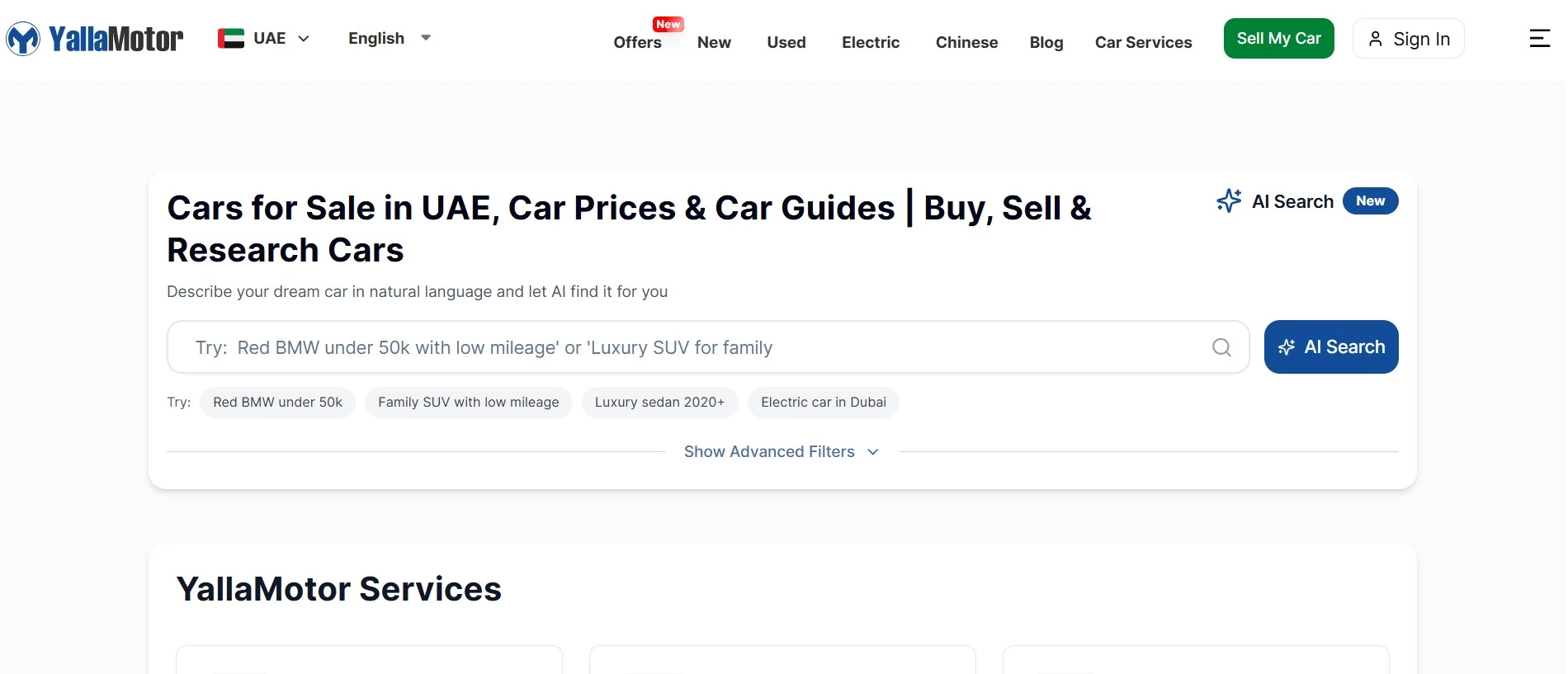
YallaMotor provides a range of tools to help you make well-informed choices when comparing Chinese and Japanese cars. With over 500,000 monthly visitors and more than 200 car sales facilitated daily, the platform offers insights into real-world pricing and market trends that can guide your decision-making process.
One standout feature is the Comparison Tool, which lets you evaluate up to three vehicles side-by-side. You can compare factors like price, engine specifications, and features. For instance, you could contrast a Toyota Corolla Cross (starting at AED 61,000) with an MG ZS (starting at AED 47,874) to get a clear picture of the value and features each car offers. Additionally, the tool calculates estimated fuel costs based on current UAE fuel prices and an average annual commute of 25,000 kilometres.
YallaMotor also includes a car valuation tool that helps estimate resale values using a standard 15% annual depreciation rate. This feature shows how different vehicles hold their value over time. For those exploring the used car market, the platform provides insights into listing turnover rates - a high turnover often indicates strong resale demand.
"Chinese automakers are focusing on long-term durability and high resale value, making them a competitive choice for budget-conscious buyers." – Amgad El Sabbagh, YallaMotor
Beyond pricing, YallaMotor offers detailed guides covering popular Japanese brands like Nissan, Honda, and Toyota, as well as leading Chinese brands such as Soueast, Jetour, BAIC, and Changan. You can filter results by regional specifications (GCC Specs, Chinese Specs, or Other Specs) and access expert reviews, video content, and technical breakdowns. These resources delve into safety features, brand reputation, and performance under UAE conditions, offering a comprehensive view that complements earlier market insights. Together, these tools and resources provide a well-rounded perspective on quality, pricing, and resale value.
Conclusion: Choosing Between Chinese and Japanese Cars in the UAE
In this analysis, we explored quality, pricing, and resale trends to help you navigate the choice between Chinese and Japanese cars in the UAE. Japanese brands like Toyota, Nissan, and Honda have long been synonymous with reliability and durability, crucial for enduring the UAE's demanding desert climate. These brands also boast extensive service networks and retain higher resale values, making them a dependable choice if you're planning to sell within three to five years or need a car that can clock over 200,000 kilometres with minimal maintenance.
On the other hand, Chinese automakers such as BYD, Geely, Jetour, and MG are reshaping the market by offering advanced technology and modern features at prices that can be up to 50% lower than their Japanese competitors. To sweeten the deal, many of these brands back their vehicles with generous warranties - some extending up to seven years or 200,000 kilometres - providing peace of mind for long-term ownership.
The growing appeal of Chinese cars is reflected in their rising market share in the UAE, which climbed from 8% to 12% by late 2024.
For buyers focused on affordability and cutting-edge features, Chinese cars deliver excellent value. Meanwhile, those who prioritise long-term reliability, strong performance, and better resale potential will find Japanese models more suited to their needs. Your final decision should take into account how long you plan to own the car, your budget, and the features that matter most to you. With these insights, you can confidently choose a vehicle that aligns with your priorities and lifestyle.
FAQs
How do Chinese cars compare to Japanese cars in terms of technology in the UAE?
Chinese cars in the UAE have gained attention for packing high-tech features into a budget-friendly package. Many of these vehicles boast large touchscreens, AI-driven voice assistants, over-the-air software updates, and advanced driver-assist systems, including lane-keeping, adaptive cruise control, and 360° cameras. These are features you’d typically associate with premium Japanese or European brands, but Chinese models make them more accessible to a wider audience.
Japanese cars, by contrast, are known for their time-tested reliability and seamless technology. While they might not always feature the latest gadgets, their safety systems - like pre-collision technology and pedestrian detection - are the result of years of refinement. Infotainment systems in Japanese cars are straightforward and built to last, focusing on usability and durability. In short, Chinese cars are perfect for those who want cutting-edge tech without breaking the bank, while Japanese cars cater to buyers who value dependability and smooth, hassle-free performance.
What are the differences in insurance and maintenance costs between Chinese and Japanese cars in the UAE?
In the UAE, insurance premiums for Chinese cars typically surpass those for Japanese cars. For example, comprehensive insurance for a standard Chinese sedan or crossover usually falls between AED 2,800–3,000, while similar coverage for a Japanese car averages around AED 2,100. This price gap - sometimes reaching 40% - is influenced by factors like higher perceived repair costs, limited claims history, and longer repair durations associated with Chinese vehicles.
When it comes to maintenance costs, Japanese cars, such as Toyota, tend to be more affordable. This is largely due to the easy availability of spare parts and a widespread network of service centres. In contrast, Chinese cars often come with steeper upkeep costs because spare parts are harder to source, and servicing is frequently limited to more expensive dealer-operated workshops.
In summary, Japanese cars generally offer better value in terms of both insurance and maintenance, making them a popular choice for many UAE residents.
How do Chinese and Japanese cars compare in resale value after three years in the UAE?
Japanese cars are known for holding their value better after three years, often retaining a larger percentage of their original price. This is largely because of their strong reputation for reliability, durability, and consistent demand in the UAE market.
On the other hand, Chinese cars, while steadily improving in quality and gaining traction among buyers, generally have lower resale values. That said, they are becoming more competitive as manufacturers focus on enhancing quality and packing in attractive features at more affordable prices. If you're looking for long-term value, Japanese cars are a safer bet. However, if your priority is a lower upfront cost paired with modern features, Chinese cars could be an appealing alternative.
Looking for a used car in Dubai or new car deals? Explore YallaMotor’s verified listings today.