Fuel prices in Saudi Arabia are rising, with EPLUS 98 now at SAR 4.51 per litre. If you're wondering whether your car can safely switch to the cheaper 91-octane fuel, here's what you need to know:
-
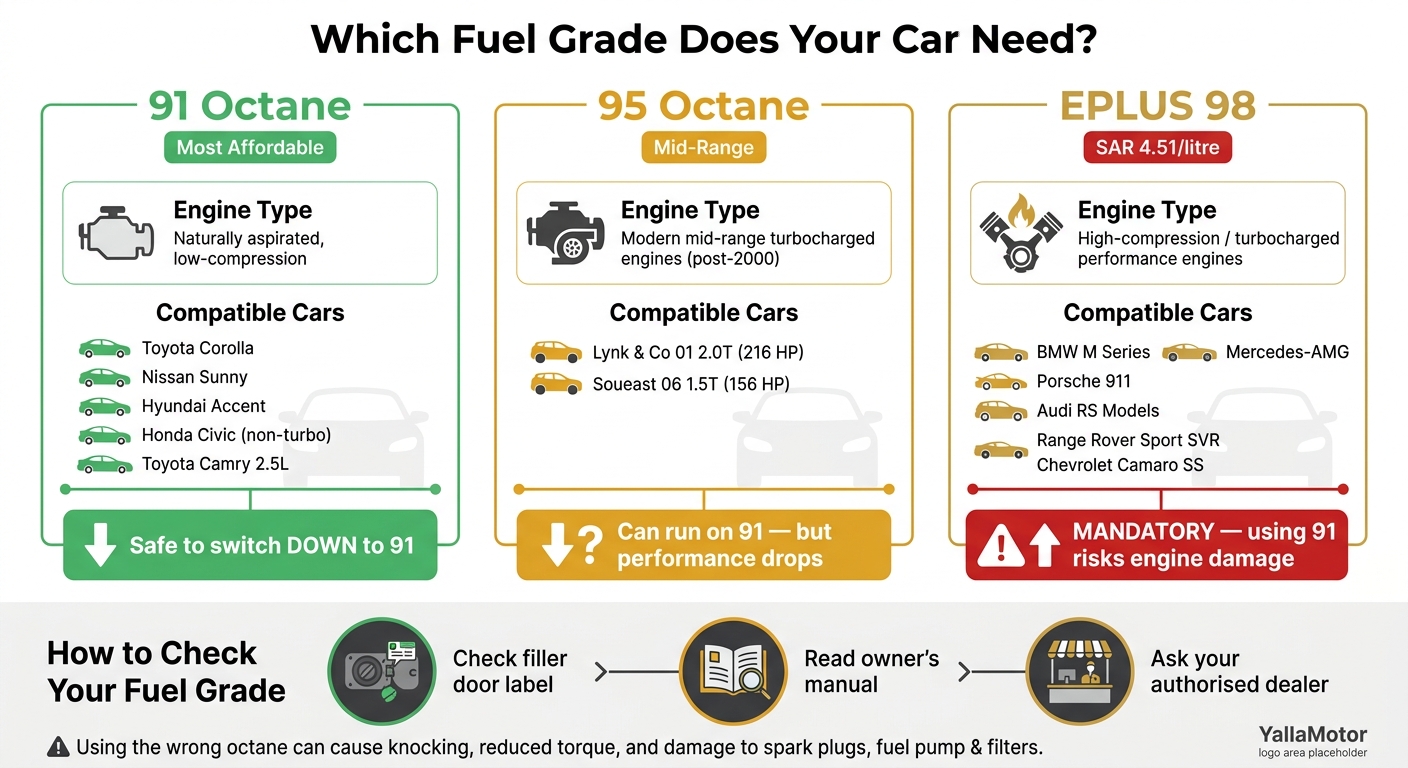
91-octane is suitable for most everyday cars like the Toyota Corolla, Nissan Sunny, and Hyundai Accent. Using higher-octane fuel in these vehicles won't improve performance and will only increase costs.
-
High-performance cars require EPLUS 98. Models like BMW M Series, Mercedes-AMG, and Porsche 911 need this fuel to avoid engine damage caused by knocking.
-
Turbocharged mainstream cars (e.g., Lynk & Co 01 2.0T) often perform better with 95-octane fuel. While they can run on 91, it may reduce responsiveness.
To check your car's fuel requirements, look at the label inside the fuel filler door or consult your owner's manual. Using the correct fuel grade ensures optimal performance and avoids costly repairs.
Key takeaway: Stick to the fuel grade recommended by your car's manufacturer. Switching to 91 when it's not suitable can cause long-term engine damage, while using EPLUS 98 unnecessarily wastes money.
Fuel Grades in the GCC: EPLUS 98 vs 91
What Octane Rating Means and Why It Matters
Octane rating is essentially a measure of a fuel's resistance to knocking, which occurs when fuel ignites prematurely in the engine. Zaina Al Natour from Motory explains:
"The combustion process is mainly affected by the octane ratio in the fuel, for it's the main measure that determines for the owner the amount of fuel needed for the engine, it also plays a fundamental role in the amount of power generated from the engine."
To put it simply, a higher octane rating means the fuel can handle more pressure before igniting. This stability is crucial for turbocharged and high-compression engines, as it ensures maximum power output and efficiency. However, using EPLUS 98 in an engine designed for 91-octane fuel won't improve performance - it just increases costs.
On the flip side, using 91-octane in an engine built for 98 can lead to problems like early ignition, which reduces engine torque and puts stress on components like spark plugs, fuel pumps, and filters.
Understanding these technical differences is key to making informed decisions about fuel, especially when comparing standards across the GCC.
Saudi Arabia vs UAE Fuel Standards
Both Saudi Arabia and the UAE use the RON (Research Octane Number) system to grade fuel, making it easy to compare options between the two countries. While the grades - 91, 95, and 98 - are the same, branding and pricing models differ.
| Feature | Saudi Arabia | UAE |
|---|---|---|
| Octane Standard | RON | RON |
| Available Grades | 91, 95, EPLUS 98 | E-Plus 91, Special 95, Super 98 |
| Pricing Model | Regulated (Aramco) | Deregulated, monthly market-linke |
| Retailers | Saudi Fuel / Aramco | ADNOC, ENOC, Emarat (uniform pricing) |
One key difference is pricing. Saudi Arabia regulates fuel prices, while the UAE has used a market-linked pricing model since August 2015. The UAE's Fuel Price Committee adjusts rates monthly, aligning them with global benchmarks like Brent Crude. For UAE drivers, the main takeaway is that RON ratings are directly comparable. If your car needs Super 98 in Dubai, it will require EPLUS 98 in Riyadh.
These differences highlight the importance of selecting the correct fuel grade, especially given the cost variations across the region.
How Much More Does EPLUS 98 Cost?
EPLUS 98 costs SAR 4.51 per litre in Saudi Arabia, making it significantly pricier than 91-octane fuel. For drivers in the GCC, where annual distances can range between 20,000 and 25,000 kilometres, this price difference adds up quickly.
Take, for example, a mid-size SUV with an average fuel consumption of 10 litres per 100 km. Over a year of driving 22,000 km, the vehicle would use about 2,200 litres of fuel. Opting for EPLUS 98 when 91-octane is recommended could lead to substantial extra costs without any performance benefits.
"There is no universally 'better' gasoline product. Each fuel grade is engineered to match specific engine requirements." - Saudi Fuel
If your car's engine is designed for 91-octane fuel, sticking to the recommended grade can result in significant savings over time, making every fill-up more economical.
Can Your Car Run on 91? How to Find Out
How to Check Your Car's Fuel Requirements
The quickest way to determine your car's fuel needs is by checking the label inside the fuel filler door. Manufacturers typically print the minimum octane rating required for your vehicle here. If the label says "91", then 91-octane is suitable. However, if it specifies "95" or "98", using 91 could harm your engine.
If the label is missing or unclear, your owner's manual is your next go-to resource. Look for the section on fuel specifications, which will clearly outline the required RON rating for your engine. Drivers in Saudi Arabia have an additional resource: the Aramco KSA website, which features a tool to identify the recommended petrol type by vehicle model. Still unsure? Contact your authorised dealership to confirm. Knowing your car’s fuel requirements ensures you use the right octane for your engine.
Engine Types That Work Fine on 91-Octane
91-octane fuel is ideal for naturally aspirated, low-compression engines. These engines are typically found in everyday commuter cars, older models, and budget-friendly vehicles. Since they don’t generate the high heat or pressure levels of performance engines, they don’t need higher-octane fuel to prevent knocking.
Examples of cars that run efficiently on 91-octane include the Toyota Corolla, Hyundai Accent, Kia Pegas, and Nissan Sunny. These models are specifically tuned for 91, and using EPLUS 98 in them doesn’t improve performance - it only increases your fuel costs.
Engines That Need EPLUS 98: Performance and Premium Models
High-performance engines require higher-octane fuel, like EPLUS 98, to operate optimally. These engines, which are often turbocharged or high-compression, generate intense heat and pressure. Lower-octane fuels can ignite too early under these conditions, causing knocking and potential engine damage.
"High-output and turbocharged engines create immense pressure and heat, requiring a higher-octane fuel like Super 98 to burn smoothly and efficiently." - The Elite Cars
Vehicles in this category include the BMW M Series, Mercedes-AMG lineup, Porsche 911, and Audi RS models, as well as performance SUVs like the Range Rover Sport SVR and Chevrolet Camaro SS. Using 91-octane in these engines can lead to knocking, reduced torque, and long-term wear on engine components. As Zaina Al Natour from Motory highlights, using the wrong fuel type can result in costly damage over time.
| Engine Type | Fuel Requirement | Why |
|---|---|---|
| Low-compression, naturally aspirated | 91 Octane | Stable combustion at lower pressures |
| Modern mid-range engines (post-2000) | 95 Octane | Improved knock protection and cleaner combustion |
| High-compression / turbocharged | EPLUS 98 | Handles extreme heat and pressure without knocking |
Using the correct octane for your engine not only safeguards its performance but also helps you avoid unnecessary expenses.
What Fuel Should You Use In Your Car? Fuel Octane Rating Explained | Drive.com.au
Cars That Can Use 91 vs Cars That Cannot: A Direct Comparison
Saudi Arabia Fuel Guide: Which Octane Does Your Car Need?
Knowing which cars are compatible with 91-octane fuel and which require higher grades can save you money and protect your engine.
Mass-Market Models That Run on 91
Many popular cars sold across the GCC, including the Toyota Corolla, Nissan Sunny, Hyundai Accent, Honda Civic (non-turbo versions), and Toyota Camry (2.5L naturally aspirated), are designed to run efficiently on 91-octane fuel. Sticking to this recommendation ensures you maintain performance while keeping fuel costs manageable.
However, not all vehicles are built to run on 91-octane, especially in the luxury and performance categories.
Luxury and Performance Cars That Require EPLUS 98
High-performance cars, like those from the BMW M Series, Mercedes-AMG, Audi RS, and Porsche, are specifically engineered to use 98-octane fuel. For these vehicles, using 98 isn't optional - it's essential.
"Using the wrong type in your car will affect the safety of the engine, its power and torque, which will cause damage to other parts like the fuel filter, fuel pump, spark plugs, etc." - Zaina Al Natour
With EPLUS 98 priced at SAR 4.51 per litre, skipping the recommended grade can not only lead to higher repair costs but also compromise your car's performance and longevity.
Grey Areas: Turbocharged Mainstream Engines
Some turbocharged mainstream cars fall between mass-market and luxury categories. Models like the Lynk & Co 01 2.0T (216 HP) and Soueast 06 1.5T (156 HP) are designed to perform better with 95-octane fuel. While they can technically run on 91, doing so may reduce torque and responsiveness. As Fuelax highlights:
"Gasoline 95 has a higher octane level, improving performance and reducing engine knocking, while 91 is suitable for regular cars"
For turbocharged engines, always check the fuel cap label or refer to the manufacturer's guidelines to avoid compromising performance.
| Model Type | Fuel Grade | Notes |
|---|---|---|
| Toyota Corolla, Nissan Sunny, Hyundai Accent, Honda Civic, Toyota Camry | 91 Octane | Naturally aspirated – 91 is optimal |
| Lynk & Co 01 2.0T, Soueast 06 1.5T | 95 Octane (recommended) | Turbocharged – optimum performance achieved with 95-octane |
| BMW M Series, Mercedes-AMG, Porsche 911, Audi RS | EPLUS 98 | Mandatory requirement; lower grades risk engine damage |
Fuel Tips for Saudi and UAE Drivers
A Simple Checklist for Choosing the Right Fuel
Before you refuel, take a moment to confirm your car's fuel requirements. You can usually find this information on the label inside the fuel filler door or in your owner's manual. If you're still unsure, it's best to reach out to your authorised dealer for guidance.
Using a higher-octane fuel than your car needs doesn't enhance performance - it just increases costs. On the flip side, using 91-octane fuel in an engine designed for 98-octane can lead to knocking, lower torque, and long-term damage to key components like the fuel pump and spark plugs.
By following these simple steps, you'll be better prepared to select the right fuel, especially given the challenges of the region's driving conditions.
How GCC Driving Conditions Affect Fuel Choice
Driving in the GCC comes with unique challenges, from extreme heat to specific driving habits, both of which can impact your fuel choice. During the summer, temperatures often soar above 40°C, increasing engine heat and pressure. This makes it critical to use fuel with good stability. For high-performance or turbocharged engines, 98-octane fuel is ideal as it burns cleaner and helps protect internal components under such intense conditions.
Your daily driving habits also play a role in fuel consumption. For example, running the air conditioning - a necessity in the Gulf - can increase fuel usage by 5–10%. To counter this, try these tips:
-
Keep your tyres properly inflated to minimise road resistance.
-
Use cruise control on long highway drives to maintain a steady pace.
-
Turn off the engine instead of idling during long stops.
-
Remove unnecessary heavy items from your boot to reduce engine strain.
By adjusting your habits and understanding how the climate affects your car, you can make more informed fuel choices.
Using YallaMotor to Check Fuel Requirements and Compare Models
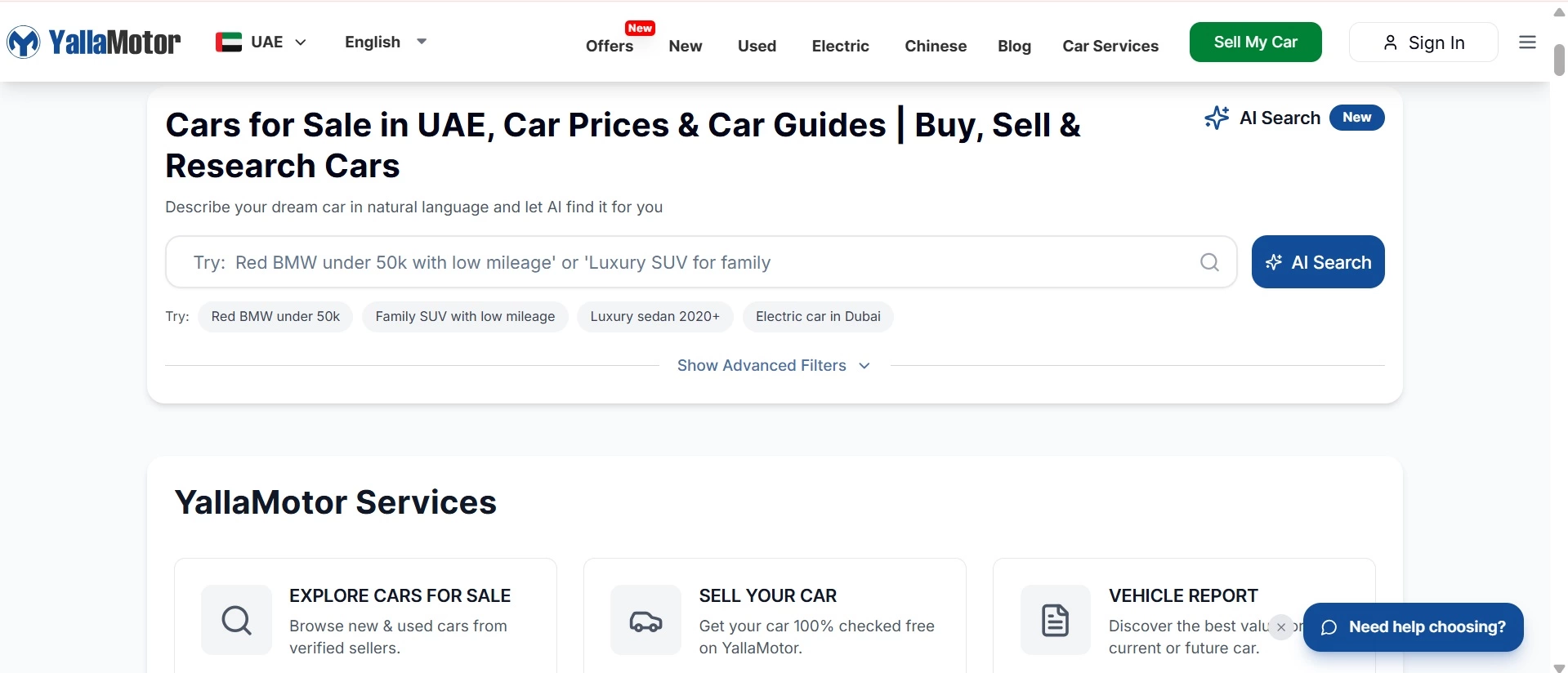
If you're unsure about your car's fuel specifications, YallaMotor is an excellent tool. The site offers detailed specifications for over 75 automotive brands, covering everything from fuel type requirements to engine configurations and trim-level differences. This makes it easier to compare models, especially since even variants of the same car - such as naturally aspirated versus turbocharged versions - can have varying octane needs.
Additionally, YallaMotor provides price comparison tools, helping you factor fuel costs into your total cost of ownership. This can be especially useful when deciding between models or planning your budget.
Conclusion: Choosing the Right Fuel Without Overspending
Understanding your car's fuel needs is crucial to avoiding unnecessary costs and potential engine damage. With Saudi EPLUS 98 priced at SAR 4.51 per litre, many drivers might consider switching to 91-octane as a way to save money. But is it the right choice for your vehicle?
If your car's manufacturer specifies 91-octane, stick to it. Using 98-octane won't enhance performance and will only increase your fuel expenses. On the flip side, if your car requires 98-octane, opting for 91-octane could lead to engine knocking, reduced torque, and damage to critical components - issues that could result in costly repairs.
"Adding a 95 high-octane petrol to a normal car with an average performance will do no harm, but if a 91 low-octane petrol was added to a car that needs high levels of octane, the engine might be damaged long-term." - Zaina Al Natour, Motory
For the majority of standard vehicles like sedans, SUVs, and hatchbacks with naturally aspirated engines, 91-octane is both economical and sufficient to keep the engine running smoothly. However, high-performance or sports cars are typically designed to run on 98-octane to achieve their intended power and efficiency.
If you're unsure about your car's fuel requirements, YallaMotor offers detailed fuel specifications and estimates for annual fuel costs. Following your car's recommended fuel type not only ensures optimal performance but also helps you save over the long term.
FAQs
Will switching from 98 to 91 void my car warranty?
Switching to 91 octane fuel generally won’t void your car’s warranty if your manufacturer lists it as an acceptable option. However, if your car is designed for higher octane fuel and you use a lower grade, it could lead to engine knocking or even damage. Such issues might affect your warranty coverage. To avoid any problems, always refer to your car’s manual to confirm the recommended fuel type.
Is it safe to mix 91 and 98 in the same tank?
Mixing 91 and 98 octane fuel is usually fine if your car is built to run on 91 RON. However, if your vehicle requires at least 95 RON or higher, combining these fuels might cause engine knocking or even damage. To keep your engine running smoothly and avoid potential problems, always stick to the fuel type recommended by your vehicle manufacturer.
How long before using 91 in a 95/98 car causes damage?
Using 91-octane fuel in a car designed for 95 or 98 octane can cause engine knocking, which might lead to damage if done repeatedly over time. However, there isn't a set timeline for when such damage might occur. To keep your engine running smoothly and avoid costly repairs, always stick to the fuel grade recommended by your car's manufacturer.