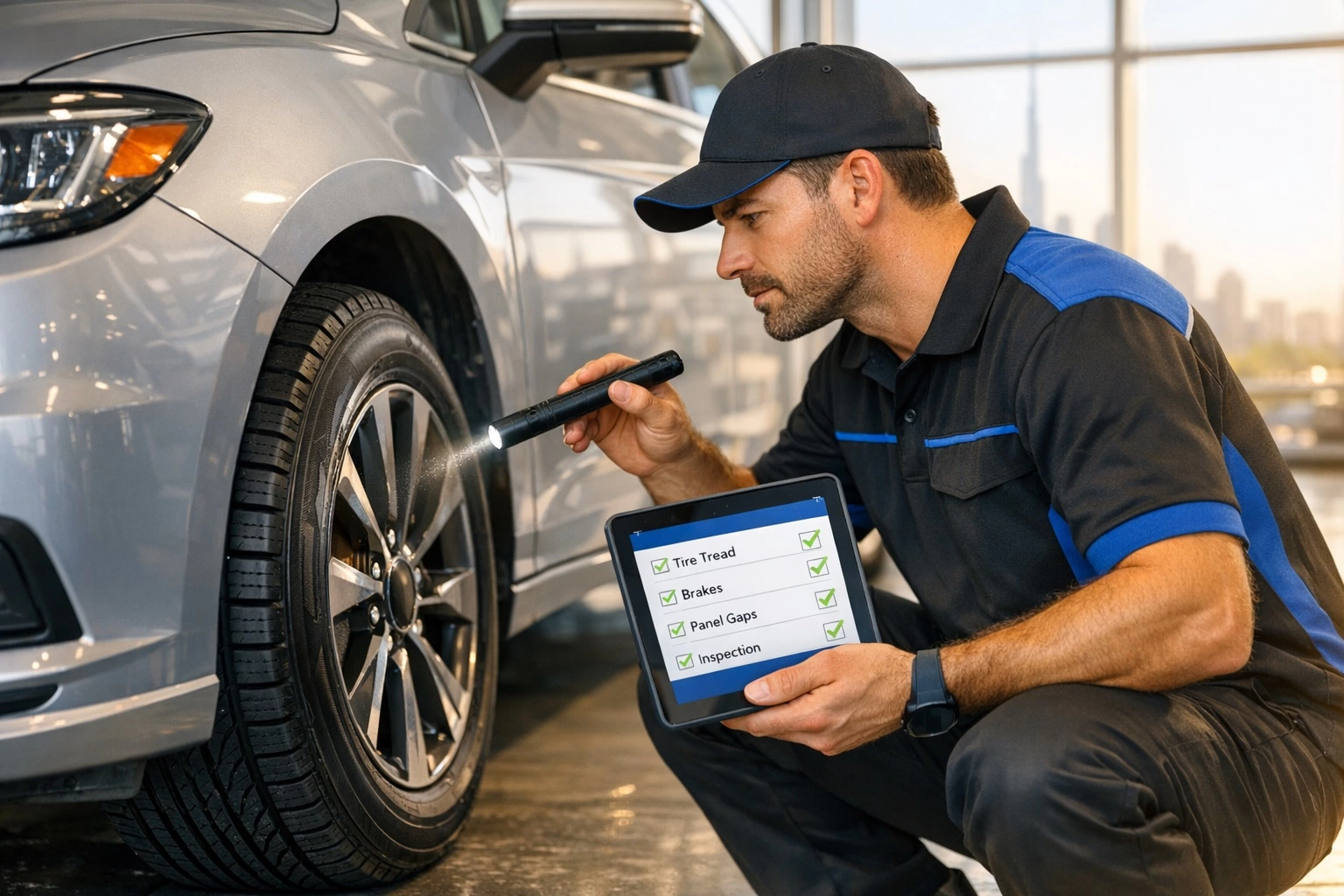
Buying a used car in the UAE? A pre-purchase inspection (PPI) is your best tool to avoid costly surprises. Unlike the basic RTA inspection, a PPI dives deep into the car’s condition, checking critical systems like the engine, brakes, suspension, tires, and electronics. It’s a small investment (around AED 399) that can save you thousands by identifying hidden issues or giving you leverage to negotiate a better deal.
Here’s what you need to know:
-
What it covers: Up to 248 points, including mechanical, electrical, and safety systems.
-
What it doesn’t: Internal defects (like engine compression) and manufacturer recalls.
-
Cost: AED 275–399 for third-party services vs AED 170 for RTA’s basic roadworthiness test.
-
How to choose: Look for certified inspectors, customer reviews, and clear pricing details.
A PPI ensures you’re making an informed decision, especially in Dubai’s competitive used car market. Skipping this step could mean buying a car with hidden problems. Always inspect before committing!
This Is How We Inspect Cars In Dubai!
What Pre-Purchase Inspections Cover
A pre-purchase inspection typically involves a detailed check of anywhere between 248 and 600 points, offering a comprehensive view of a car’s condition - from the engine bay to the boot. Here’s what inspectors focus on during this detailed process.
Engine and Mechanical Systems
The inspection often starts under the hood. Inspectors look for oil leaks, unusual engine noises, and general cleanliness. They also check oil and coolant levels, looking for signs of contamination or overheating. The transmission and drivetrain are carefully evaluated to ensure smooth gear shifts and detect any slippage or leaks in the gearbox and differential. Another critical step is verifying that the Vehicle Identification Number (VIN) matches across all major components to rule out tampering.
Given Dubai’s intense heat, battery health is a top priority. Inspectors perform battery tests since high temperatures can shorten battery life. For a deeper analysis, some services use diagnostic scanners to retrieve fault codes from the car’s computer, which can reveal hidden issues that aren’t visible during a basic visual inspection. After addressing the engine and mechanical systems, the focus shifts to the vehicle’s safety components.
Brakes, Suspension, and Tires
Safety-critical components like brakes, suspension, and tires are next on the checklist. Brake systems are thoroughly inspected - technicians measure brake pad thickness, check rotors or discs for signs of scoring or warping, and test brake fluid levels for leaks. The emergency brake is also tested to ensure it’s functioning properly. As highlighted by CarBuyers.ae:
"The brakes are critical when conducting a vehicle inspection. Properly working brakes are among the essential requirements for a car assessment."
The suspension system is another key focus. Inspectors examine shock absorbers, struts, springs, bushings, and ball joints for wear and leaks. A simple bounce test - pressing down on each corner of the car - can indicate whether the suspension stabilises quickly or sways excessively.
Tire checks include evaluating tread depth, manufacturing dates, and ensuring brand consistency. Uneven wear patterns can signal alignment or suspension problems. In the UAE’s harsh climate, inspectors pay special attention to rubber degradation and cracking, as these issues can be more common in extreme heat.
Body, Interior, and Electronics
The inspection also extends to the car’s exterior, interior, and electronic systems. On the outside, inspectors assess paint consistency, panel alignment, and look for signs of past accident repairs or rust. Tools like paint thickness gauges are often used to identify resprayed panels that might hide previous damage. Inside the cabin, they check for musty smells or mould, which could indicate hidden water or flood damage.
All dashboard controls, seat adjustments (manual and electronic), seatbelts, and the air conditioning system are tested to ensure they’re in working order. Electronics undergo a thorough evaluation as well. Inspectors verify the odometer reading, test power windows and locks, and assess the infotainment system. An OBD-II diagnostic scan is often run to detect any hidden faults. Safety systems like airbags, ABS, and sensors are also checked to ensure they’re functioning properly.
Most inspection services provide a digital report, complete with photos and videos, within one to six hours after the inspection.
What Pre-Purchase Inspections Do Not Cover
A pre-purchase inspection provides a snapshot of a car's current condition, but it does have its limits. Understanding what inspectors cannot assess can help you manage expectations and avoid unpleasant surprises after buying a vehicle.
Internal Defects
Pre-purchase inspections are non-invasive, which means mechanics won’t take apart the engine or gearbox to examine internal components. As AutoHub explains:
"Engine compression testing must be done at a workshop. Our inspection is non-invasive and does not involve dismantling engine components."
This approach means internal problems, such as worn piston rings, damaged valves, head gasket issues, or cylinder wall damage, may go undetected. Similarly, internal transmission wear - like metal shavings in the fluid or deteriorating differential components - requires specialised tests, such as laboratory fluid analysis, which are not part of standard inspections. If you’re considering a high-mileage or performance car, it’s worth investing in additional tests for peace of mind.
Manufacturer Defects and Recalls
While inspectors focus on the car’s physical and electronic condition, they don’t typically check for active recalls or factory defects. Some premium services offer a VIN check that might reveal warranty or recall information, but this isn’t a standard feature. To stay informed about recalls, you’ll need to contact an authorised dealer directly with the vehicle’s VIN. Keep in mind that inspections also cannot guarantee the vehicle’s future performance.
Long-Term Performance and Reliability
An inspection only reflects the car’s condition at the time it’s conducted; it doesn’t predict how the vehicle will perform in the future. As The Mechanics points out:
"While our inspection ensures thorough checking, it doesn't guarantee the future performance of the vehicle, as conditions can change post-purchase."
In the UAE, factors like extreme heat and sandstorms can accelerate wear and tear unpredictably. To address this, request a full service history from the seller to confirm the car was maintained according to the manufacturer’s recommendations. Use the inspection report as a maintenance guide to address minor issues before they escalate. Experts also advise scheduling professional check-ups every 6 to 12 months after purchase to help maintain reliability. These steps highlight the importance of ongoing care and research, even after an initial inspection.
How to Choose a Pre-Purchase Inspection Service in Dubai and the UAE
Pre-Purchase Car Inspection Options and Costs in Dubai UAE
When it comes to buying a car, a reliable inspection service can make all the difference. With so many options available, it’s important to know how to select a service that will provide a thorough and accurate evaluation.
Check for Certification and Credentials
A proper inspection can reveal hidden issues, so it’s essential to ensure the inspector is qualified. For inspections required for registration or ownership transfer, look for RTA‐approved centres. These centres follow regulatory standards, and their certificates are valid for only 30 days from the date of issue.
For third-party inspections, check if the service uses advanced diagnostic tools. For instance, thermal imaging cameras can detect engine overheating, while paint thickness gauges can reveal past repairs. Some inspectors are also licensed to assess specialised vehicles, such as classic cars or heavy vehicles. Be sure the inspection covers key areas like the chassis, engine, transmission, electrical systems, and bodywork.
Research Reviews and Customer Feedback
Customer reviews can give you a clearer picture of what to expect. Some services boast ratings as high as 4.8/5 stars from over 12,000 inspections, with clients often highlighting their ability to detect hidden issues like flood damage or poor repairs. One satisfied customer, Omar Jabr, shared:
"The market is full of bad cars these days, so having such a great inspection is invaluable".
Instead of focusing solely on star ratings, read detailed reviews to understand how the service handles complex cases. Whenever possible, visit the service centre to observe operations and speak directly with the team. This can help you evaluate their professionalism and expertise, as well as clarify the scope of their services and pricing.
Understand Inspection Scope and Pricing
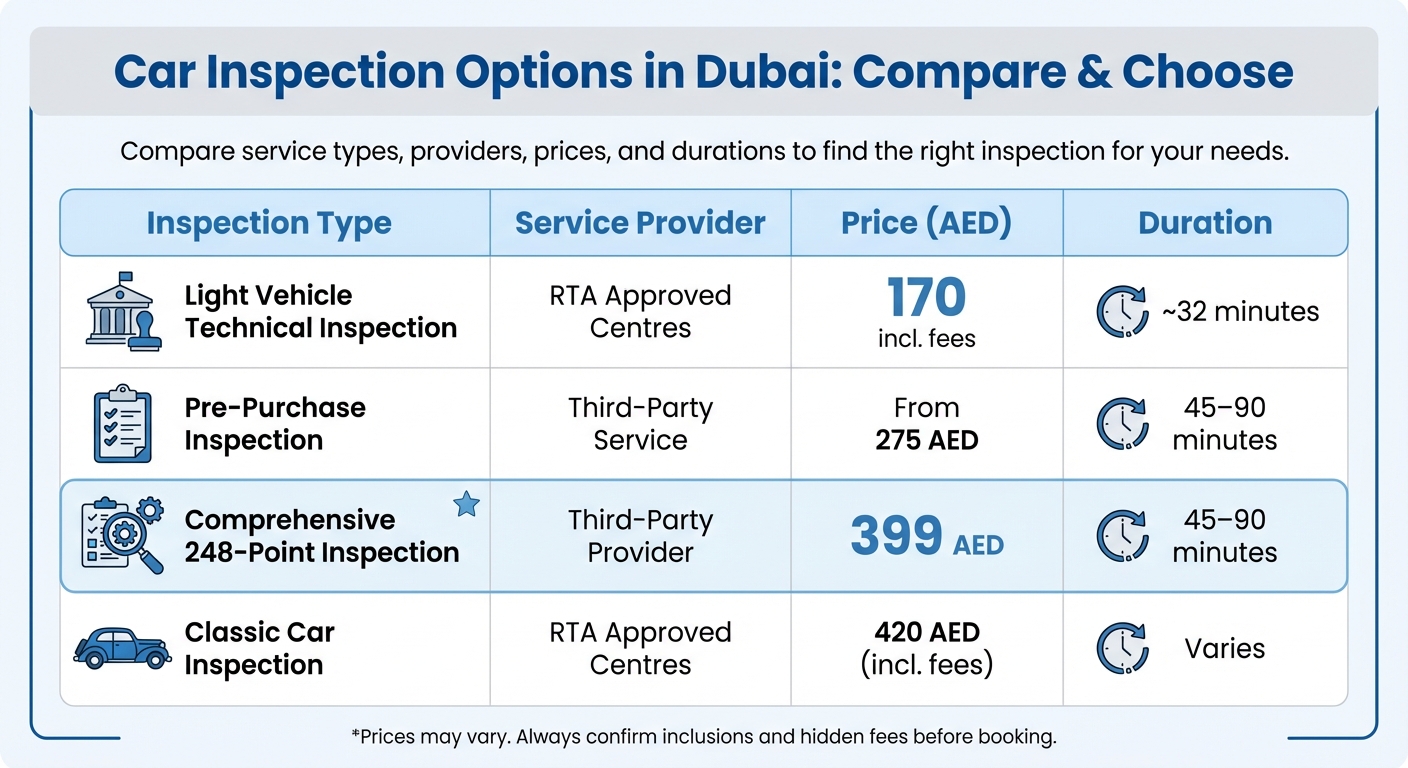
Inspection services can differ widely in both cost and depth. For example, an RTA light vehicle inspection typically costs AED 170 (including fees) and takes about 32 minutes, covering essentials like roadworthiness, safety, and emissions. On the other hand, third-party pre-purchase inspections often provide a deeper analysis. A comprehensive 248-point mobile inspection might cost AED 399 and take 45 to 90 minutes, while other providers offer reports starting at AED 275.
Here’s a quick comparison of inspection options:
|
Inspection Type |
Service Provider |
Price (AED) |
Duration |
|---|---|---|---|
|
Light Vehicle Technical Inspection |
RTA Approved Centres |
170 (incl. fees) |
~32 minutes |
|
Pre‑Purchase Inspection |
Third‑Party Service |
From 275 |
45–90 minutes |
|
Comprehensive 248‑Point Inspection |
Third‑Party Provider |
399 |
45–90 minutes |
|
Classic Car Inspection |
RTA Approved Centres |
420 (incl. fees) |
Varies |
When comparing services, clarify what’s included in the fee. For electric or hybrid vehicles, check if the service uses specialised tools for battery and motor inspections. Also, confirm whether the inspection includes extras like a free VIN history check or an underbody inspection. Be aware of potential hidden fees, such as the AED 20 "Knowledge and Innovation" charge sometimes added to RTA inspections.
Conclusion
When buying a used car in Dubai or anywhere in the UAE, a thorough pre-purchase inspection is your best defence against hidden risks. It transforms what might feel like an emotional choice into a well-informed, data-backed decision that safeguards your finances and provides peace of mind. Whether you're eyeing a sedan in Sharjah or an SUV in Abu Dhabi, an inspection covering up to 248 points can uncover problems that even the most observant buyer might miss.
For an investment of AED 399 to AED 500, you’ll receive a detailed report - often within just 4 to 6 hours. This report isn’t just for peace of mind; it’s a powerful tool for negotiation, potentially saving you thousands of dirhams by identifying issues that could justify a lower price.
Even if the car looks flawless or the seller seems genuine, skipping the inspection is a gamble. As Amal Kumar, General Manager at Royal Prince Auto Care, cautions:
"It is possible for garages to manipulate the odometer or do some basic body work and sell the car for a profit".
An independent inspection ensures you’re not paying for a vehicle with hidden flaws or a tampered history.
To make your purchase as smooth as possible, schedule the inspection before finalising the deal. Take advantage of mobile services that come directly to the seller’s location, and set aside funds for immediate maintenance, like oil changes or minor repairs. By following these steps, you can enjoy a more confident and worry-free car-buying experience.
FAQs
Can I do a PPI if the seller won’t let the car go to a workshop?
A pre-purchase inspection (PPI) typically takes place at a workshop, provided the seller agrees. If the seller declines, it might limit your ability to conduct a detailed inspection. In such situations, you could try negotiating alternative inspection methods, but remember, a restricted inspection might miss some hidden problems.
What extra checks should I request for high‑mileage or performance cars?
For cars with high mileage or designed for performance, it’s wise to request extra attention during inspections. Focus on the engine condition, suspension, brakes, and drivetrain. These components are more likely to show signs of wear or hidden damage over time. A thorough check ensures the vehicle is still capable of handling the higher demands placed on it.
Should I still buy the car if the report shows minor issues?
If the report highlights minor issues, you might still go ahead with purchasing the car. Such problems are usually easy to handle and don't typically affect the car's value or safety. That said, it's a smart move to either negotiate the price or have the seller take care of the repairs before you close the deal.
Looking for a used car in Dubai or new car deals? Explore YallaMotor’s verified listings today.