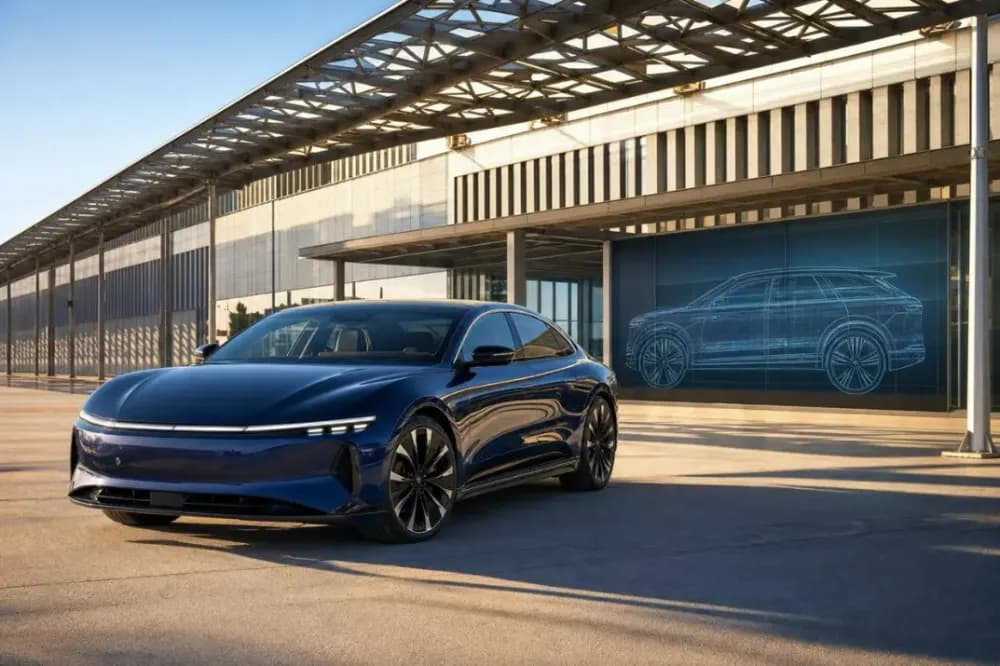
Ceer is due to start commercial EV production in Q4 2026, with Saudi deliveries expected before the end of 2026. If you’re in Saudi Arabia or the UAE, the big points are simple: Ceer has strong state and global backing, a factory in KAEC sized for 240,000 cars a year, and two first models planned at launch: one sedan and one SUV.
Here’s the short version in plain English:
-
What it is: Saudi Arabia’s first local EV brand
-
Who backs it: PIF + Foxconn, with input from BMW, Hyundai Transys, Rimac, and others
-
When it starts: Trial builds in mid-2026, sales production in Q4 2026
-
First cars: Electric sedan and electric SUV
-
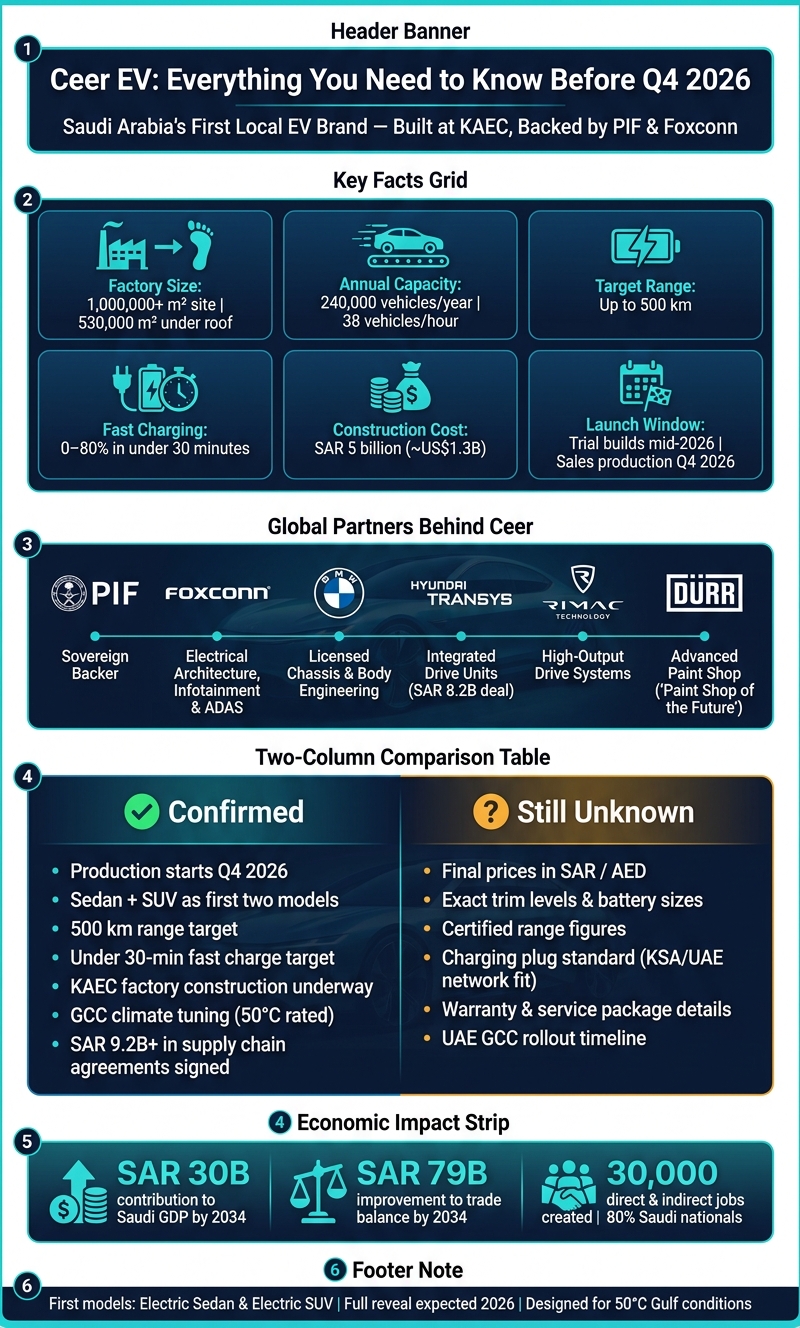
Factory size: Over 1 million m² site, with up to 240,000 vehicles per year
-
Early targets: Up to 500 km range and 0–80% charging in under 30 minutes
-
What’s still missing: Final prices in SAR and AED, trims, warranty details, and charging plug details
-
Why GCC buyers should care: Ceer says it is tuning cooling, glass, HVAC, and cabin systems for 50°C Gulf conditions
What I take from all this is straightforward: Ceer looks serious on factory scale, supplier depth, and local build plans, but buyers still need the final ownership details before making up their minds.
| Area | What looks clear | What is still open |
|---|---|---|
| Launch timing | Production starts in Q4 2026 | Whether first customer deliveries stay on schedule |
| Models | Sedan + SUV first | Names, trims, battery sizes |
| Performance | Target of up to 500 km range | Final certified figures |
| Charging | Fast-charge target under 30 minutes | Plug standard and network fit in KSA/UAE |
| Ownership | Local supplier park may help parts supply | Price, service plan, warranty, finance |
If you just want the headline: Ceer is no longer just a concept story. It now has a build site, named suppliers, a production window, and a first-market plan. The next updates that matter most are price, spec, and after-sales cover.
Ceer EV at a Glance: Key Facts, Partners & What's Still Unknown
Ceer's Origins, Ownership and Market Position
PIF, Foxconn and BMW: who is behind Ceer
Ceer is backed by PIF and Foxconn, while BMW provides licensed technology and engineering standards. That mix says a lot about the space Ceer wants to play in.
Ceer has also grown its supplier network with Hyundai Transys, Rimac Technology and Dürr. Together, these partners cover integrated drive units that combine the motor, inverter and reduction gear, high-output drive systems for select models, and paint shop equipment for the KAEC plant. In plain terms, this is about getting local production at KAEC ready and moving manufacturing plans forward ahead of the Q4 2026 launch.
How Ceer plans to position itself in Saudi Arabia and the GCC
Ceer is being positioned as Saudi Arabia's EV flagship, with expansion across the GCC planned after that. The brand is aiming at upper-mid to premium buyers, with design choices shaped for the GCC, hot-weather durability, and Arabic/English interfaces.
Those partnerships now feed straight into Ceer's KAEC production plan.
Expected Models, EV Technology and Cabin Features
First models: electric sedan and electric SUV
Ceer has already made the broad plan clear: its first two vehicles will be an electric sedan and an electric SUV. Beyond that, the company is still keeping its cards close to its chest. Official model names, trims, and full design details haven't been shared yet, with the full reveal expected in 2026.
Power, range, charging and technology partners
Under the skin, Ceer is leaning on a group of global partners.
BMW is supplying licensed chassis and body engineering technology. Foxconn is responsible for the electrical architecture, infotainment, connectivity, ADAS, and over-the-air updates. For the powertrain, Rimac Technology and Hyundai Transys are jointly covering drive systems across the lineup.
That setup gives a pretty clear picture of what Ceer is aiming for: modern EV hardware backed by companies that already know this space well.
Ceer has also pointed to some early performance targets. The brand says it is aiming for a range of up to about 500 km, with 0–80% fast charging in under 30 minutes. That said, these are still targets, not final certified figures.
Interior, cooling and daily usability for GCC drivers
For drivers in the Gulf, range is only part of the story. Cabin cooling and heat control matter just as much in day-to-day use.
Ceer's cabin is expected to include an Arabic-English interface, which fits the brand's regional focus. The company is also putting a lot of attention on thermal management. It has teamed up with Isoclima on what is described as the world's largest automotive windshield, fitted with ultra-thin infrared-reflective coatings that help cut solar heat gain and reduce the load on the battery-powered cooling system.
HVAC tuning is also being handled with local input. Ceer is working with AITS and the APICO Balubaid Group to make sure cooling performance suits GCC conditions, where ambient temperatures can hit 50°C.
Factory Plans, Local Production and Key Supply Partners
KAEC factory timeline and planned production capacity
The Ceer Manufacturing Complex (CMC) sits in the Industrial Valley of King Abdullah Economic City (KAEC), on Saudi Arabia's Red Sea coast near King Abdullah Port. Construction started in March 2024. Trial production is planned for mid-2026, with commercial production and first deliveries scheduled for Q4 2026. That timeline puts Ceer on the edge of becoming a market-ready car brand, not just a factory story.
The site spans more than 1 million sq m, with 530,000 sq m under roof. It includes a press shop, body shop, paint shop, general assembly area, and a vehicle test track. At full output, the plant is built to produce 38 vehicles per hour, or about 240,000 vehicles per year. The construction contract was worth SAR 5 billion, roughly US$1.3 billion.
What the partner network means for build quality and local content
Once the production schedule is in place, the next thing buyers will look at is simple: can the supplier base support quality, scale, and service from day one?
In January 2026, Ceer confirmed a deal with German company Dürr to install the "Paint Shop of the Future" at the CMC. Instead of relying on standard paint lines, the setup uses modular EcoProBooth boxes and automated guided vehicles. The result is a paint process that cuts heating time by 30% versus conventional systems. It also supports two-tone finishes through EcoPaintJet Pro technology, without plastic waste.
Ceer’s confirmed partners already cover key parts of the vehicle and factory setup, including chassis, software, powertrain, paint, seating, and HVAC.
| Partner | Role | Buyer Impact |
|---|---|---|
| Dürr | Advanced paint shop | Premium finish quality and bespoke colour customisation |
| FEV / AVL | Engineering development services | Vehicle tuning and reliability validation for regional conditions |
| Sabelt | Sports seating | Italian-designed seats focused on safety and interior quality |
| Zamil / APICO | HVAC and plastic components | Localised parts that support faster servicing in the GCC |
One of the biggest supply deals so far is the SAR 8.2 billion agreement with Hyundai Transys, signed in June 2024.
Vision 2030, local supply chains and after-sales support
Ceer is expected to contribute SAR 30 billion to Saudi GDP and improve the trade balance by SAR 79 billion by 2034. The company is also projected to create 30,000 direct and indirect jobs, with 80% of direct roles set to go to Saudi nationals.
There’s also a clear local sourcing goal. Ceer plans to source 45% of vehicle materials and components from Saudi suppliers by 2034. By February 2026, it had already signed supply chain agreements worth more than SAR 9.2 billion. That includes SAR 5.5 billion in 2025 and another SAR 3.7 billion across 16 new agreements at the 4th PIF Private Sector Forum in early 2026.
"Our approach goes beyond mere assembly; we are utilising local raw materials and empowering Saudi companies to become global suppliers, directly contributing to Vision 2030's mission to diversify the national automotive industry." - James DeLuca, CEO, Ceer
For buyers, this matters most when it comes to parts supply and service speed after launch. Ceer’s setup includes a dedicated Automotive Supplier Park next to the KAEC factory. With global tier-1 suppliers such as Lear Corp and Forvia on-site, plus specialist facilities for cold stamping, hot stamping, and axles, the aim is to support parts supply and after-sales service from close range. In practical terms, that kind of nearby supplier base usually helps keep parts on hand and workshop turnaround times under control, which matters a lot for GCC owners planning to keep a vehicle for years.
What Buyers in Saudi Arabia and the UAE Should Watch Before Launch
Launch timing, likely rollout order and the main open questions
The launch window is now on the table. What buyers in Saudi Arabia and the UAE still need are the details that shape the ownership experience day to day.
The biggest gaps are price, trims, warranty cover, and charging fit. Final prices in SAR and AED have not been shared yet. The same goes for exact trim levels and after-sales service packages. Charging standard fit with current UAE and KSA networks is still not confirmed either. And one point matters more than most in this region: real-world range in 50°C+ heat.
Right now, the main thing to watch is how fast Ceer moves beyond its Saudi launch.
How Ceer could fit daily life in the GCC
These unknowns matter most once the car leaves the brochure and enters daily life. In the GCC, range, charging ease, and heat performance can make or break the experience.
Daily usable range will matter. So will access to charging. Heat performance matters just as much, especially for drivers covering longer intercity routes across the region. The Hyundai Transys 3-in-1 integrated drive system is meant to improve efficiency, which could help on those longer drives between GCC cities.
If you live in an apartment or an older home, it makes sense to check home-charging readiness before launch. That small step can save a lot of hassle later. UAE buyers should also keep an eye on Ceer’s formal GCC expansion timeline, since charging fit and warranty cover may not match the Saudi launch spec.
Tracking Ceer on YallaMotor as official details arrive
As Ceer moves from announcement to delivery, guesswork will give way to confirmed listings. Track Ceer on YallaMotor for confirmed prices, trims, and specs as they’re announced.
Here’s the current snapshot for buyers:
| Feature | Likely Strengths | Current Uncertainties |
|---|---|---|
| Backing & technology | PIF sovereign support; BMW, Foxconn, and Hyundai Transys partnerships | Long-term reliability of a first-generation brand |
| Regional tuning | Designed specifically for GCC climate; advanced cooling and paint technology | Real-world range in 50°C+ heat |
| Manufacturing | 240,000-vehicle annual capacity at KAEC; state-of-the-art facility | Ability to meet Q4 2026 delivery targets without delays |
| Ownership costs | Localised supply chain and after-sales support | Final retail pricing in SAR/AED; insurance and financing rates |
| Product range | Seven models planned; SUV and sedan first | Specific trims, battery sizes, and charging standards at launch |
CEER - First Saudi EV SUV Spotted | Coming in 2026
FAQs
Will Ceer launch in the UAE at the same time as Saudi Arabia?
No. Ceer is focused on its home market in Saudi Arabia for now, with its launch expected in Q4 2026.
Reports available so far suggest that entry into other Gulf markets will come in later phases, once the company has its operations in the Kingdom up and running.
How will Ceer perform in real GCC summer heat?
Ceer says its vehicles are being designed with the region in mind, and company leaders have pointed to performance tuned for local conditions. That matters in a market where heat, dust, and long-distance driving can put any car to the test. That said, the company still hasn't shared full details about its thermal management setup.
Ceer is also working with global engineering partners, including BMW and Rimac. At the same time, its King Abdullah Economic City plant uses advanced paint-shop processes, which points to a broader push around climate readiness for the region.
What ownership details are still missing before launch?
Ceer has said it is a joint venture between Saudi Arabia’s PIF and Foxconn, with BMW supplying component technology. That part is clear.
What hasn’t been laid out in plain terms is the ownership split, who holds which governance roles, or whether any other investors or deal structures have been locked in ahead of the 2026 launch.
The same pattern shows up in its financial plans. So far, Ceer has shared only a broad outline, including funding through 2034 and the possibility of a future IPO.