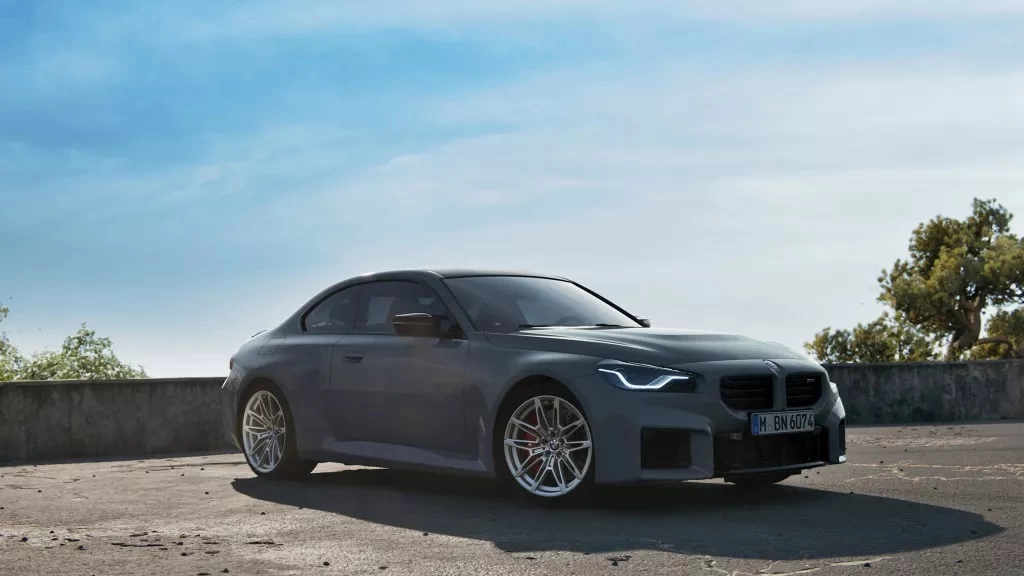
BMW's M division has ended rumours: head honcho Fran van Meel has confirmed M will preserve its iconic inline‑six and V8 engines in M cars deep into the late 2020s, supported by next-generation hybrid technologies.
A Legacy Saved Through Emissions
With Euro 7 emissions laws on the horizon, BMW M head Frank van Meel told Autocar UK that the greatest challenge wasn't conformity but it was keeping performance. BMW says both engine formats will achieve tougher standards without sacrificing output, through improved combustion methods and improved thermal management.
“The whole story is about driving with lambda one [when the air-fuel ratio for combustion is perfectly matched] so you have to keep that, and there's no cooling. Normally, if you are in high-performance situations, you cool using the fuel. With EU7, that’s impossible, so you need to find different ways of avoiding temperature build-up.”
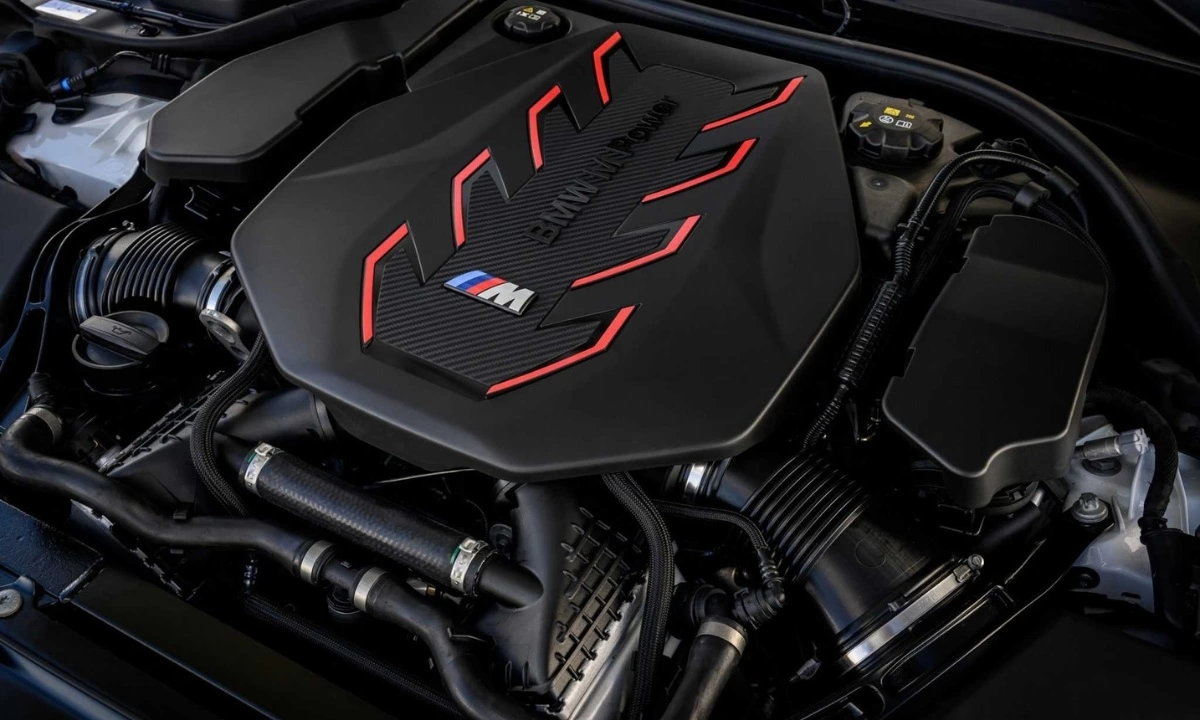
“The six-cylinder in-line engine is our legacy, and the V8 has got a long history in racing, so we intend to keep going,” said Van Meel. BMW has made some “very interesting” tweaks to make the engines compliant.
In late 2023, van Meel categorically excluded even a move towards lesser three- or four-cylinder engines even with the addition of EV support. BMW maintains that such combinations do not jive with the very essence of what an M car represents.
Talk Less, Drive More: What Customers Actually Want
Surprisingly, in-house BMW research indicates that more than 95% of M buyers don't care what's under the hood, as long as it "feels like an M." That is, they desire visceral connection, dynamic weight, and engine sound. Even if four-cylinder hybrids could produce the same output, they wouldn't be able to deliver the driving experience M buyers want.

Market-Specific Strategy: V8 Lives Where Fans Demand It
BMW also assures that this policy is sensitive to the market. In the U.S. and Middle East, buyers are still very hungry for smooth, sonorous V8s; a turbocharged inline-six, even with performance equivalence, simply does not resonate on the same level. BMW views hybrid assistance (such as in the XM SUV) as a bridge, rather than a substitute.
With all this, however, BMW isn't discounting electrification. Hybrid V8 cars such as the XM and future M5 G90/G99 combine old combustion might with electric motors, but there are no plans to electrify smaller engines for full M football machines. Asked if he considered putting a four-cylinder in an M5, Van Meel replied, "I couldn't imagine putting a four-cylinder in an M5."
FAQs:
Will BMW M cars continue to use internal combustion engines in the future?
Yes, BMW M has confirmed that its performance cars will continue to use inline-six and V8 engines for as long as legislation allows. While the industry moves toward electrification, BMW believes in maintaining the emotional driving experience that these engines offer.
Why is BMW sticking with six- and eight-cylinder engines?
BMW M believes these engines are central to the brand’s identity and driving enjoyment. Frank van Meel, BMW M CEO, emphasized that customer demand and the unique characteristics of these engines—like sound and throttle response—still have strong relevance.
Are there any plans for fully electric M models?
Yes, BMW is actively developing electric M cars. The company is testing a quad-motor electric M prototype and has confirmed a Neue Klasse-based M EV for 2026. These future models will coexist with traditional engine offerings for the foreseeable future.
What about plug-in hybrid M cars?
The current XM is a plug-in hybrid and represents BMW M’s efforts to blend high performance with electrification. This approach allows BMW to meet stricter emissions standards while retaining the power and dynamics expected from M cars.
Which current BMW M models use the inline-six and V8 engines?
BMW’s inline-six engine powers models like the M3 and M4, while the V8 is found in the M5, X5 M, and XM. Both engine types are likely to continue serving as the foundation for future high-performance models.
Is this commitment only for Europe, or global?
BMW M’s strategy applies globally, although regulatory changes may affect availability in specific markets. For now, customers in major regions such as the U.S., Europe, and Asia can expect continued access to these iconic powertrains.
How does this decision impact the environment?
BMW acknowledges the need to reduce emissions and is working on parallel electrification strategies. By offering both combustion and electric options, BMW aims to balance performance heritage with sustainability.
How long will these engines realistically remain on sale?
BMW hasn’t set an exact end date, but CEO van Meel said that as long as the engines are legal and customers want them, they’ll be offered. However, regional bans on combustion engines—like those planned in parts of Europe by 2035—will eventually force transitions.
Looking for a used car in Dubai or new car deals? Explore YallaMotor’s verified listings today.