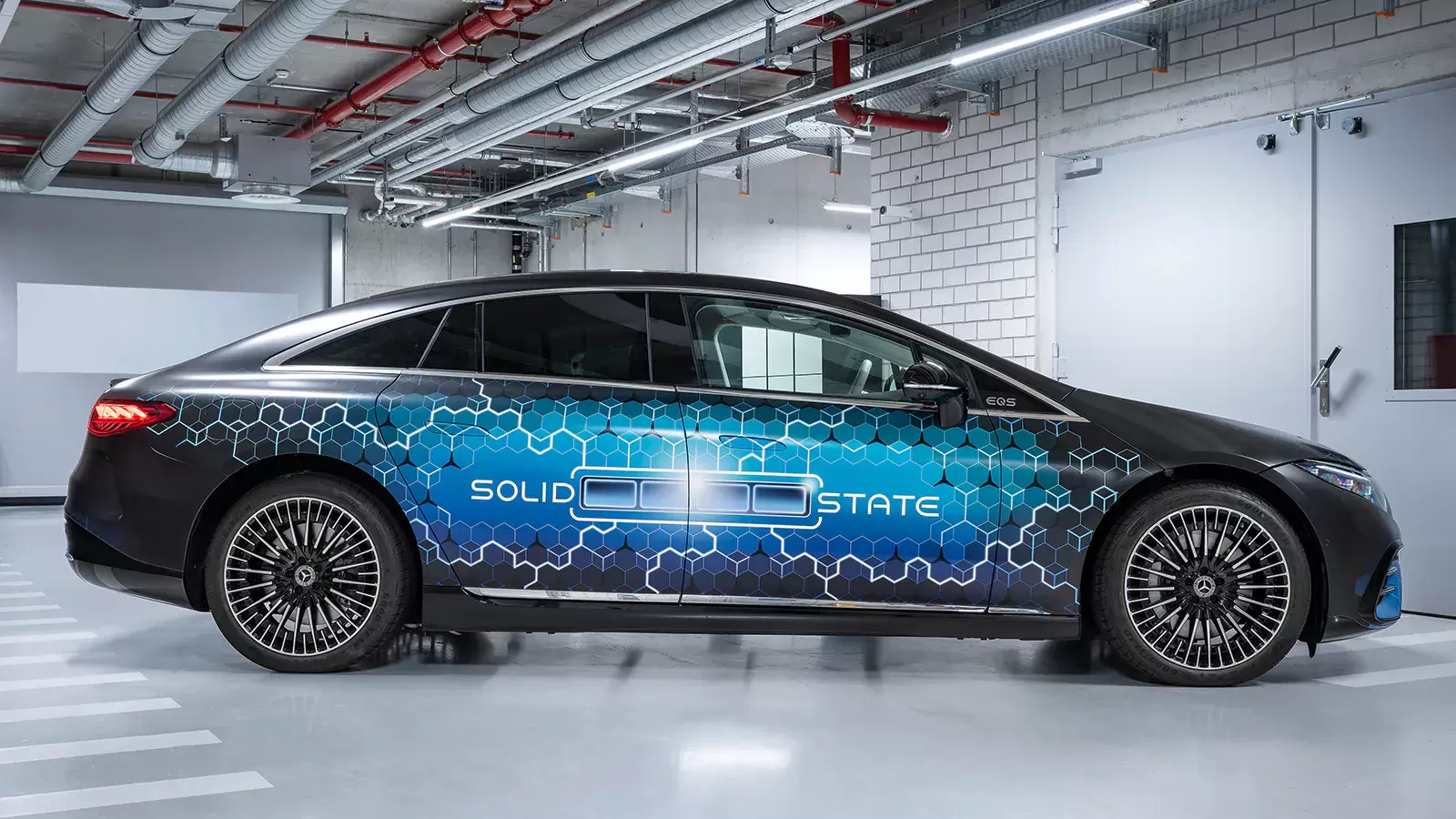
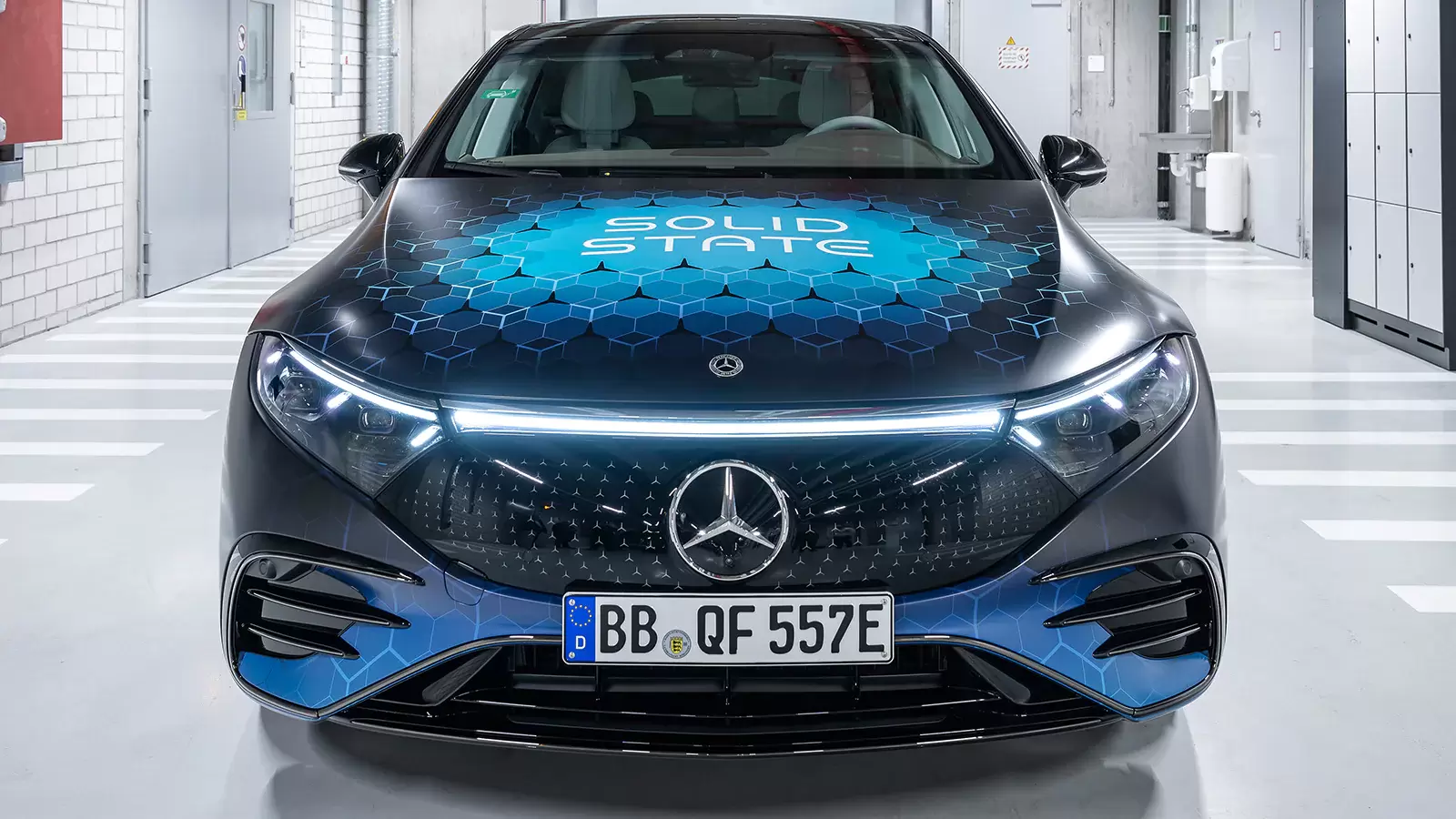
Mercedes-Benz is testing a prototype EQS electric sedan fitted with a semi-solid-state battery pack co-developed with its Formula 1 powertrain subsidiary, Mercedes-AMG High Performance Powertrains (HPP), and US-based battery specialist Factorial Energy. The prototype lithium-metal battery is expected to deliver at least 25 percent more range compared with the lithium-ion battery fitted to production EQS models. In fact, Mercedes-Benz engineers believe the EQS prototype will have a real-world driving range of more than 620 miles, compared with the 390-mile EPA-rated range of the EQS 450+ currently sold in the U.S.
The Future of Solid-State Batteries in Electric Vehicles
Solid-state batteries are regarded as the next key step in improving the range and usability of EVs. In simple terms, they use a solid electrolyte rather than a liquid one, which makes them lighter and allows the use of more efficient anodes. These batteries not only have a higher energy density than conventional lithium-ion batteries but can also be charged faster. Additionally, because they don’t have a flammable liquid electrolyte, they are less prone to fires.
Challenges of Solid-State Batteries
- More lithium required: Solid-state batteries need more lithium than conventional lithium-ion packs.
- Risk of dendrite formation: These batteries are prone to growing organic-looking structures called lithium dendrites over multiple charge and discharge cycles, which can short-circuit the battery.
- Conductivity issues: Solid-state batteries don’t achieve high conductivity at room temperature, limiting their efficiency.

Mercedes-Benz’s Prototype Semi-Solid-State Battery
The EQS prototype’s battery has been built using Factorial Energy’s proprietary FEST cells. These cells have a quasi-solid electrolyte, a solid matrix infused with a liquid or gel-like electrolyte, making the battery technically a semi-solid-state unit. A quasi-solid electrolyte combines the safety advantages of solid-state electrolytes with the improved performance and manufacturability of liquid electrolytes. Raimund Koerver, Factorial Energy’s Vice-President of Business Development, states that these cells offer a promising middle ground, using lithium metal anodes to achieve higher energy densities.
The Key to Success: Floating Cell Carrier
The Mercedes-Benz battery features a patented floating cell carrier. When the battery charges, the cells expand, and when discharging, they contract. To support these volume changes, the battery uses pneumatic actuators. This design helps reduce dendrite formation in the cells, a major issue in solid-state batteries.
Collaboration with Factorial Energy and Future Prospects
Mercedes-Benz has been working on solid-state battery technology with Factorial Energy since 2021, with the first sample cells being shipped to the automaker in 2024. This collaboration aims to push the boundaries of electric vehicle performance. Mercedes-Benz is also working with Factorial Energy on the development of an all-solid-state cell called Solstice, which promises an 80% increase in range compared to current lithium-ion batteries.
Advantages of the Solstice Cell
- Higher energy density: The Solstice cell promises a significant boost in range, thanks to its sulfide-based electrolyte.
- Lightweight: The new cell promises a significant reduction in the weight of battery packs.
- Environmentally friendly: The dry coating process used for the Solstice eliminates hazardous solvents and energy-intensive steps in traditional cathode production.
Though other automakers, such as Toyota, are also working on solid-state battery technology, Mercedes-Benz and Factorial Energy may be the first to achieve mass production with this breakthrough technology. Siyu Huang, CEO and Co-Founder of Factorial Energy, emphasizes that this achievement demonstrates how solid-state technology has moved from the lab into real-world application.
Conclusion
As Mercedes-Benz continues its collaboration with Factorial Energy, the future of electric vehicles looks brighter than ever, with advancements in solid-state and semi-solid-state battery technology leading the charge.
Looking for a used car for sale in Dubai or new car for sale in Dubai? Used cars or New cars