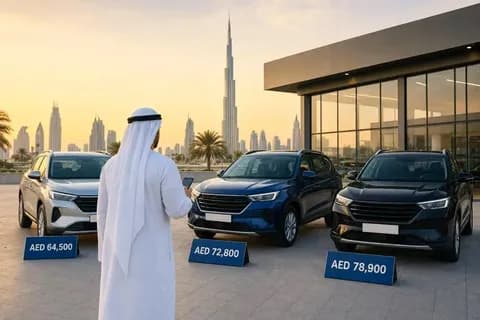
The used car market in the GCC during Q1 2026 showed mixed results. Some brands held their value well, while others saw sharp declines. Here’s a quick overview of the key trends:
-
Winners: Japanese brands like Toyota and Nissan performed strongly. Models such as the Toyota Prado retained up to 85% of their value, while GCC-spec vehicles with verified histories commanded higher prices.
-
Losers: European luxury cars and premium EVs, including Tesla and Porsche Taycan, faced steep depreciation, with some models losing up to 60% of their value in three years.
-
Market Impact: New 2026 models, like the Toyota Land Cruiser, caused price drops of 8–12% for older versions. Geopolitical tensions and changing buyer preferences also played a role.
For buyers, this is a great time to find deals on luxury EVs and sedans. Sellers, however, may face challenges with declining values, especially for high-end brands. The market is expected to grow significantly, doubling in size by 2034, making it essential to time purchases and sales wisely.
1. Brands That Gained Value in Q1 2026
In the first quarter of 2026, some brands managed to not just hold their ground but also increase their market value. Toyota and Nissan emerged as strong performers, with standout models like the Toyota Prado (2019–2021), which retained 85% of its value, priced between AED 93,000 and AED 141,000. Similarly, the Toyota Land Cruiser (2020–2022), with a value retention of 74–90%, was priced from AED 130,000 to AED 245,000. These figures highlight the enduring appeal of these vehicles and set a benchmark for other international brands.
Korean brands also saw steady demand. Models like the Hyundai Tucson and Kia Sportage were particularly appealing to buyers prioritising fuel efficiency and lower running costs, signalling a continued preference for practical mid-size SUVs.
One factor driving these gains is the spec premium. GCC-spec vehicles with verified mileage and complete service histories are commanding 10–20% more than their import-spec counterparts. Buyers are increasingly focused on vehicle history before making a purchase decision.
In the UAE, premium pre-owned vehicles priced above AED 150,000, such as the BMW X5 and Mercedes-Benz GLE, saw a 40% year-on-year growth in demand. This surge is partly due to the limited availability of high-spec GCC models. Meanwhile, in Sharjah and the Northern Emirates, family SUVs like the Nissan Patrol remain a favourite.
The shift towards electrification is also making its mark. Models like the Tesla Model Y and Hyundai Ioniq 5 are gaining traction in the used car market. This trend is supported by the expansion of charging infrastructure and the appeal of lower daily running costs, particularly in urban areas.
2. Brands That Lost Value or Stagnated
Several well-known car brands faced declining demand and falling prices during Q1 2026.
While some Nissan models performed strongly, the broader Nissan lineup struggled. For example, prices for the Altima (2019–2021) now range between AED 15,000 and AED 45,500, reflecting a demand drop of over 40% in Q1 2026. The release of the updated 2026 Nissan Patrol added pressure on older models (2 to 5 years old), leading to an 8–12% price reduction compared to 2025.
Stellantis also faced challenges, with shipments to the GCC region plummeting by roughly 50% year-on-year in Q1 2026. This decline highlights waning consumer confidence and the growing dominance of Chinese automakers, which now hold over 25% of the market share in Saudi Arabia and the UAE. These changes are also impacting high-end and electric models within the segment.
The Tesla Model S experienced a 17.2% drop in demand year-on-year as of March 2025, with used Tesla prices falling by an average of 10.1%. Similarly, the Porsche Taycan and Ford Explorer Hybrid saw declines of 15.1% and 14.1%, respectively. Tesla's ongoing price cuts for new models have further contributed to the depreciation of older vehicles.
In February 2026, geopolitical tensions near the Strait of Hormuz and inverted oil price spreads dealt another blow to consumer confidence in the GCC, resulting in a staggering 40–60% year-on-year drop in auto sales across the six GCC countries.
"Time has become a direct cost, and turning over stock faster is no longer optional." - Ahd Kamal, Automotive Journalist
For buyers, these trends could signal opportunities, as the falling prices of luxury EVs and premium sedans offer a chance to secure vehicles at more attractive rates.
Pros and Cons
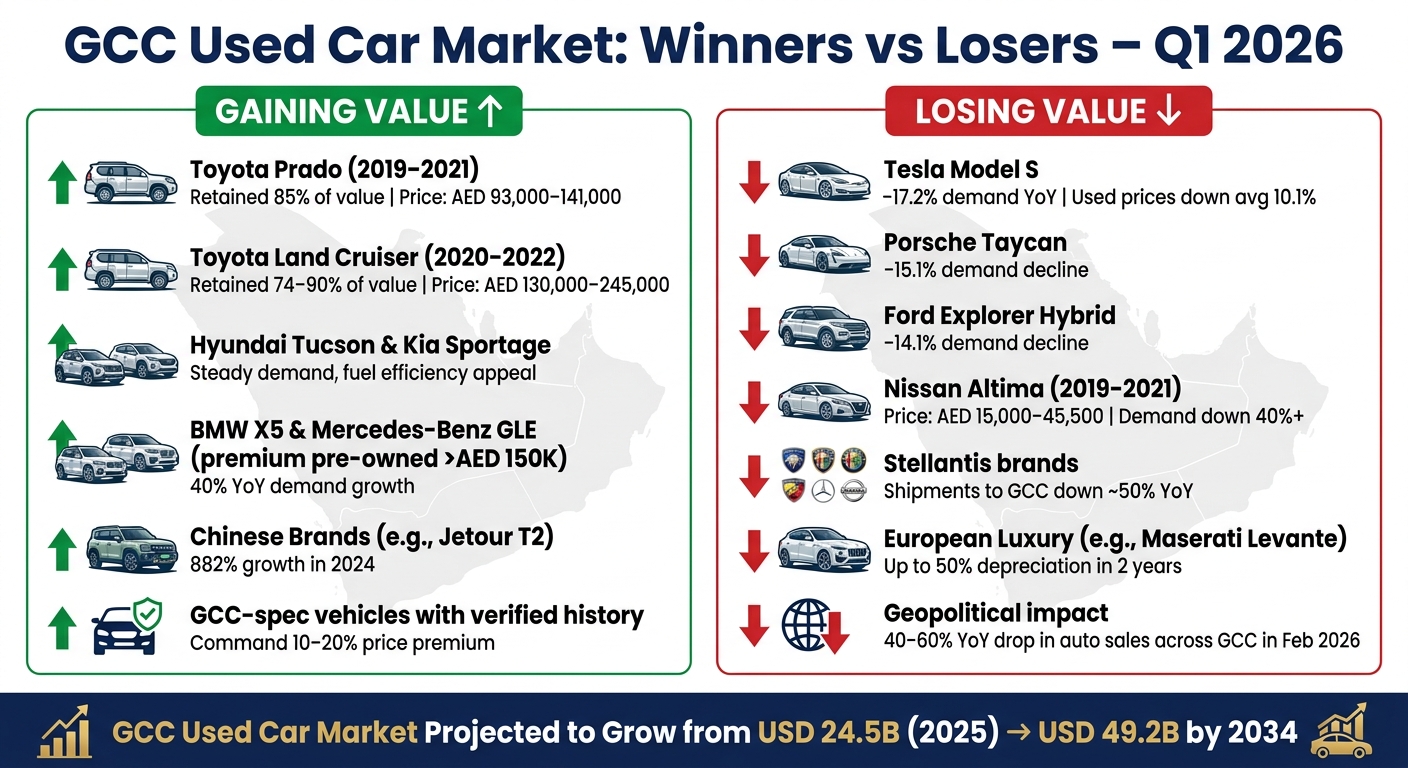
GCC Used Car Market: Winners vs Losers in Q1 2026
The first quarter of 2026 revealed clear shifts in the used car market, creating both opportunities and challenges for buyers and sellers. These trends varied significantly depending on the brand and model.
Brands such as Toyota and Jetour stood out for offering strong resale value, benefiting sellers and reassuring buyers about long-term ownership costs. Toyota, in particular, continues to dominate in resale returns, outperforming many premium models. However, sellers of high-demand brands like Toyota may find themselves with limited room for negotiation due to consistent demand. On the other hand, budget-conscious buyers often turn to grey imports, attracted by their lower upfront costs. Yet, these vehicles typically lack warranty coverage and tend to depreciate faster.
This divide in market performance reflects broader dynamics from Q1 2026, as highlighted by industry experts.
"The future of the used car market will depend on how quickly we adapt by embracing technology, building trust through transparency, and anticipating how today's innovations will shape tomorrow's residual values." - Gerry Mcentee, Automotive Sales Director
At the other end of the spectrum, brands like Tesla, Porsche Taycan, and certain Nissan models experienced notable drops in value. For buyers, this opens up opportunities to secure luxury EVs and premium sedans at reduced prices. Sellers, however, face challenges with ageing inventory and declining demand.
Here’s a summary of the key trends by brand category:
| Brand Category | Price Trend (Q1 2026) | Representative Models | Key Market Condition |
|---|---|---|---|
| Japanese Mainstream | Gaining | Toyota Land Cruiser, Camry HEV | Strong resale demand, flood-driven 4x4 surge |
| Chinese Brands | Gaining | Jetour T2 | 882% growth in 2024; rising market share |
| Premium EVs | Declining | Tesla Model S, Porsche Taycan | - |
| Legacy Sedans | Declining | Nissan Altima (2019–2021) | 40%+ demand drop; newer model pressure |
| European Luxury | Declining | Mercedes GLE, Maserati Levante | High depreciation; ~50% drop in 2 years |
Timing also plays a critical role in negotiation. Buyers are more likely to find better deals at the end of the month or during winter, when demand typically slows, and dealers are eager to close sales.
Conclusion
The Q1 trends reveal a critical insight: not all used cars retain their value equally in the GCC market. Japanese brands, particularly Toyota, continue to dominate as a dependable option for both buyers and sellers, thanks to their consistently strong resale performance.
For buyers, focusing on GCC-spec models from 2019 to 2024 offers a sweet spot. These vehicles are priced 40–50% below their original MSRP yet still come packed with modern features. If maintaining resale value is a key concern, Japanese brands are the go-to choice. On the other hand, newer Chinese models cater to those prioritising additional features over long-term value retention.
Sellers of European luxury cars and premium EVs face a tougher market. Models like the Maserati Levante can depreciate by as much as 50% within just two years, meaning sellers need to adopt competitive pricing or act quickly to avoid further losses.
For dealers, the data points to one straightforward strategy: focus on vehicles that buyers trust. Full-size SUVs priced between AED 200,000–400,000 and mid-size SUVs in the AED 100,000–180,000 range remain popular and sell consistently. However, ageing EVs and European luxury cars may require more aggressive pricing strategies to minimise holding costs.
Looking ahead, the GCC used car market is projected to nearly double in size, growing from USD 24.5 billion in 2025 to USD 49.2 billion by 2034. Navigating depreciation trends and timing transactions effectively will be key for capitalising on this expected growth.
FAQs
How do I confirm a used car is GCC-spec with a clean history?
To ensure a car is GCC-spec with a clean history, start by reviewing its paperwork. This includes checking original sale documents and the service history to confirm the vehicle was sold locally and registered within the GCC. Next, look for a GCC sticker or badge, which is often found on the windscreen or door frame. Additionally, inspect the car for regional features, such as enhanced cooling systems, designed to handle the region's climate. Finally, run a trusted vehicle history report to verify there haven’t been any major accidents or significant issues.
Is it better to buy a used luxury EV now or wait for further price drops?
It could be worth holding off for now, as depreciation patterns and market trends in the UAE indicate that prices for used luxury EVs might drop further by 2026. Monitoring market conditions closely will help you make a well-informed choice.
When’s the best time in the UAE to negotiate a used car deal?
The best time to negotiate a used car deal in the UAE is when market demand tends to dip. This usually occurs during times of economic uncertainty or when geopolitical issues cause consumers to be more cautious with their spending. By staying informed about market trends, you can spot the right moment to secure a better deal.