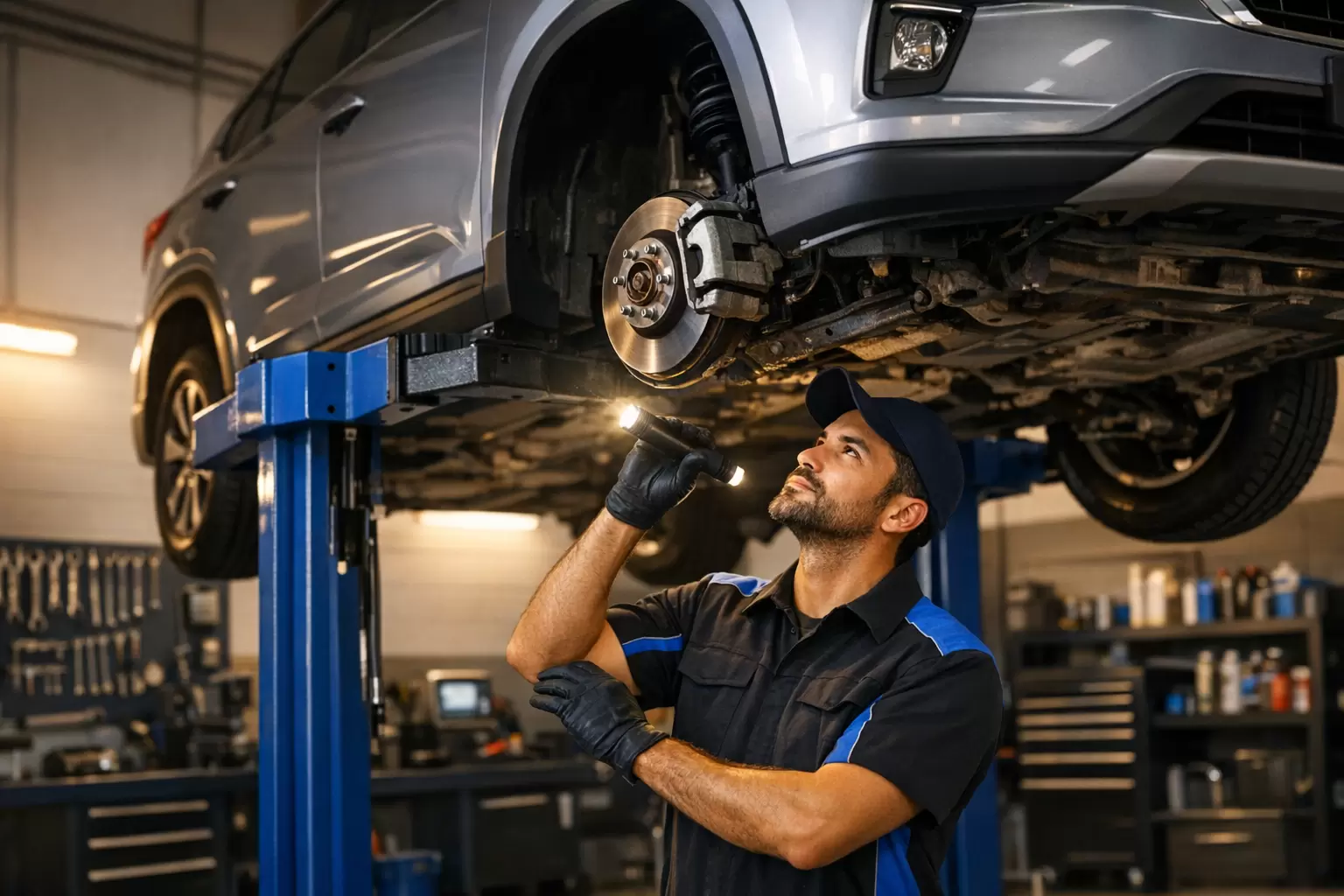
Buying a used car in the UAE? Skipping a proper inspection can lead to costly surprises. The UAE's extreme heat, sandstorms, and flash floods can cause hidden damage to vehicles. Here's a quick guide to ensure your purchase is safe and worth the money:
-
Exterior Check: Look for paint mismatches, rust under mats, and cracks in glass or lights.
-
Engine and Fluids: Check for leaks, odd noises, and fluid quality (oil, coolant, etc.).
-
Interior: Inspect seats, pedals, and dashboard electronics. Ensure the air conditioning works.
-
Tires and Brakes: Tires should be less than 4 years old. Test brakes for smooth stopping.
-
Vehicle History: Verify VIN, service records, and accident history through UAE platforms like RTA or MOI.
Save yourself trouble by investing 10 minutes in a thorough inspection or using professional services like YallaMotor's 175-point inspection for added peace of mind.
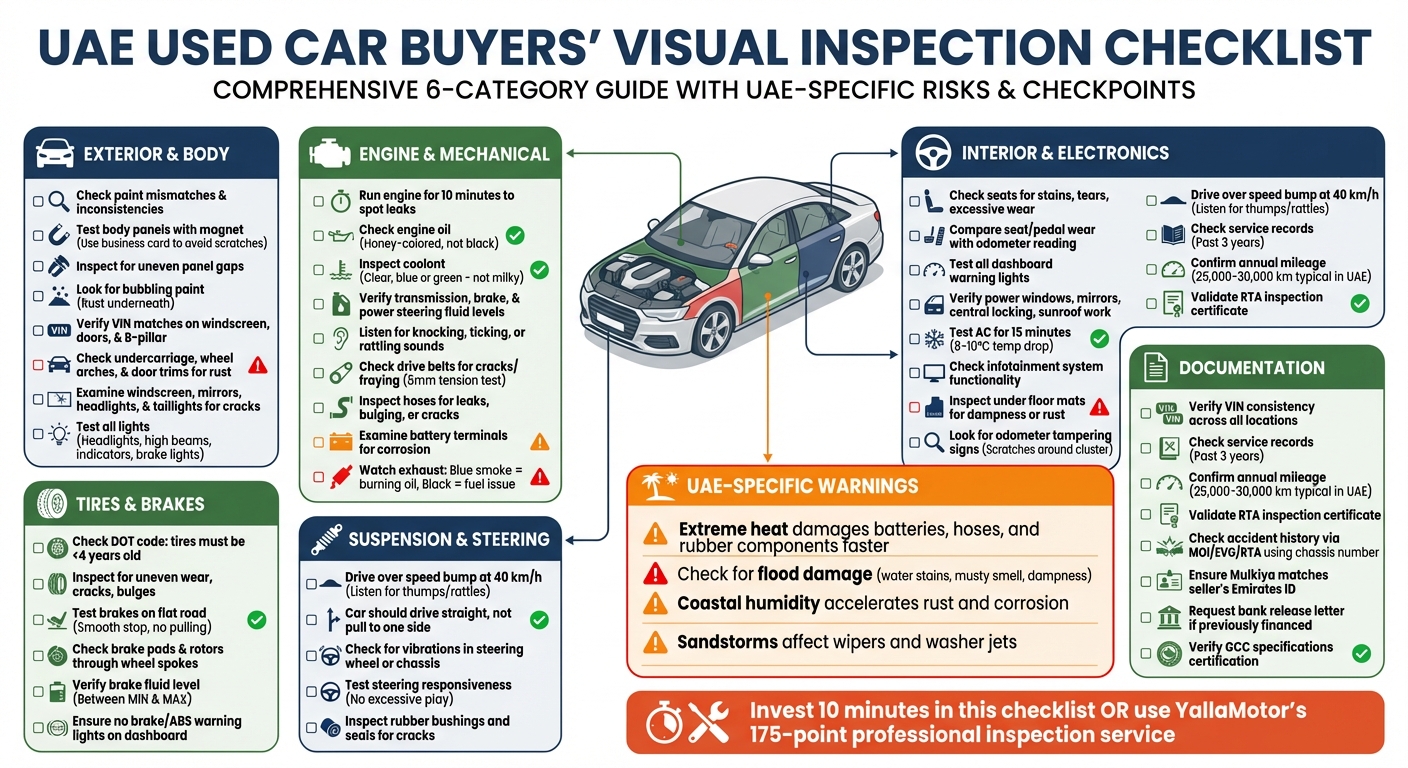
Complete Used Car Inspection Checklist for UAE Buyers
How to Check Used Car Before Buying - DIY Inspection -How to Inspect Used Car | Full Car Inspection
Exterior and Body Condition
The exterior of a car can reveal a lot about its history - how well it’s been cared for and whether it’s been in any accidents. Always inspect the vehicle during daylight for a clear view of its condition. Look closely at each panel for paint inconsistencies, such as mismatched colours or uneven textures, as these often hint at prior repairs or repainting. Pay attention to the gaps between body panels like doors, the bonnet, and fenders. Uneven gaps might signal past collision repairs or structural problems.
Paint and Body Panels
A simple magnet test can help uncover hidden issues. Use a magnet with a business card to avoid scratches - if it doesn’t stick firmly, it could mean heavy body filler was used, likely due to collision damage. Another useful tool is a paint thickness gauge, which can detect repainting variations. Be on the lookout for bubbling paint, a common sign of rust forming beneath the surface.
Additionally, confirm that the Vehicle Identification Number (VIN) matches across all locations, including the windscreen, car doors, and B-pillar. Any mismatched numbers should raise serious concerns. Finally, inspect areas prone to rust and corrosion for further clues about the car’s condition.
Rust and Corrosion
Given the UAE’s humid coastal climate and occasional flash floods, checking for rust is especially important. Focus on areas where moisture tends to collect, like the undercarriage, wheel arches, wheel wells, and door trims. Vehicles exposed to salt air are particularly vulnerable to corrosion. Within the engine bay, look for signs of hard-water damage, debris, or rust patches on components. If the radiator or water bottle contains cloudy liquid, it could indicate internal corrosion in the cooling system.
Don’t forget to check under the floor mats for dampness or standing water, as these can lead to floorboard rust. Once you’ve gone over the metal components, shift your focus to the glass and lighting to ensure everything is in good working order.
Glass and Lights
Examine the windscreen, mirrors, headlights, and taillights for any cracks or chips. Damaged glass not only reduces visibility but can also result in failing the RTA inspection. Test all lighting functions - headlights, high beams, indicators, hazard lights, brake lights, and reverse lights - by observing their performance from outside the car. Faulty lights can compromise safety by hindering proper signalling.
Lastly, check the windshield wipers and washers. In the UAE’s dusty conditions, dried-out wiper blades or clogged washer jets are common issues that can affect visibility during sudden rain or sandstorms.
Engine and Mechanical Components
The engine is the core of any vehicle, and catching issues early can save you from costly repairs later. Before diving into inspections, let the engine run for around 10 minutes. This warms it up, circulates fluids, and builds pressure, making it easier to spot fresh leaks as stains or drips on the ground. Check underneath the engine bay for any wet patches - these are immediate warning signs. Alongside visual checks, pay attention to fluid levels and any unusual sounds to identify potential problems.
Leaks and Fluid Levels
Start by checking the engine oil using the dipstick. Ideally, the oil should be honey-coloured; thick, black oil suggests neglect and infrequent maintenance. Move on to the coolant, which should be clear and either blue or green. If it looks milky or cloudy, this could mean trouble with the radiator or cooling system. Don’t skip examining the underside of the oil filler cap - dark brown residue is normal, but any odd colours or textures might indicate internal contamination.
While you're at it, check the levels of transmission, brake, and power steering fluids. Inspect hoses and belts for any dampness or residue that might signal slow leaks from pressurised components. Keep an eye on the exhaust too: blue smoke means the engine is burning oil, while black smoke points to a fuel system issue, like running too "rich". In the UAE's intense heat, seals and hoses degrade faster, making these checks even more crucial.
Engine Noises
Turn on the engine and listen carefully for knocking, ticking, or rattling sounds. These noises often indicate internal engine wear or failing components. During a test drive, unusual sounds like squeaks or clunks could point to mechanical issues or loose parts. If you notice a "clunk" or a violent shudder when shifting gears, the automatic gearbox might be in bad shape.
Struggling to start the engine or experiencing hesitation usually signals a failing battery or starter motor. A thorough 10-minute inspection can help you avoid most common pitfalls when buying a used car.
Belts, Hoses, and Battery
After checking fluids and noises, shift your focus to the ancillary components. Look at all drive belts and alternator belts for signs of wear, such as cracks or fraying. Test the alternator belt's tension - it should give about 5mm when pressed. Too much or too little slack means it might need adjustment or replacement. While the engine runs, listen for squeaks or rattles, which often hint at a worn belt or a failing belt-driven component.
Inspect engine hoses for any leaks, bulging, or cracks. On a cold engine, check the radiator or coolant reservoir for cloudy liquid or debris near hose connections, as these could indicate cooling system issues. Finally, examine the battery terminals for corrosion or a white powdery build-up, which can interfere with the charging system. The UAE’s high temperatures accelerate battery wear and rubber degradation, making these checks particularly important for buyers in the region.
|
Component |
What to Look For |
UAE-Specific Risk |
|---|---|---|
|
Belts |
Cracks, fraying, 5mm tension |
Extreme heat makes rubber brittle and prone to snapping |
|
Hoses |
Leaks, cracks, bulging, clear coolant |
High heat and pressure speed up hose wear |
|
Battery |
Smooth starting, clean terminals |
Heat shortens battery life and affects charging |
Interior and Electrical System
The state of a car's interior often tells you everything you need to know about how it was treated by its previous owner. In the UAE's challenging climate, the interior can deteriorate more quickly, making it especially important to give this area a thorough check.
Seats and Upholstery
Start with the seats. Look for stains, tears, or excessive wear on the upholstery. Water stains can hint at past flooding, while a musty smell might point to hidden water damage or mould. These are signs you don’t want to ignore.
Compare the condition of the seats and pedals with the car’s odometer reading. For example, if a car shows 50,000 km but the driver’s seat is heavily worn or the pedals are smooth, this could indicate odometer tampering. Sit in every seat to test the cushions and frames - sagging cushions or broken springs are immediate warning signs. Don’t forget to check under the seats for debris or rust. Also, test any manual or electronic seat adjustments to ensure they're working as they should.
Once you're satisfied with the upholstery, turn your attention to the dashboard and its electronic systems.
Dashboard Electronics and Controls
Before starting the car, ensure all the dashboard lights briefly illuminate as you turn the key. Then, once the engine is running, confirm that no warning lights - like Check Engine, Airbag, or ABS - stay on.
Test every feature: power windows, electric mirrors, central locking, sunroof, and windshield wipers. Everything should operate smoothly without delay. The air conditioning is particularly critical in the UAE. Let it run for at least 15 minutes to ensure it cools effectively. A properly functioning AC should deliver an 8–10°C temperature drop at the vents.
Check the infotainment system for responsiveness, navigation accuracy, and sound quality. Don’t overlook smaller details like interior lights, including map lights and vanity mirror lights. Finally, inspect the area behind the fuse box or firewall insulation for any signs of discolouration or dampness, as these may indicate flood damage - a real concern in regions prone to flash floods like the UAE.
Once the electronics are in good shape, turn your focus to the odometer reading.
Odometer Reading
Odometer fraud is a trick used to disguise a car's actual wear and tear. In the UAE, most cars average 25,000–30,000 km per year. Multiply the car’s age by this range to get a rough idea of what the mileage should be. For instance, a five-year-old car should typically show 125,000–150,000 km. If the reading is significantly lower, it’s worth investigating further.
Signs of tampering include heavy pedal wear on a low-mileage car or brand-new pedal pads that seem out of place. Scratches or loose screws around the instrument cluster are also red flags. Double-check the service records to ensure the mileage is consistent. You can also use the car’s VIN to pull up a history report through UAE platforms like the Ministry of Interior (MOI) or RTA. These records often include mileage from annual inspections.
|
Inspection Item |
Red Flag for Tampering |
|---|---|
|
Pedals |
Heavy wear or new pads on a low-mileage car |
|
Service History |
Gaps in records or decreasing mileage |
|
Dashboard |
Scratches or loose screws around the cluster |
|
Tyres |
Tyres older than 4 years on a low-mileage car |
Tires, Brakes, and Suspension
Your safety on UAE roads depends heavily on these three critical components. Even if a car looks flawless on the outside, worn tyres, faulty brakes, or a compromised suspension can turn every drive into a hazard. Here's how to inspect them thoroughly.
Tire Tread and Condition
Start by checking the DOT code on the tyre's sidewall. The last four digits reveal the manufacturing date - the first two digits indicate the week, and the last two show the year. Given the UAE's intense heat, tyres older than 4 years should be replaced, as even those with good tread may have rubber that's become brittle with time.
Next, examine the tread depth and watch for uneven wear patterns. If one side of the tyre is more worn than the other, this often points to alignment or suspension issues. Inspect the tyres for cracks, bulges, or any visible sidewall damage. Additionally, ensure the tyres are from reliable brands, as quality is essential in the desert environment. Keep in mind, the RTA inspects tyres during vehicle checks, and failing due to worn-out or expired tyres will prevent registration.
|
Inspection Item |
UAE Standard / Requirement |
Verification Method |
|---|---|---|
|
Tyre Age |
Not older than 4 years |
Check the last four digits of the DOT code |
|
Tyre Condition |
No cracks, bulges, or uneven wear |
Visual inspection of sidewalls and tread |
|
RTA Compliance |
Mandatory for cars older than 3 years |
Periodic Technical Inspection at approved centres |
Once you've reviewed the tyres, move on to the brakes to ensure safe stopping power.
Brakes and Brake Pads
During a test drive, gently apply the brakes on a flat road. The car should stop smoothly without pulling to one side. If it veers left or right, this could indicate uneven brake wear or alignment issues. Pay attention to the brake pedal - it should feel firm and responsive, not soft or requiring excessive effort.
As noted by CarBuyers.ae:
"The brakes are critical when conducting a vehicle inspection. Properly working brakes are among the essential requirements for a car assessment."
Inspect the brake pads and rotors through the wheel spokes. Look for thinning pads or any scoring on the rotors. Check underneath the car for brake fluid leaks. Under the bonnet, confirm that the brake fluid level is between the MIN and MAX marks on the reservoir. Also, ensure that no brake or ABS warning lights are illuminated on the dashboard before heading for an RTA inspection.
After checking the brakes, turn your attention to the suspension and steering for a smooth and stable ride.
Suspension and Steering
To evaluate the suspension, drive over a speed bump at around 40 km/h. Listen for any dull thumps or rattling sounds, as these could indicate worn suspension components. During the test drive, ensure the car drives straight and doesn’t pull to one side when braking - this could signal alignment or steering issues.
Watch for any unusual vibrations in the steering wheel or the chassis. The steering should feel smooth and responsive, with no excessive looseness or "play" in the wheel. In the UAE's hot climate, rubber components like chassis bushings and door seals tend to degrade faster, so inspect these for cracks or brittleness. If you spot any issues, consider booking a professional pre-purchase inspection at RTA-approved centres like Tasjeel, Shamil, or Wasel in Dubai.
Vehicle History and Documentation
When buying a used car, checking its history and documentation is just as important as a physical inspection. Even a car that looks perfect can become a legal headache if its paperwork is incomplete or suspicious.
Service and Maintenance Records
Start by requesting maintenance records from the past three years, ideally from authorised service centres. Any gaps in these records could indicate potential problems. Look closely at repair receipts to ensure they reflect the use of genuine parts and regular service intervals. Also, confirm that the Vehicle Identification Number (VIN) on the Mulkiya matches the VIN markings on the windshield, car doors, and B-pillar. If there’s any mismatch, consider it a major warning sign.
Another essential step is to check the odometer reading against the car's age. In the UAE, cars typically rack up between 25,000 and 30,000 km annually. If the mileage seems unusually low but the car shows excessive wear - like worn-out pedals - it might suggest odometer tampering. Always cross-check these details with the official registration documents.
|
Inspection Item |
Standard/Requirement |
Verification Method |
|---|---|---|
|
VIN Consistency |
Must match across all locations |
Compare numbers on the windshield, B-pillar, and Mulkiya |
|
Service Continuity |
Maintenance records should cover 3 years |
Review service receipts and documentation |
|
Annual Inspection |
Must be valid |
Look for the official RTA stamp |
|
Accident History |
Should report any past incidents |
Check using the chassis number on official portals |
Registration and Ownership Documents
The next step is to verify the car’s registration and ownership documents. The vehicle registration card (Mulkiya) is your key proof of ownership and includes important details about the car. Make sure the name on the Mulkiya matches the seller’s Emirates ID, and confirm that the car has a valid RTA inspection certificate.
If the car was previously leased or financed, ask for a formal release letter from the bank or financing company to ensure there are no outstanding debts tied to the vehicle. For parallel import cars, check for a GCC specifications certification to confirm the vehicle meets local standards.
You can also use the chassis number to check the car’s accident history through official platforms like the Ministry of Interior (MOI), Emirates Vehicle Gate (EVG), or the RTA for Dubai-registered vehicles. If the seller is unwilling to provide this information, it’s a serious red flag.
YallaMotor's Vehicle Report Service
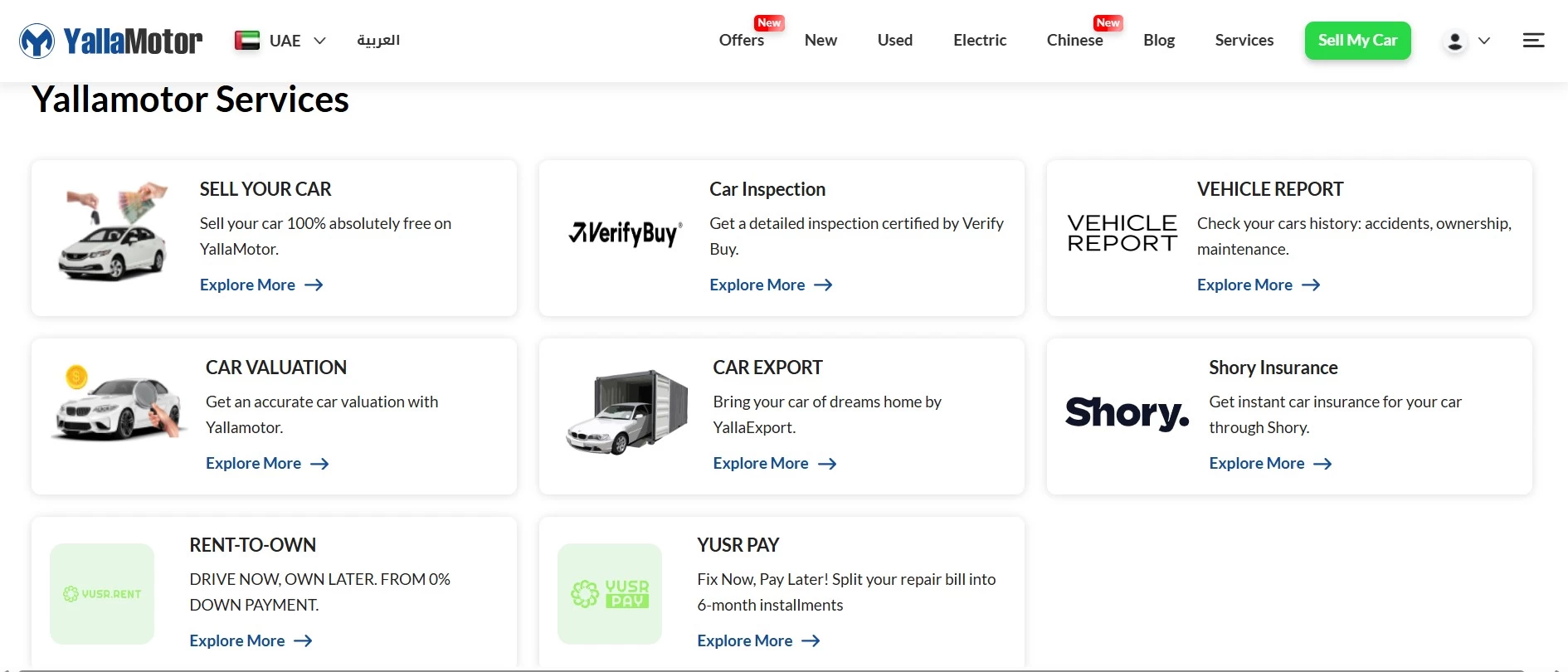
For added peace of mind, consider using YallaMotor's Vehicle Report Service. This tool provides detailed insights into a car’s history, including accident records, odometer readings, and ownership checks. It’s a reliable way to uncover critical details before making your purchase.
Professional Inspection Services with YallaMotor
Why Choose YallaMotor's Inspection Service
While a basic checklist can help spot visible issues, only a professional inspection can uncover the hidden risks that might lead to costly repairs. YallaMotor, in partnership with VerifyBuy, offers a thorough 175-point inspection that examines everything from engine performance to structural integrity. Their expert team provides instant digital reports, and cars marked as "Inspected" on the platform have undergone this detailed evaluation .
Many "Certified" listings go a step further, offering perks like a complete service history, warranty coverage, and even a 7-day return policy. These benefits are all backed by the same 175-point inspection report, giving you added confidence in your purchase. Want to ensure your next car is in top condition? Keep reading to find out how to book your inspection.
How to Book an Inspection with YallaMotor
Booking an inspection is simple. Just click the "Yallamotor Services" or "Car Inspection" link on the car's listing. Enjoy an exclusive discount of 20%–40% off the standard price . Once you’ve scheduled your inspection, you’ll receive an instant report to help with price negotiations or pinpoint necessary repairs. For even greater confidence, pair this inspection with YallaMotor's Vehicle Report Service to compare the car’s history with its current mechanical condition.
Conclusion
Key Takeaways for UAE Buyers
When you're inspecting a used car in the UAE, there are a few must-check items to keep in mind:
-
VIN Verification: Always ensure the Vehicle Identification Numbers (VINs) match across the car to avoid the risk of fraud.
-
Climate-Specific Components: Pay special attention to cooling systems, rubber parts, and batteries, as UAE's harsh climate can take a toll on these.
-
Documentation: Use trusted platforms like MOI, EVG, RTA, or TAMM to verify the car's accident history and service records.
-
GCC Specifications: Make sure the vehicle is built to meet GCC standards, which are tailored for local road and weather conditions.
-
Test Drive: During the test drive, listen for any suspension noises when going over speed bumps at 40 km/h and ensure the car doesn’t veer to one side when braking.
-
Mileage Check: Verify that the mileage aligns with typical annual usage in the UAE, which is around 25,000–30,000 km.
-
Water Damage: Look for signs of water damage, especially after recent flash floods.
-
Negotiation: Use any repair estimates to negotiate a better deal.
Don’t forget to ask for the chassis number. If the seller hesitates or refuses to provide it, walk away - it’s a red flag. Spending just 10 minutes on these checks can save you from most common issues. These steps ensure you're making a smart, informed choice, but there’s more to the process - this is where YallaMotor steps in to make things even easier.
Final Thoughts on Using YallaMotor
YallaMotor transforms the car-buying experience in the UAE, offering access to over 10,000 verified listings and attracting more than 500,000 monthly buyers. Its extensive features, like 175-point inspection reports and certified pre-owned programmes, add a layer of trust with perks such as warranties, 7-day return policies, and buy-back guarantees.
With AI-powered valuation tools and detailed vehicle reports, YallaMotor helps you understand the true condition and fair market price of any car you're considering. Whether you’re comparing prices, reviewing vehicle history, or scheduling a professional inspection, YallaMotor’s all-in-one platform ensures you make a well-informed decision in the UAE's used car market.
FAQs
How can you spot signs of water damage in a used car in the UAE?
Water damage in a used car isn’t always obvious, but there are a few key signs to watch for. Start by inspecting for rust or corrosion on the body, undercarriage, or metal parts. Inside the car, check for water stains, damp patches, or any discolouration on the seats, carpets, or roof lining. Another red flag is a musty or mildew-like odour lingering in the cabin. These details are especially important to scrutinise in the UAE, where heavy rains and occasional flooding can take a toll on vehicles.
How can I check if a used car has been in an accident in the UAE?
To check a used car's accident history in the UAE, you can use its chassis number with the UAE Ministry of Interior’s Accident Inquiry service or access the Emirates Vehicle Gate portal. For an extra layer of assurance, consider getting a professional inspection report through YallaMotor’s vehicle inspection service, which offers a thorough evaluation of the vehicle.
Why is checking the VIN important when buying a used car in the UAE?
Checking the Vehicle Identification Number (VIN) is an essential step when buying a car. It ensures the car's identity aligns with its registration documents, giving you insight into its history. This process can reveal signs of tampering, confirm legal ownership, and protect you from fraud. Ultimately, it helps you make sure the car is both safe and legitimate to purchase.
Looking for a used car in Dubai or new car deals? Explore YallaMotor’s verified listings today.