
Common Used Car Problems: Signs and Solutions
Tags:
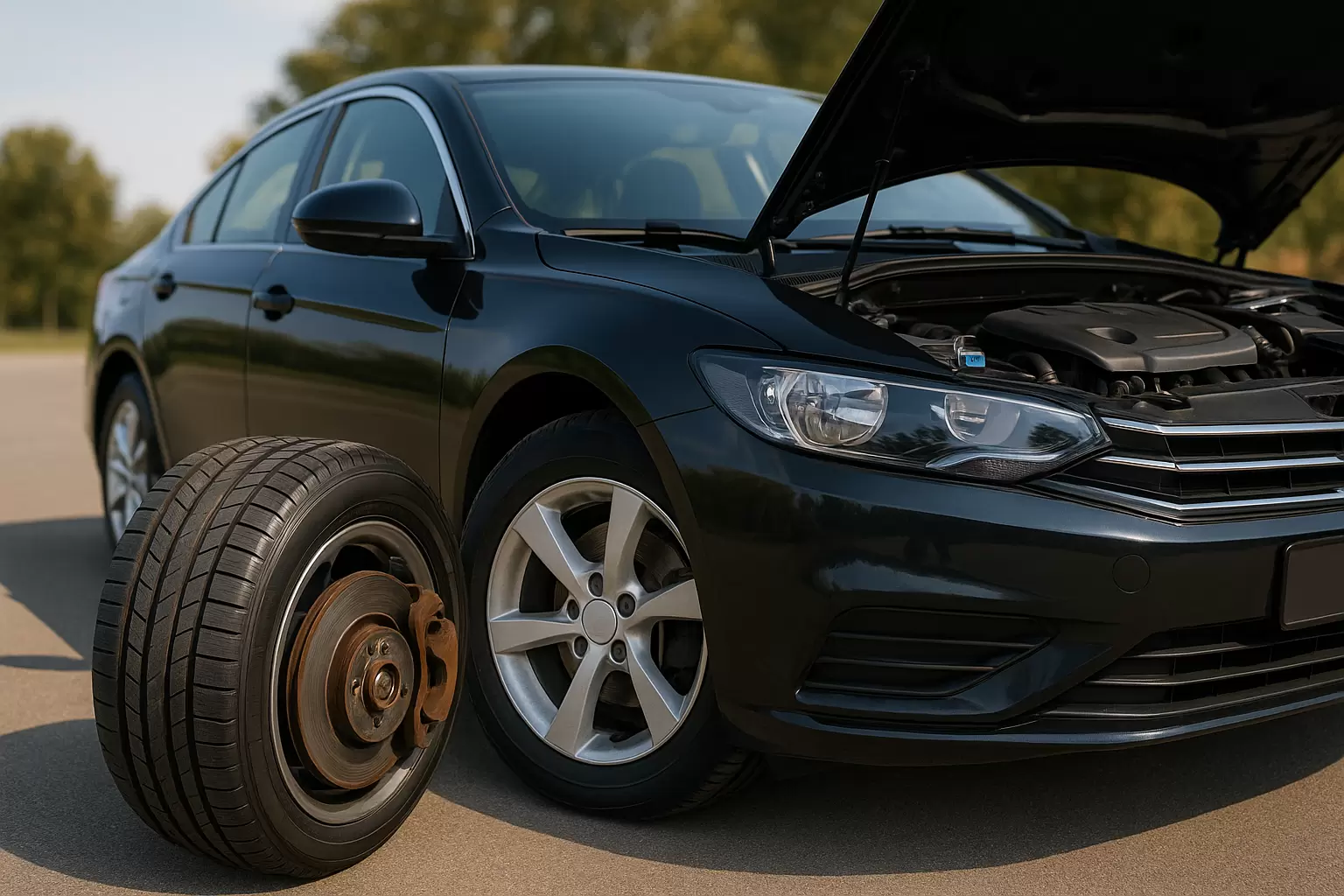
Buying a used car in the UAE can be tricky due to the harsh climate and driving conditions. Intense heat, sand, and stop-and-go traffic can lead to issues like engine overheating, transmission wear, and battery failures. Spotting warning signs early - like dashboard alerts, strange noises, or fluid leaks - can save you from costly repairs. Regular maintenance, such as changing oil, checking coolant, and replacing air filters, is crucial to keeping your car running smoothly. Here's what to watch for:
-
Engine Issues: Overheating, misfiring, or oil leaks. Regular oil changes and coolant checks help.
-
Transmission Problems: Slipping gears or overheating in dunes. Use proper fluids and shorter service intervals.
-
Battery Failures: Shorter lifespan due to heat. Test batteries regularly and replace every 2–3 years.
-
Tyre and Brake Wear: Heat and sand cause faster wear. Check tyre pressure, rotate tyres, and replace brake pads as needed.
-
Electrical Issues: Dust and heat damage wiring. Clean sensors and test systems regularly.
Pro Tip: Always get a professional inspection before buying a used car. Services like YallaMotor can help identify hidden issues and ensure fair pricing.
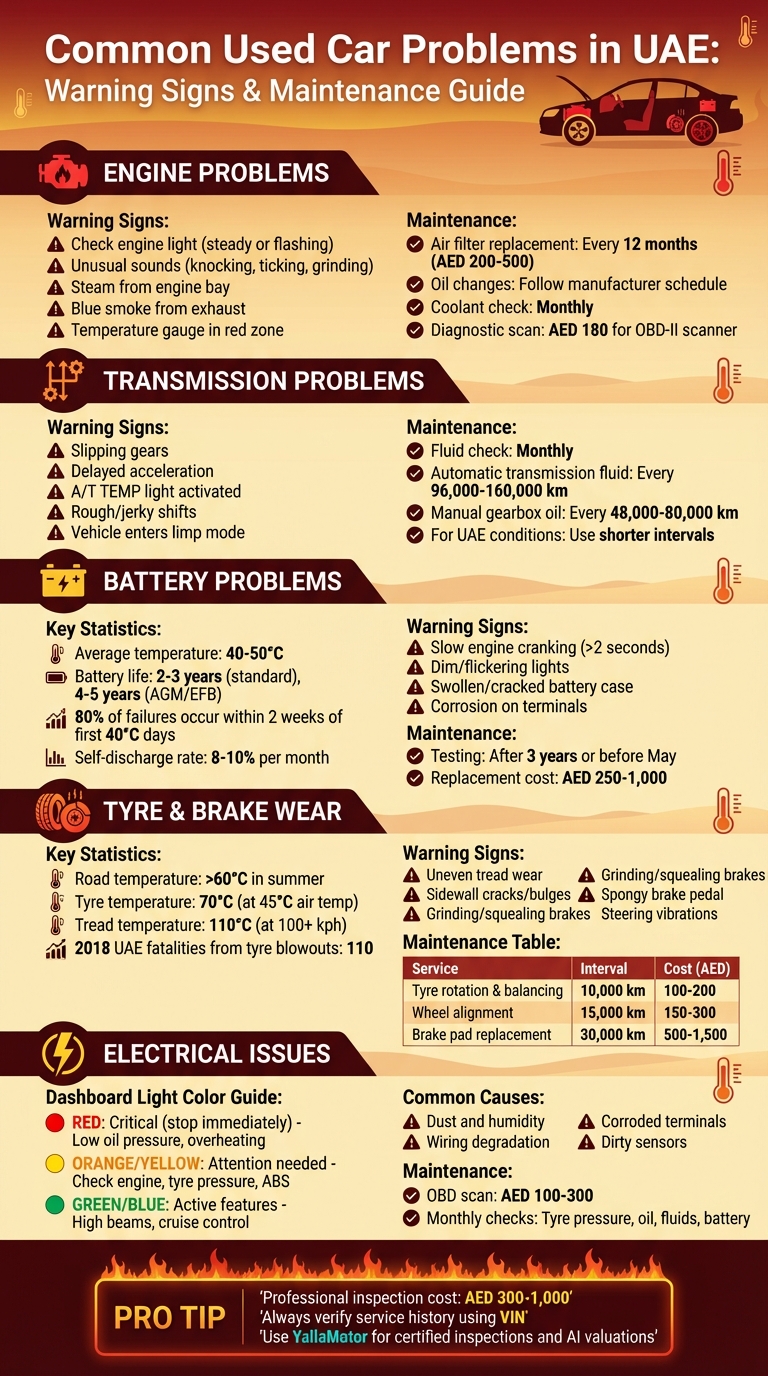
Common Used Car Problems in UAE: Warning Signs and Maintenance Intervals
Engine Problems
Driving in the UAE brings its own set of challenges for engine performance. Common issues in used cars include overheating, misfiring, oil leaks, strange noises, and a noticeable drop in performance. The intense heat combined with constant exposure to dust speeds up wear and tear on engine components. Coolant systems are pushed to their limits, air filters clog faster, and engine oil breaks down more quickly under these extreme conditions.
Warning Signs
Engines under stress often give clear signals that something is wrong. One of the most obvious is the check engine light on your dashboard. A steady light points to a minor issue, but a flashing light is a red flag that requires immediate action. As Kelley Blue Book explains:
A check engine light signals issues from minor to severe. A flashing light means stop driving immediately.
Other key warning signs include unusual sounds like knocking, ticking, or grinding, which could indicate problems with critical engine parts. If you see steam rising from the engine bay, notice the temperature gauge moving into the red zone, or spot blue smoke coming from the exhaust (a sign of burning oil), it’s time to pull over immediately. Additional clues such as frequent oil top-ups, sluggish acceleration, or puddles of fluid under the car could signal developing engine trouble.
How to Fix and Prevent
The sooner you address these warning signs, the better your chances of avoiding costly repairs. Start with a diagnostic test to identify the problem - many auto parts shops offer free scans, or you can buy an OBD-II scanner for less than AED 180. Replace your air filter at least once a year, or more frequently in sandy areas. This typically costs between AED 200 and AED 500. Also, stick to your vehicle's recommended oil change schedule to counteract faster oil degradation. As Munich Motor Works puts it:
Oil is your engine's lifeblood, keeping components lubricated and cooled.
Make a habit of checking coolant levels and inspecting radiator hoses for signs of wear. A properly functioning cooling system should hold pressure for 15 minutes at 90°C. If you're stuck in Dubai's stop-and-go traffic, gently revving the engine while stationary can help improve coolant flow by boosting the fan’s effectiveness. Taking these steps can help your engine handle the UAE's demanding conditions with less strain.
Transmission Problems
The UAE's climate poses tough challenges for vehicle transmissions. The combination of extreme heat and demanding driving conditions - whether it's navigating urban stop-and-go traffic or tackling sand dunes - can lead to quicker transmission fluid breakdown and increased wear. Driving through dunes, in particular, puts extra thermal stress on the system, often causing overheating and potential long-term damage. Additionally, Dubai's high temperatures can interfere with sensors, leading to incorrect readings and further overheating inside the gearbox.
Warning Signs
Transmission problems often come with early warning signs. Be alert to slipping gears, where the vehicle unexpectedly shifts or struggles to stay in gear. Delayed acceleration can point to issues with the fluid or valve body. One critical indicator is the A/T TEMP light on your dashboard. As an experienced off-roader explains:
It's relatively easy to overheat your ATF if you're 'playing' in the dunes, so keep an eye on the A/T TEMP light on your dash. If it comes on, leave the engine running and put it in Park or Neutral (with the brake on) and let the ATF cool off before continuing. If you like to play in the dunes, consider synthetic ATF such as Amsoil ATL or Redline D6 and an auxiliary ATF cooler. - DEWFPO, FJ Cruiser Forum User
Other signs to watch for include strange noises or vibrations coming from the transmission, rough or jerky gear shifts, and the vehicle entering limp mode. Limp mode is a safety feature that limits performance when overheating or other malfunctions are detected. Address these symptoms quickly to avoid more severe damage.
How to Fix
Prompt action is essential when dealing with transmission issues. Regular maintenance can help avoid bigger problems. Check your transmission fluid levels monthly, and replace the fluid every 40,000–60,000 km. For manual gearboxes, change the oil every 48,000–80,000 km, and for automatic transmissions, replace the fluid every 96,000–160,000 km. Given the UAE’s harsh conditions, shorter maintenance intervals are often a safer choice.
If you frequently drive on sandy terrain, use techniques that protect your transmission. For instance, when driving in dunes, engage 4-Low to reduce strain and prevent overheating of the transmission oil. Upgrades like synthetic ATF (e.g., Amsoil ATL or Redline D6) and an auxiliary ATF cooler can also help if dune bashing is a regular activity.
When buying a used car, especially one intended for off-road use, take precautions to ensure the transmission is in good condition. YallaMotor's vehicle inspection service can help verify smooth shifting and assess its ability to handle tough conditions. Always review the service history to confirm consistent maintenance. Neglecting repairs in Dubai's heat can lead to faster fluid breakdown, warped bearings, and burned clutch packs.
Battery Problems
After tackling transmission issues, it's essential to address how UAE conditions impact battery performance.
In the UAE, where temperatures can soar to 40–50°C, batteries face extreme stress. These high temperatures speed up electrolyte evaporation and plate corrosion, significantly shortening battery life. Studies reveal that an average yearly temperature of 45°C in the Gulf region leads to a threefold increase in electrolyte evaporation and a 50% rise in plate corrosion rates. Additionally, the self-discharge rate of batteries can spike to 8–10% per month under such conditions.
This means batteries that might last four years in cooler climates often only manage 2–3 years in the UAE for standard lead-acid types. On the other hand, AGM/EFB batteries tend to perform better, lasting around 4–5 years. Notably, 80% of battery failures occur within two weeks of the first 40°C days in summer. Recognising early warning signs can save you from an inconvenient roadside breakdown.
Warning Signs
A failing battery rarely quits without dropping hints. One of the most common signs is slow engine cranking - if your engine takes longer than two seconds to start or struggles to turn over, especially in the morning, it could indicate a weakening battery. Dim headlights when idling or flickering interior lights are also symptoms of a battery that’s struggling to power the car’s electrical systems.
Physical clues are just as revealing. Check the battery case for cracks, bulges, or swelling - these are signs of heat damage. Corrosion or acid leakage around the terminals is another red flag. Pay attention to dashboard warning lights, particularly the battery icon or check engine light, as they can point to charging system or battery issues. If you find yourself needing frequent jump starts, it’s time to act.
How to Fix
To keep your battery running smoothly in the UAE’s harsh climate, proactive maintenance is key. Regularly test your battery, especially after three years of use or before the summer heat peaks in May. Many car care centres offer free battery testing, making it a simple and effective precaution. Cleaning the battery terminals periodically can also prevent corrosion that disrupts electrical flow.
For standard batteries, replacement every 2–3 years is advisable, while AGM/EFB batteries typically last 4–5 years. Replacement costs range from AED 250 to AED 1,000, depending on your vehicle and the type of battery you choose. If your battery warning light comes on or your car fails to start, visit a trusted service centre immediately for a professional check-up. YallaMotor’s partner network can connect you with reliable mechanics and roadside assistance services for emergencies. Finally, parking in shaded areas or underground car parks can reduce heat exposure and help extend battery life. These simple steps can make a big difference in ensuring your battery performs reliably, even in the UAE’s intense heat.
Tyre and Brake Wear
After ensuring proper battery care, it's time to turn attention to tyre and brake wear - two components that take a beating under the UAE's harsh conditions. The region's intense heat and sandy environment are tough on these parts. In Dubai, road temperatures can soar past 60°C during summer months. When the air temperature hits 45°C, tyres can reach about 70°C, and during high-speed drives exceeding 100 kph, tread temperatures may climb to a scorching 110°C within just an hour.
Such extreme heat makes tyre rubber softer, which reduces grip and increases stopping distances [42,44]. Heat also causes the air inside tyres to expand, raising pressure by approximately 0.1 bar (1.4 PSI) for every 10°C increase in ambient temperature. Over-inflated tyres can lead to reduced grip, uneven wear, and poor handling. On top of that, sandy roads allow tiny particles to lodge in tyre grooves and between brake pads and discs, creating extra friction and accelerating wear. These combined factors mean tyres and brakes wear out faster in the UAE than in cooler, cleaner climates.
Warning Signs
Spotting early signs of tyre and brake problems can save you from dangerous situations. For tyres, keep an eye out for uneven tread wear, which may indicate alignment issues or incorrect inflation. Regularly check tread depth, as worn treads reduce grip. Inspect the sidewalls for cracks, bulges, or cuts - these could signal heat damage or structural issues. If your steering wheel pulls to one side or vibrates, it could mean your tyres are unbalanced or misaligned.
When it comes to brakes, listen for grinding or squealing noises, as these are signs that brake pads need replacing. A spongy brake pedal or one that requires extra force could indicate low brake fluid levels. Vibrations or a pulsing sensation through the brake pedal might point to warped rotors. It's worth noting that in 2018, tyre blowouts were linked to 110 fatalities in the UAE, highlighting the importance of staying vigilant with these checks.
How to Fix
Routine maintenance is essential to avoid tyre and brake issues. Check tyre pressure every month - more often during the summer. While most vehicles recommend pressures between 32–35 PSI, always follow your car's manual for accuracy. Clean your tyres weekly with water and mild soap to get rid of sand and dust, especially after driving in desert areas.
Rotate your tyres every 10,000 km to ensure even wear, and align your wheels every 15,000 km to maintain proper tread life. Even minor misalignment can shorten tyre life significantly, costing you up to 10,000 km of mileage for every millimetre of tread lost. For brakes, inspect the pads, rotors, and fluid levels every 5,000 km, and replace brake pads and discs around 30,000 km - or sooner if you notice warning signs.
|
Maintenance Item |
Recommended Interval |
Cost Range (AED) |
|---|---|---|
|
Tyre Rotation & Balancing |
Every 10,000 km |
AED 100–200 |
|
Wheel Alignment |
Every 15,000 km |
AED 150–300 |
|
Brake Pad Replacement |
Around 30,000 km |
AED 500–1,500 |
YallaMotor's partner network connects you with reliable service centres across the UAE, ensuring your tyres and brakes are in top condition. This not only keeps you safe on the road but also extends the lifespan of these critical components.
Electrical Issues and Dashboard Lights
Electrical problems, much like engine or battery troubles, need close attention. In the UAE, used cars often face electrical challenges due to harsh environmental conditions like dust, coastal humidity, and extreme heat. These factors can lead to wiring degradation, causing power interruptions, flickering lights, or malfunctioning accessories. As highlighted by Auto Garage Services:
Dirt, oil, and moisture are the enemies of your car's electrical system.
Additionally, corroded battery terminals and water-damaged fuses can trigger dashboard warning lights, making it harder for even experienced drivers to diagnose the issue.
Common Warning Lights
Dashboard warning lights are colour-coded to indicate the severity of the issue. Red lights signal critical problems such as low oil pressure or engine overheating, requiring immediate action. Orange or yellow lights suggest issues like a check engine alert, tyre pressure concerns, or problems with the anti-lock braking system that need attention soon. Green or blue lights typically indicate active features, such as high beams or cruise control.
In used cars, dirty or clogged sensors can often cause warning lights to stay on. For instance, a dust-covered sensor might activate the check engine light, while corroded wiring or battery terminals could lead to flickering ABS or TPMS indicators.
How to Fix
Addressing these issues starts with understanding the warning lights. Your vehicle's manual can help decode them, and simple problems like sand-covered sensors might only need a quick cleaning. Routine maintenance - such as checking tyre pressure monthly, changing oil, topping up fluids, and inspecting the battery - can prevent many warning lights from appearing in the first place.
If the warning lights persist, an OBD (On-Board Diagnostics) scan is a smart next step. In the UAE, these scans typically cost between AED 100 and 300 and provide insights into your car's systems. While basic OBD scanners can reset codes temporarily, this might hide serious underlying problems that need proper repairs. Professional diagnostics can accurately identify issues like corroded wiring, faulty switches, or a failing alternator, allowing you to address them before they worsen.
When considering a used car, tools like YallaMotor's car valuation service can help you check for recurring electrical problems in the vehicle's history. For more complex repairs, consult a professional auto electrician. They have the expertise and tools to fix issues like damaged wiring, corroded terminals, or malfunctioning sensors effectively.
Maintenance Tips to Prevent Problems
The UAE’s extreme climate - with summer temperatures soaring up to 50°C and frequent sandstorms - can take a toll on your vehicle. Cooling systems, batteries, tyres, and air conditioning are especially vulnerable. Staying on top of regular maintenance can help avoid costly issues with your engine, transmission, and battery.
Regular Maintenance Schedule
Stick to the manufacturer’s recommended service intervals, but be mindful that UAE conditions may require shorter intervals. Make it a habit to check key fluids - like engine oil, coolant, and brake fluid - every month, as high temperatures speed up their degradation. Dust and sandstorms are common here, so inspect air filters frequently. A clogged filter can hurt both cabin air quality and engine performance.
Tyre pressure is another critical factor. Check it weekly since extreme heat can cause air expansion, leading to over-inflation and uneven wear. As for your car battery, test it every six months to avoid sudden failures caused by the intense heat. These small, consistent checks can save you from bigger repair bills and keep your car running smoothly for longer.
Check Service History
A complete service history is like a window into the car’s past. It shows maintenance routines, past accidents, ownership changes, and any major repairs. This timeline includes every oil change, filter replacement, and fix the vehicle has undergone.
Always request full service records from the seller. If the records seem incomplete, use the vehicle’s VIN (chassis number) to track its history through authorised dealerships or service centres. In the UAE, platforms like Emirates Vehicle Gate (EVG), the Ministry of Interior (MOI), and the Roads and Transport Authority (RTA) can also help verify a vehicle’s background. Be cautious of gaps in service records or missing documentation for major repairs - these could signal neglect or questionable maintenance practices. Additionally, ensure the annual RTA inspection certificate is up to date and review at least three years of maintenance records before making a purchase. For a more detailed history, services like CarFax can provide reports on issues like flood damage or theft for a fee.
Verified service records, combined with a professional inspection, can give you peace of mind when buying a vehicle.
Use YallaMotor Services
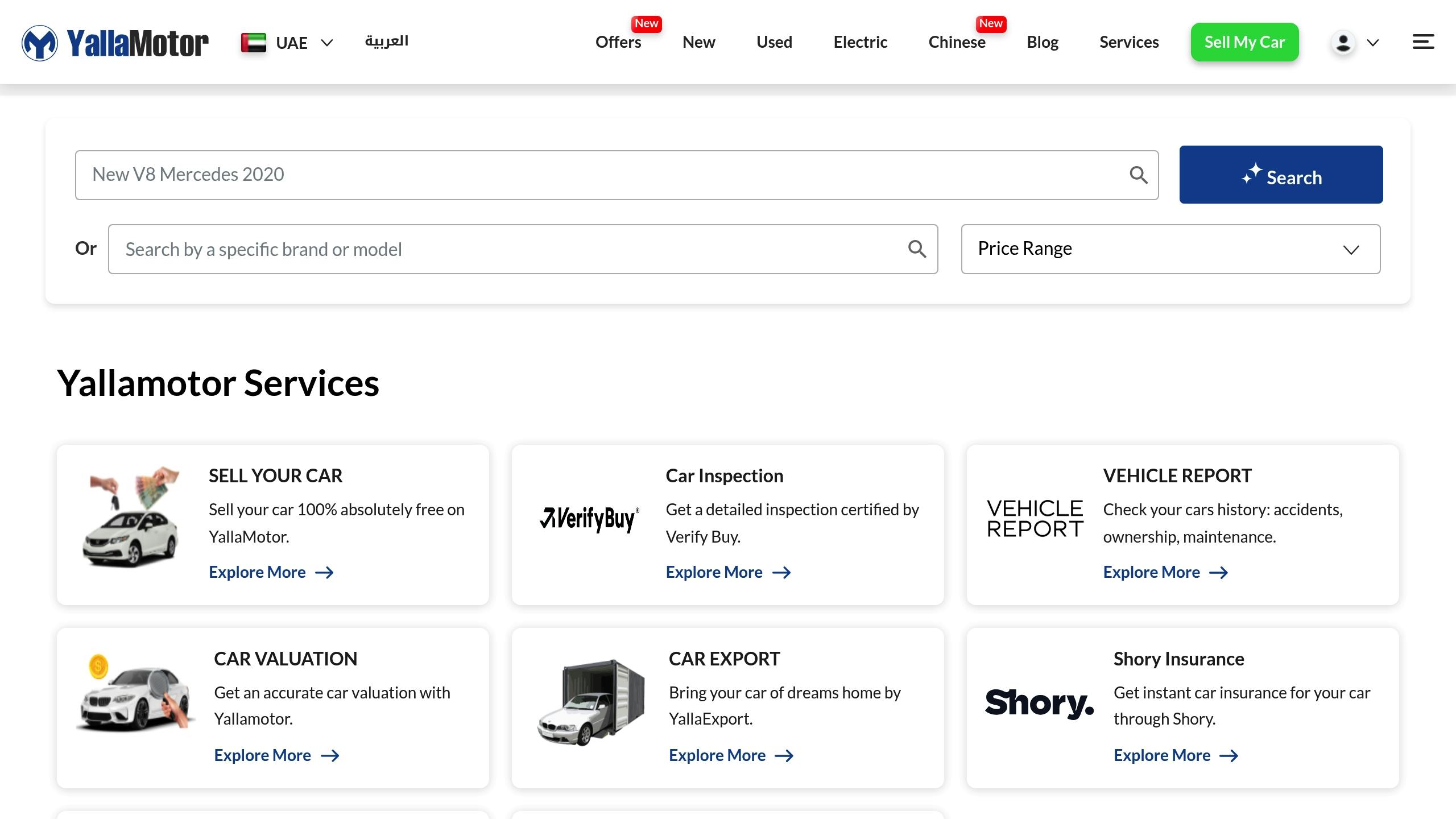
YallaMotor can make your car-buying journey easier with professional vehicle inspections, access to certified dealers, and an AI-powered valuation tool. This tool helps verify a car’s condition and service history, ensuring you make an informed decision.
Conclusion
Buying a used car in the UAE comes with its own set of challenges, especially given the region's harsh climate. Issues like engine overheating, transmission slipping, or battery failures are all too common under intense heat. Spotting warning signs - such as dashboard alerts, strange noises, or fluid leaks - can save you from expensive repairs down the line. In this environment, regular maintenance isn't just a good idea; it's a must to ensure your car stays dependable and retains its value over time. These factors highlight the importance of conducting a thorough evaluation before making a purchase.
Before committing to a used car, invest in a professional inspection, which typically costs between AED 300 and AED 1,000. It's also crucial to verify the car's service history using its VIN. These steps can reveal hidden issues that a simple test drive might not catch, such as odometer fraud or signs of previous accidents. Services like YallaMotor offer detailed reports that include photos and repair cost estimates, providing you with a clear understanding of the car's condition.
Additionally, YallaMotor's AI-powered valuation tool and certified dealer network can help you secure a fair price on a well-maintained vehicle. Together, these resources remove the guesswork and protect your investment, giving you peace of mind as you drive away.
FAQs
What are the best ways to prevent engine overheating in the UAE's hot climate?
To keep your engine from overheating in the UAE’s intense heat, start by using a high-quality coolant specifically designed to handle high temperatures. Regularly inspect and flush the coolant system to ensure it’s working properly. Clean radiators and air filters are also essential, as they help maintain proper airflow and cooling efficiency. Whenever possible, park in shaded or covered spots to minimise heat exposure, and consider using heat management tools like reflective films or heat shields for extra protection.
Another smart move is to schedule seasonal vehicle inspections before summer arrives. These check-ups can help identify and address potential problems before they escalate. Additionally, avoid overloading your car or letting it idle for extended periods, as both can put extra stress on the engine. By staying on top of maintenance and following these tips, you can keep your car running smoothly, even during the UAE’s scorching summer days.
What are the common signs of transmission issues in a used car?
Transmission problems in used cars often reveal themselves through difficulty shifting gears, gears slipping, or a delayed response when shifting. You might also hear odd sounds like humming, whining, or grinding, or feel vibrations during gear changes. Other warning signs include a burning smell, leaking transmission fluid (usually red with a sweet scent), or, in manual cars, a dragging clutch. Additionally, the check engine light might illuminate, hinting at possible transmission issues.
If you come across any of these signs, it’s wise to have the car checked by a reliable mechanic promptly. Addressing the problem early can save you from more extensive damage and hefty repair bills. Keeping up with regular maintenance and checking the transmission fluid can also go a long way in preventing these issues.
How often should I change my car battery in the UAE?
In the UAE's scorching climate, car batteries usually last between 3 to 5 years, though this can vary based on how the vehicle is used and maintained. The intense heat often takes a toll on battery life, so it's a good idea to keep an eye on it, especially once it crosses the 3-year threshold.
Pay attention to signs like a sluggish engine start, dimming headlights, or odd electrical problems. Staying on top of regular maintenance and scheduling periodic battery checks can save you from sudden breakdowns and keep your car running without a hitch.
Looking for a used car in Dubai or new car deals? Explore YallaMotor’s verified listings today.
