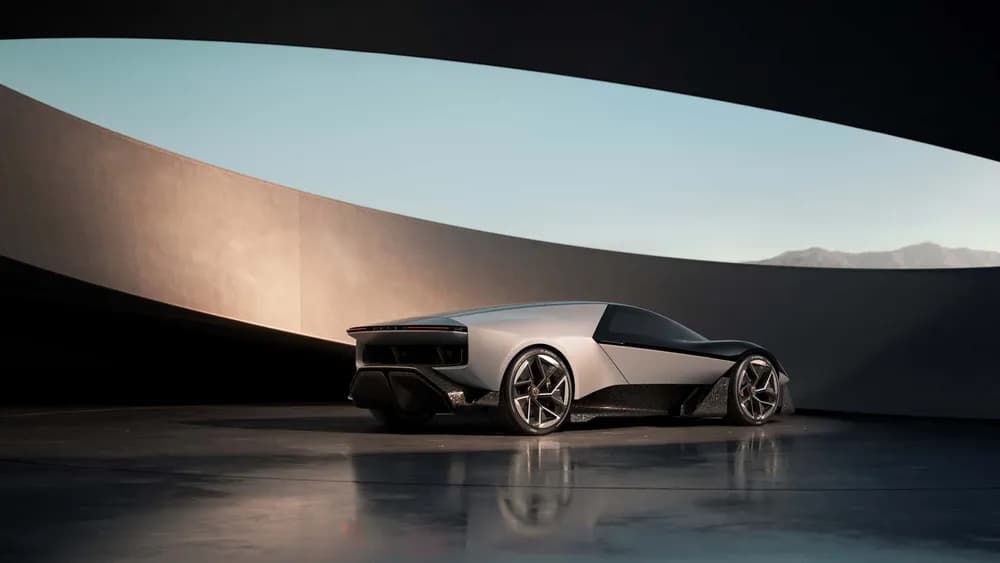

The Lotus renaissance continues. After amazing the world with the Evija, bidding adieu to combustion engined cars with the Emira, stepping into the hot market of SUVs with the Eletre, the British carmaker has given a glimpse of its electric future with the Theory 1.
Blending Past and Future
Theory 1 concept car is a forward-looking design study that merges Lotus’s traditional lightweight, performance-driven philosophy with a tech-heavy electric future. Inspired by Lotus’s past, the Theory 1 is a nod to the mid-engine Esprit while introducing futuristic design elements.

Its sharp, aerodynamic profile features a minimalist front, active aerodynamics, and a complex rear diffuser. The emphasis on sleekness is bolstered by details like the laser-based headlights and pop-out LiDAR sensors that maintain clean lines while integrating Level 4 autonomy.
Blistering Performance
The headline figures are 987 horsepower sent to all four wheels via a single-speed transmission. It has a 70kWh battery and promises blistering performance—0-62mph in under 2.5 seconds and a top speed of 199 mph.

Weighing less than 1,600kg, the car incorporates cutting-edge materials like recycled carbon fiber and cellulose-based glass fiber to remain true to Lotus’s lightweight ethos, despite the added weight of modern EV tech.
Inside the Cabin
Inside, the Lotus Theory 1 offers a three-seat layout reminiscent of the McLaren F1, with the driver at the center. The minimalist cabin design showcases a yoke-style steering wheel, structural carbon spars, and transparent rear-view monitors replacing conventional mirrors.

Adding to the immersive experience, the "Lotuswear" system provides haptic feedback via inflatable pods in the seats and steering wheel, assisting the driver with navigation cues and driving modes. These pods tighten or adjust based on driving conditions, making the interaction between driver and machine more engaging and intuitive.
A Step Toward Sustainability
The Theory 1 is not only focused on performance but also on sustainability. Lotus uses a range of recycled materials, including carbon fiber and glass, and reduces the number of components used in the car’s structure to just ten, as opposed to over a hundred in a traditional car. This not only reduces weight but also simplifies manufacturing and enhances recyclability.

Balancing Luxury with Performance
While the Theory 1 offers impressive technology, it doesn’t overindulge in unnecessary tech features. Its cabin design, with subtle displays and tactile controls, avoids the over-reliance on touchscreens, instead emphasizing driver connection with the car. This maintains the raw, analogue driving experience Lotus is known for, while also embracing future technologies.
Though it’s a concept, the Lotus Theory 1 gives a glimpse into the future of Lotus’s electric ambitions, balancing lightweight, performance-oriented design with modern EV technology. This concept provides a reassuring look at Lotus’s ability to adapt to an evolving automotive landscape while staying true to its core identity—lightweight, driver-focused, and undeniably innovative.
The challenge now is to generate sales with the EV offerings. Lotus needs to start generating volumes to stay alive and not become an NPA for its Chinese investors.