If I want the simple answer: the main live bus link is Dubai to Muscat on Al Khanjry, usually about 3 times a day, for around AED 100 one way, and the trip is often 6 to 8 hours plus border time.
Before I book, I’d look at these points first:
Main route now: Dubai → Muscat
Main operator now: Al Khanjry Transport
Typical fare: AED 100 one way, about AED 200 return
Usual departures: around 07:00, 15:00, and 21:00–22:00
Border fee from UAE side: AED 35, paid separately
For Salalah: either check the direct GTC bus first, or go via Muscat and switch to Mwasalat Route 100
Trip time to Salalah: about 16 hours direct from Dubai if that bus is running, or 12 to 13 hours from Muscat by Route 100
Quick comparison
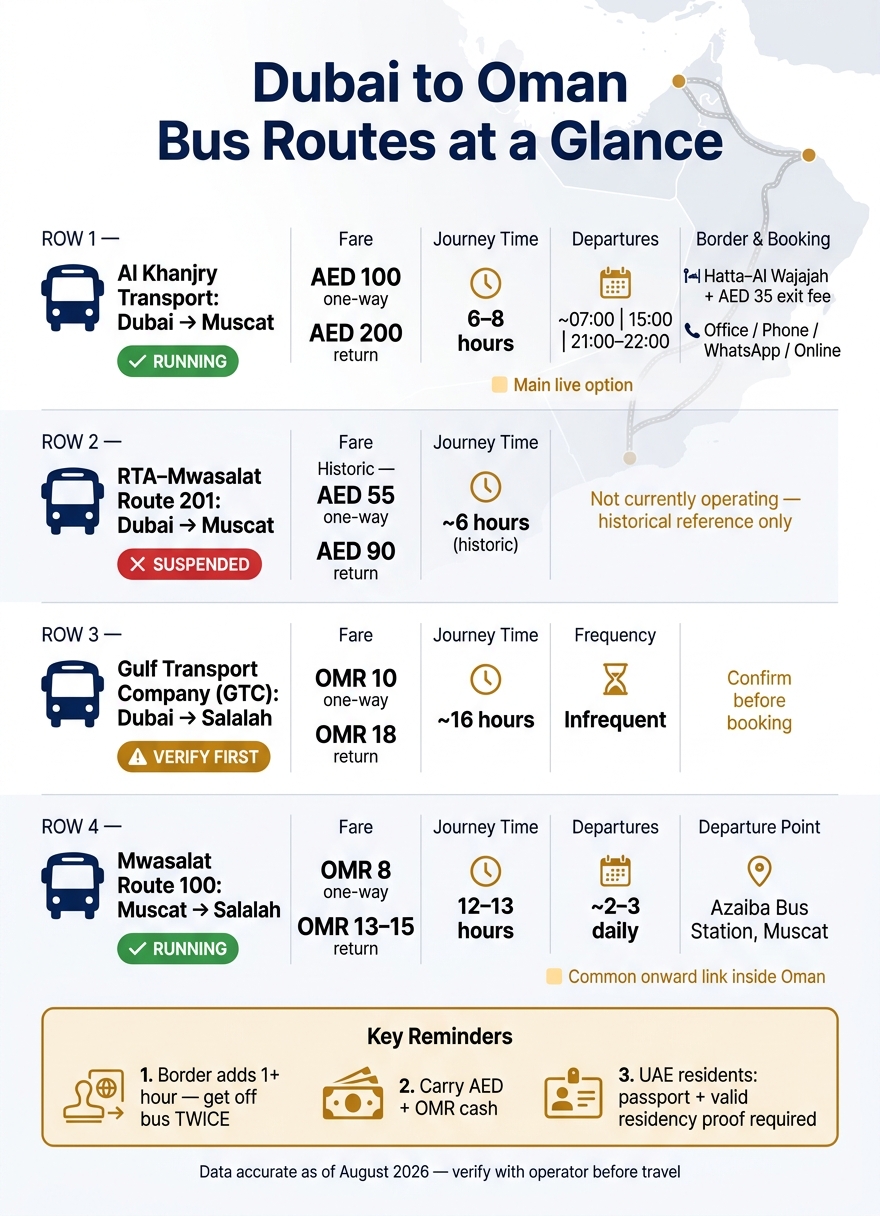
Dubai to Oman Bus Routes: Fares, Times & Status (2026)
Route | Status on 17 Aug 2026 | Fare | Trip time | Notes |
|---|---|---|---|---|
Dubai → Muscat (Al Khanjry) | Running | AED 100 one way | 6–8 hrs | Main live option |
Dubai → Muscat (RTA–Mwasalat 201) | Suspended | Historic only | Historic only | Not running |
Dubai → Salalah (GTC) | Check first | OMR 10 one way | ~16 hrs | Less frequent |
Muscat → Salalah (Mwasalat 100) | Running | OMR 8 one way | 12–13 hrs | Common link inside Oman |
A few things matter more than most people expect. Border checks can add 1+ hour, you’ll usually get off the bus twice for passport and customs checks, and UAE residents often need both a passport and valid UAE residency proof. I’d also keep cash in AED and OMR, plus my passport, Emirates ID, visa papers, medicines, and charger in a small hand bag.
So if I were planning this trip, I’d treat it as a simple checklist: confirm the bus, confirm the border papers, confirm the baggage rule, then go.
Bus Routes, Operators and Boarding Points
Here are the bus options travellers can use right now. At present, Al Khanjry Transport is the main Dubai–Muscat service. The old RTA–Mwasalat Route 201 has been suspended since early 2023, so it’s included here only for past reference.
Operator | Route | Dubai Departure Point | Oman Arrival Point(s) | Frequency | Journey Time | Fare | Booking Method |
Al Khanjry Transport | Dubai → Muscat | Al Khanjry office near Abu Hail Metro Station, Deira | Ruwi/Azaiba area in Muscat, via Hatta–Al Wajajah border and the Sohar corridor | About 3 departures daily | About 6–8 hrs | AED 100 one-way; around AED 200 return | Office, phone, WhatsApp, online booking |
RTA–Mwasalat Route 201 (historic, suspended) | Dubai → Muscat | Abu Hail Bus Station, Dubai International Airport Terminal 2 and Rashidiya Bus Station | Ruwi/Azaiba area, with stops including Shinas, Sohar, Barka and Muscat Airport | Suspended | Around 6 hrs (historic) | AED 55 one-way; AED 90 return (historic) | Suspended |
Gulf Transport Company (GTC) | Dubai → Salalah | Deira, Dubai | Salalah | Infrequent; verify before travel | About 16 hrs | Around OMR 10 one-way; OMR 18 return | Phone or office |
Mwasalat Route 100 | Muscat → Salalah | Salalah, via Muscat International Airport and Burj Al Sahwa | About 2–3 daily | 12–13 hrs | Around OMR 8 one-way; OMR 13–15 return | Mwasalat counters / online |
Now that the main services are clear, the next thing is simple: pick the boarding point and route that match your plan.
RTA–Mwasalat Route 201: Dubai to Muscat
Route 201 is suspended and listed here only as historical reference.
Al Khanjry Transport: Dubai to Muscat via the Hatta Corridor
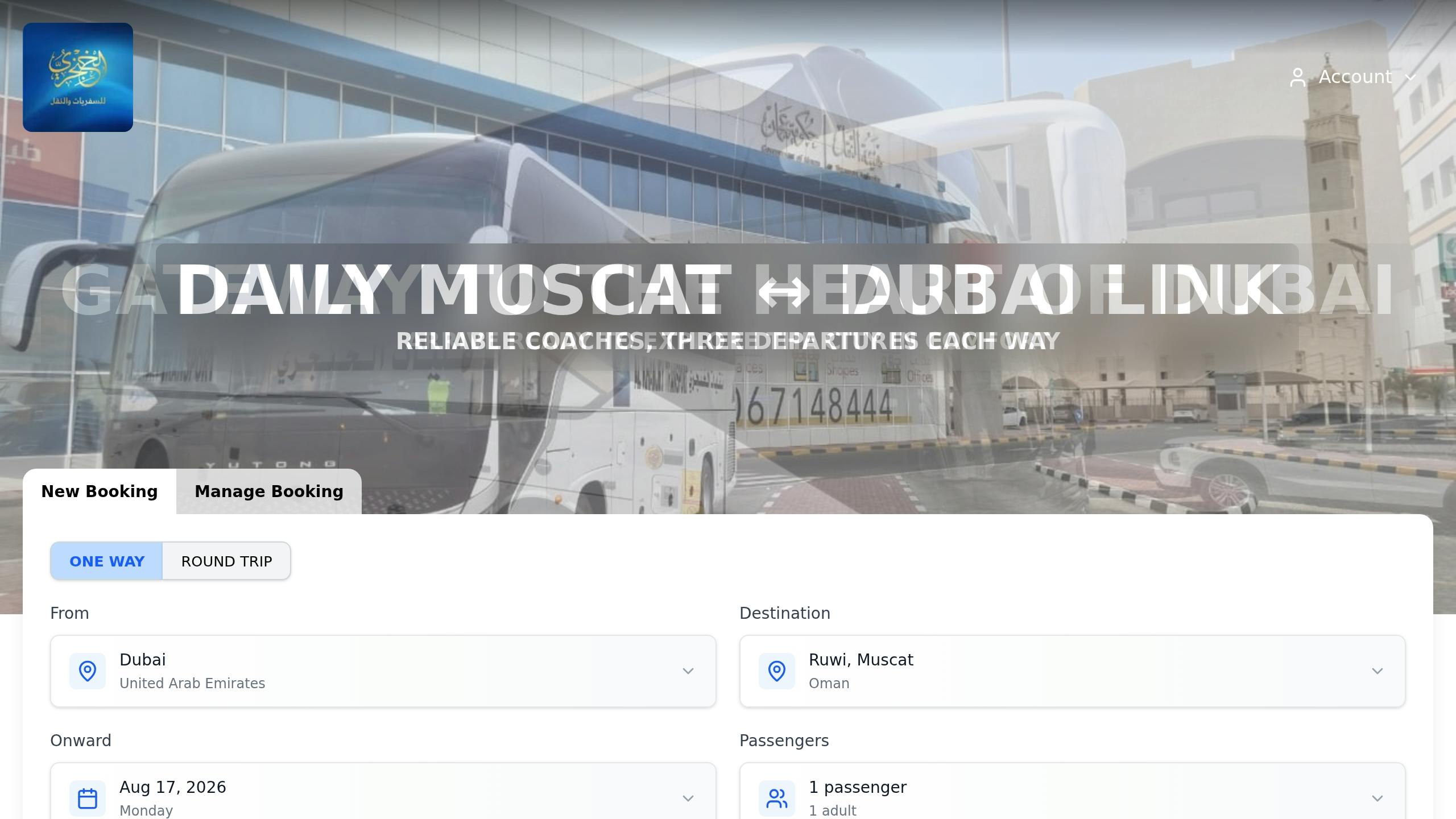
Al Khanjry Transport runs direct Dubai–Muscat buses from its office near Abu Hail Metro Station in Deira. Departures are commonly listed at around 07:00, 15:00, and 21:00–22:00. The trip usually takes about 6 to 8 hours, including border formalities.
The one-way fare is about AED 100. You can book through the office, by phone, via WhatsApp, and in many cases online as well.
Dubai to Salalah and Other Oman Connections
If you're heading to Salalah, most people travel via Muscat and then switch to Mwasalat Route 100. There are also reports of a direct Gulf Transport Company (GTC) service from Dubai to Salalah, but it runs infrequently, so it’s smart to confirm it before making plans.
Before you book, check the border documents and entry rules for the route you plan to take.
Timetables, Ticket Prices and How to Book
Once you’ve picked your route, check the timetable, fare, and booking option before you plan the border crossing. It sounds basic, but this step can save you a lot of hassle later.
Departure Times and Journey Duration
Al Khanjry Transport leaves from its Deira office at around 07:00, 15:00, and 21:00–22:00. The trip usually takes about 6 to 8 hours.
It’s smart to confirm the latest departure time before you travel. Border checks can add time, so give yourself some breathing room when choosing which service to take.
One-Way and Return Fares in AED
Al Khanjry's Dubai–Muscat fare is about AED 100 for a one-way ticket and AED 200 for a return ticket.
Where and How to Buy Tickets
You can buy Al Khanjry tickets through the operator’s office, by phone, on WhatsApp, or through online booking.
Border Crossing, Visa Documents and Entry Requirements
Once you’re on the bus, the next part is border clearance. Dubai–Muscat buses cross through the Hatta–Al Wajajah border, the main land crossing between the UAE and mainland Oman. It’s smart to leave room in your plans, because delays can add more than an hour to the trip.
What Happens at the Hatta Border
Passengers get off the bus twice: first on the UAE side, then again on the Oman side. On the UAE side, you pay the AED 35 exit fee separately from your bus fare. Hold on to that receipt. Omani officials may ask for it before they allow entry.
After that, you board the bus again and continue to the Oman checkpoint at Al Wajajah. There, passengers disembark a second time for visa checks, passport stamping, customs screening, and luggage inspection. If it’s your first visit, officials may also ask for biometric checks.
Passport, Visa and Residency Documents to Carry
The documents you need depend on your nationality and residency status. GCC nationals, including Emiratis, can usually enter Oman without a visa and may use a national ID card, though it’s still wise to carry a passport. UAE residents from eligible nationalities can get a visa on arrival at Al Wajajah if both their passport and UAE residence visa are valid for at least 6 months. Bring your original Emirates ID as well.
If you don’t fall into those groups, check if your nationality is eligible for a visa on arrival or if you need to apply for an Oman eVisa through the Royal Oman Police portal before travelling. It helps to carry:
A printed eVisa approval
A copy of your UAE residence permit
Proof of onward or return travel
Border Fees, Insurance and Pre-Travel Checks
On the Oman side, visa fees depend on your nationality and the visa type. Oman tourist eVisas are valid for up to 30 days, with the option to extend for another 30 days.
Bring a mix of AED and OMR cash, along with a bank card, since card terminals at the border don’t always work smoothly. Travel insurance that clearly covers Oman, including cross-border medical care and trip interruptions, is a smart step. Before you leave, check the latest entry rules on the Royal Oman Police eVisa portal.
Once you’re through, attention turns to onboard comfort and baggage rules.
Onboard Experience, Baggage Rules and Planning Notes
Once you’ve cleared the border side of the trip, the focus shifts to the practical stuff: how comfortable the ride is, what you can bring, and what you’ll want close at hand before you arrive.
Coach Facilities and Comfort on the Journey
Facilities depend on the operator, but current Dubai–Oman coaches are usually air-conditioned and set up for longer cross-border trips. That matters more than people think. A few hours on the road can feel fine with decent seating and cool air, or feel much longer without them.
Private operators can differ quite a bit, so it’s smart to check what’s included before you book. If comfort matters to you, look at the onboard setup first instead of leaving it to chance.
Baggage Allowances and What to Pack
Your main luggage usually goes in the hold, while hand luggage stays with you on the coach. Baggage limits are not the same across all operators, so check the allowance during booking rather than guessing at the last minute.
Keep your most important items in a small carry-on. That should include:
Passport
Emirates ID
Visa documents
eVisa approval
Medicines
Charger
That small bag can save you a lot of hassle, especially at the border or on arrival.
Conclusion: Choosing the Right Dubai–Oman Bus Service
Once your documents are sorted and your bags are packed, the final decision is mostly about route, timing, and operator. Pick the service that matches your schedule, fare, and boarding point, then double-check the comfort level, baggage limit, and booking method.
Before departure, keep all travel documents ready and easy to reach.
FAQs
Can I do Dubai to Oman by bus without booking in advance?
The available information doesn’t confirm whether you can travel from Dubai to Oman by bus without booking in advance.
Based on the search results provided, there is no specific information about advance booking rules for this route.
What if I’m not eligible for visa on arrival at the border?
If you’re not eligible for a visa on arrival, you need to get the right visa or travel authorisation before you travel. In Dubai, bus operators will usually ask to see valid entry documents before they let you board.
Check your visa rules and the application process with the nearest Omani embassy or consulate well in advance. If you arrive without the required entry permit, you may be refused entry at the border.
How early should I arrive before the bus leaves?
For travel between Dubai and Oman, it’s best to arrive at the bus station at least 15 minutes before your scheduled departure.
That gives you enough time to board without rushing and can help you avoid delays, especially during peak travel times or on weekends, when stations are often busier.