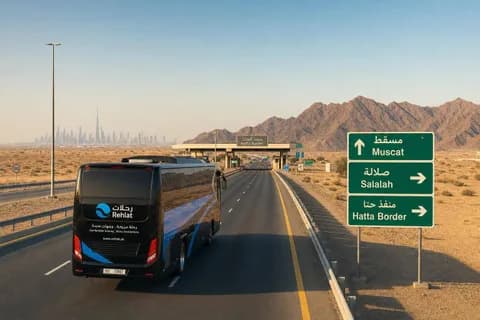
Dubai Metro stands as the world's largest fully automated metro network, boasting an impressive 75 km of track. This modern marvel, inaugurated in 2009 by His Highness Sheikh Mohammed bin Rashid Al Maktoum, serves as a lifeline for over half a million commuters daily, both residents and tourists alike. Its convenience and cost-effectiveness make it an integral part of Dubai's transport infrastructure.
Overview of Dubai Metro Lines
Dubai Metro comprises two main lines: the Red Line and the Green Line, each meticulously planned to ease urban mobility. The Red Line stretches from Centre Point Metro Station (formerly Al Rashidiya) to the Expo 2020 Metro Station, encompassing 35 stations, including the crucial interchange at Jebel Ali. This line, essential for accessing key city areas and venues, includes new extensions like the Route 2020 project, which introduces six additional stations aimed at enhancing connectivity to residential zones and the Expo 2020 site.
Red Line Stations:
- Centrepoint
- Emirates
- Airport Terminal 3
- Airport Terminal 1
- GGICO
- Deira City Centre
- Al Rigga
- Union (interchange with Green Line)
- Burjuman (interchange with Green Line)
- ADCB
- Max (formerly Al Jafiliya)
- World Trade Center
- Emirates Towers
- Financial Centre
- Burj Khalifa / Dubai Mall
- Business Bay
- Al Safa
- Equiti
- Mall of the Emirates
- Mashreq
- Dubai Internet City
- Al Khail
- Sobha Realty (interchange with Dubai Tram)
- DMCC (interchange with Dubai Tram)
- Jabal Ali
- Ibn Battuta
- Energy
- Danube
- UAE Exchange
- The Gardens
- Discovery Gardens
- Al Furjan
- Jumeirah Golf Estates
- Dubai Investment Park
- Expo 2020

The Green Line, on the other hand, traverses from Etisalat Station in Al Qusais to Dubai Creek in Al Jaddaf, covering 20 stations. This line serves as a vital corridor through the city, intersecting with the Red Line at Union and Burjuman, facilitating seamless transfers for passengers.
Green Line Stations:
- Etisalat
- Al Qusais
- Dubai Airport Free Zone
- Al Nahda
- Stadium
- Al Qiyadah
- Abu Hail
- Abu Baker Al Siddique
- Salah Al Din
- Union (interchange with Red Line)
- Baniyas Square
- Gold Souq
- Al Ras
- Al Ghubaiba
- Sharaf DG
- Burjuman (interchange with Red Line)
- Oud Metha
- Dubai Healthcare City
- Al Jadaf
- Creek
Payment and Fare System

To travel on the Dubai Metro, passengers use the RTA NOL card, a versatile smart card also applicable across other public transport modes, including buses and water buses. There are four types of NOL cards: Red, Silver, Gold, and Blue, catering to various passenger needs from casual visitors to daily commuters.
Fare Calculation: Dubai is divided into seven zones for public transport, with the metro covering five zones. Fares are calculated based on the number of zones traveled through. The more zones crossed, the higher the fare. The zones help structure the pricing to accommodate different travel distances, ensuring a fair cost distribution.
Dubai Metro Monthly Pass
For frequent travelers, the Dubai Metro offers a Monthly Pass, which provides unlimited travel across selected zones for a month. The pass is available for both Silver and Gold NOL card users, with distinct pricing based on the zones covered:
Silver NOL Card Monthly Pass:
- AED 140 for 1 zone
- AED 230 for 2 zones
- AED 350 for all zones
Gold NOL Card Monthly Pass:
- AED 280 for 1 zone
- AED 460 for 2 zones
- AED 700 for all zones
For extended usage, 90-day and annual passes are also available, offering even greater savings for regular commuters.
Cabin Classes and Facilities

Dubai Metro features three distinct cabin types: regular, gold, and a dedicated women and children cabin. The Gold cabin offers a premium travel experience with luxurious seating and panoramic views, accessible only to Gold NOL cardholders. The women and children cabin ensures a safe and comfortable space for families, equipped with extra room for strollers.
Onboard amenities include free Wi-Fi, CCTV for security, emergency call boxes, and a direct radio link to emergency services, ensuring a safe and pleasant journey for all passengers.
Operational Timings and Accessibility
The metro operates daily, with extended hours on weekends and holidays to accommodate the city's bustling activity. Each station is designed with accessibility in mind, featuring tactile guidance paths, audible alerts, wheelchair spaces, and lift access, ensuring inclusivity for all passengers.
Unique Features and Regulations

Dubai Metro stations are aesthetically themed around the elements of air, earth, fire, and water, reflecting the UAE's natural landscape. Passengers are expected to adhere to strict rules, including prohibitions on eating, drinking, and sleeping, with fines imposed for violations, check out all about Dubai metro fines. The network is renowned for its efficiency, boasting the shortest waiting times globally, with intervals not exceeding 3.5 minutes.
Conclusion
Dubai Metro represents a pinnacle of modern urban transport, combining efficiency, convenience, and sustainability. Its role in the daily lives of Dubai's residents and visitors underscores its importance as a public transport cornerstone. For further details or queries, one may refer to the comprehensive Dubai Metro FAQs.