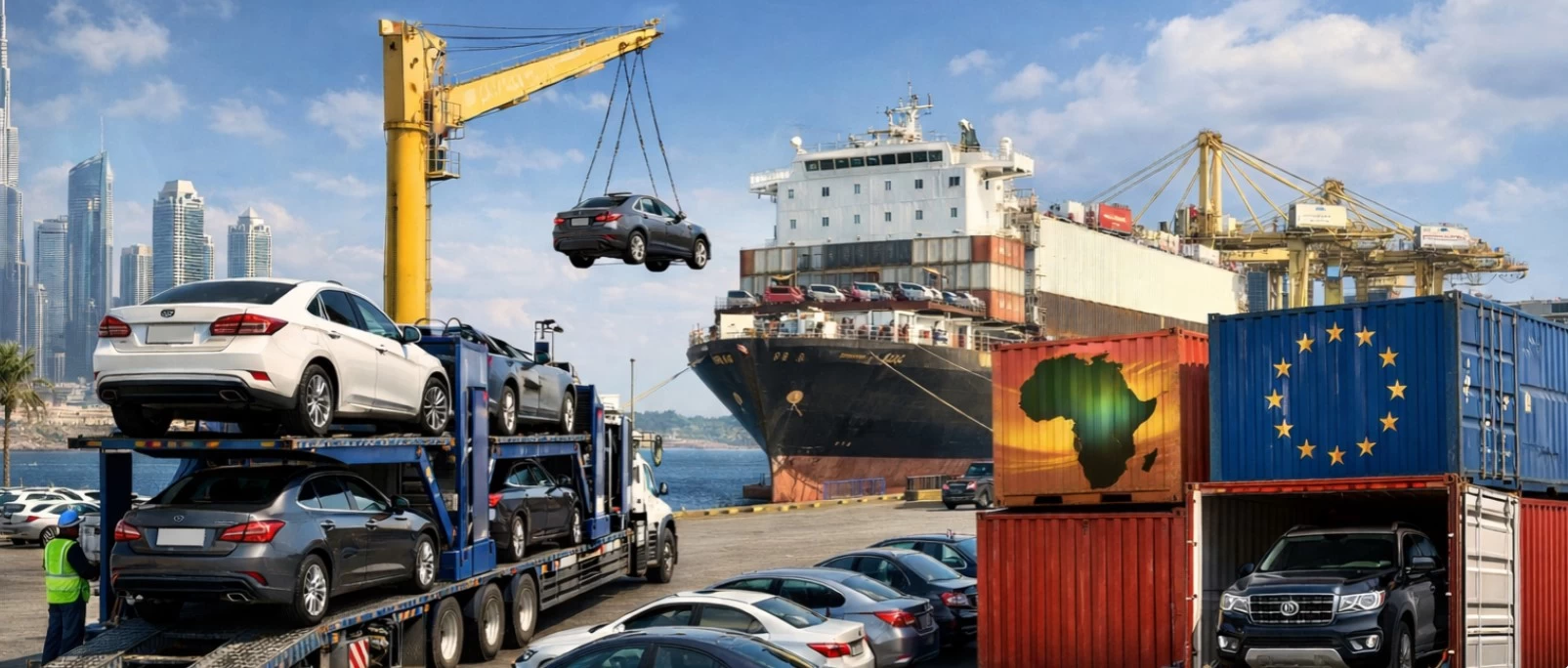
Why Foreign Buyers Choose Dubai for Car Exports?
Foreign buyers are increasingly turning to Dubai for car exports due to its competitive prices, wide availability of models, and efficient logistics network. Dubai offers an organized and transparent system for exporting vehicles, making it a preferred choice for both individual and commercial exporters.
The city’s high vehicle turnover, low local taxation, and strong import channels contribute to a fresh and competitively priced used car market. Combined with world-class port infrastructure and streamlined customs procedures, Dubai ensures speed and reliability for vehicle exports.
- Low local taxes and competitive vehicle pricing
- High turnover ensures fresh inventory for buyers
- Transparent documentation and ownership records
- Efficient logistics and port facilities
Who Is Eligible to Export Cars from Dubai?
Foreign nationals can legally export vehicles from Dubai without UAE residency or citizenship. The process is accessible for both personal and commercial exports, though requirements differ based on the volume and purpose of export.
Individual exporters often rely on dealers or agents to simplify paperwork, whereas commercial exporters may need trade licenses and customs registration for bulk shipments. Understanding eligibility criteria is crucial for a smooth export process.
Vehicle Ownership and Legal Clearance
Before exporting a car, ownership must be clear and legally registered under the exporter’s name. Outstanding loans, fines, or legal disputes must be settled before the vehicle can be exported. Cars under finance agreements are not eligible until fully paid off.
Deregistration of the vehicle in the UAE is mandatory, confirming that it will no longer be used locally. This step is critical and forms part of the RTA’s legal process for vehicle exports.

Documentation Required for Export
Accurate documentation is essential. Exporters must provide proof of ownership, such as the original registration card, a valid passport copy, and a bill of sale or purchase invoice. These documents verify ownership, transaction value, and eligibility for export.
Once verified, the Roads and Transport Authority (RTA) issues an export certificate, officially canceling the local registration. Customs clearance documents are then prepared, followed by shipping paperwork from the logistics provider.
RTA Export Procedure and Temporary Plates
The RTA oversees deregistration and issues temporary export plates, allowing vehicles to be legally transported within Dubai to ports. These plates have limited validity, and vehicles must leave the UAE within this timeframe to avoid fines or reprocessing.
Dubai Customs Clearance Process
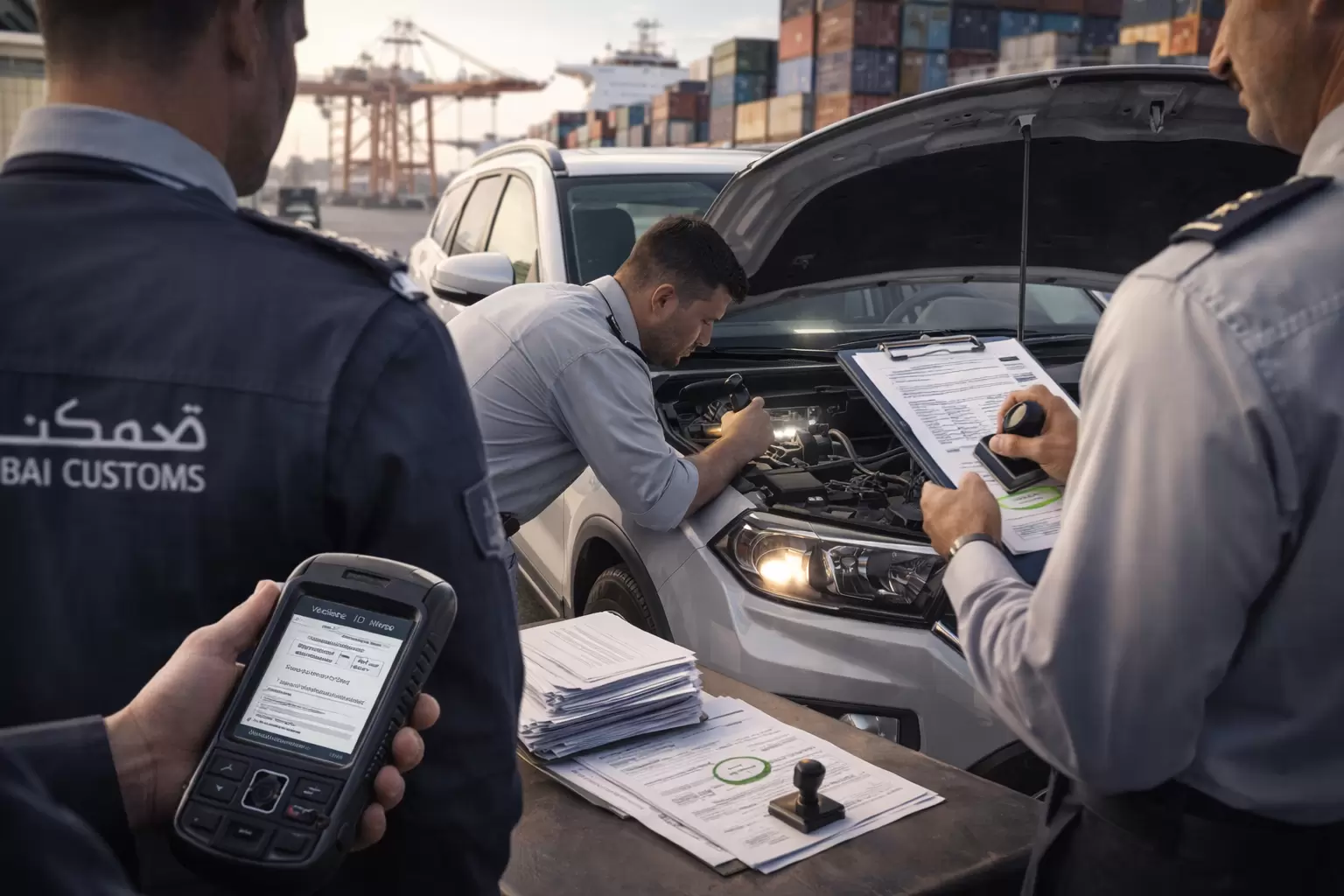
At the port, Dubai Customs verifies vehicle details including chassis and engine numbers. Physical inspections may occur to ensure declared information matches the vehicle. Once approved, the vehicle is officially authorized for export and responsibility transitions to the shipping company.
Shipping Options for Exported Vehicles
Exported vehicles typically use roll-on/roll-off (RoRo) vessels or container shipping. RoRo is cost-effective for standard vehicles, while container shipping provides added protection for luxury, high-value, or classic cars. Air freight is rare due to high costs, reserved for rare or urgent shipments.
- RoRo shipping: cost-effective for standard vehicles
- Container shipping: secure option for luxury or classic cars
- Air freight: rarely used due to high cost
Costs Associated With Exporting a Car
Exporting a vehicle from Dubai involves fees for RTA processing, temporary export plates, customs clearance, and shipping. Dubai does not charge export taxes, but import duties may apply in the destination country. Optional insurance is recommended for expensive or long-distance shipments.
Destination Country Compliance
Understanding import regulations in the destination country is crucial. Some countries restrict vehicle age, emissions standards, or steering orientation. Others require pre-approval or levy high import duties. Ensuring compliance prior to shipment avoids customs rejection and costly storage fees.
Working With Dealers and Export Agents
Many foreign buyers work with licensed dealers or export agents to manage paperwork, customs coordination, and shipping logistics. Professional agents reduce the risk of errors and are particularly valuable for first-time exporters or bulk shipments.
Final Thoughts on Dubai Car Exports
Exporting cars from Dubai is legal and structured, offering significant advantages for foreign buyers. Compliance with documentation, RTA procedures, and destination-country regulations ensures smooth transactions. Dubai’s infrastructure and transparency make it an attractive hub for international vehicle sourcing.
By following the Dubai car export rules for foreigners, exporters can avoid common pitfalls and leverage Dubai’s position as a global automotive export hub.
Check out used cars for sale in Dubai and new cars for sale in Dubai to explore vehicles ready for export.
FAQs
Can foreigners legally export cars from Dubai?
Yes. Foreign nationals can export vehicles from Dubai without UAE residency or citizenship, as long as they comply with RTA and customs procedures.
What documents are required for exporting a car?
Key documents include the vehicle registration card, a valid passport copy, a bill of sale or invoice, and an RTA-issued export certificate.
Do I need a dealer or export agent?
While optional, using licensed dealers or export agents is highly recommended. They simplify paperwork, customs clearance, and shipping logistics, reducing errors and delays.
What shipping options are available?
Vehicles can be exported via Roll-on/Roll-off (RoRo) shipping for standard cars or container shipping for luxury and high-value vehicles. Air freight is rare and costly.
Are there fees for exporting a car from Dubai?
Yes. Exporting involves RTA fees, temporary export plates, customs processing, and shipping costs. Dubai does not charge export taxes, but import duties may apply in the destination country.