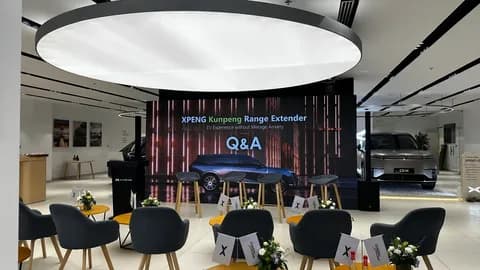
Riyadh's transportation landscape is changing. In July 2025, WeRide became the first company in Saudi Arabia to secure a nationwide permit for robotaxis, marking a major step toward autonomous mobility. By October 2025, WeRide partnered with Uber to launch robotaxi services in Riyadh, allowing users to book rides through the Uber app. The Kingdom aims for 15% of its transportation system to operate autonomously by 2030, aligning with Vision 2030’s goals.
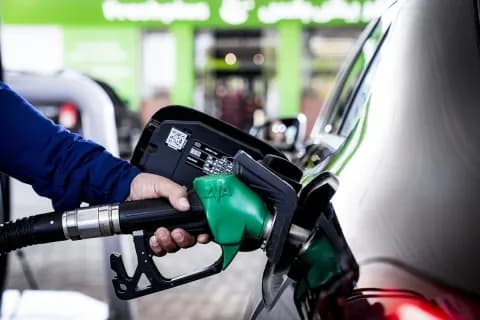
Car ownership in Saudi Arabia remains high, driven by cultural preferences, long commutes, and the design of cities like Riyadh, which favour private vehicles. However, robotaxis could challenge this trend by offering cost savings and convenience. While owning a car involves fuel, insurance, maintenance, and parking costs, robotaxis operate on a pay-per-trip model, eliminating these expenses for users.
Robotaxi adoption will likely start with frequent travellers, urban professionals, and residents in managed communities. Yet, private car ownership is expected to coexist with these services, especially for families and intercity travel. By 2030, a hybrid approach - combining autonomous services for daily commutes and private cars for specific needs - seems likely.
Saudi Arabia’s robotaxi rollout is part of a broader shift toward smart mobility, with plans to expand fleets and integrate autonomous vehicles into logistics and public transport. While car ownership won’t disappear by 2030, the rise of robotaxis could reshape how Saudis think about transportation.
WeRide Approved for Robotaxi Operations in Saudi Arabia
Car Ownership in Saudi Arabia Today
Saudi Arabia stands out as one of the countries with the highest rates of car ownership globally. Riyadh, in particular, is designed with cars in mind - featuring wide roads, sprawling neighbourhoods, and destinations spread far apart. This layout makes owning a vehicle almost a necessity, creating a heavy reliance on private cars. But with new mobility solutions emerging, this dependency may face challenges in the near future.
The Car as a Status Symbol and Daily Necessity
In Saudi culture, owning a car goes beyond practicality - it’s a marker of success, personal style, and independence. These values are reflected in the car market, where luxury and comfort are highly prized. Analysts point out that vehicles in this market need to offer more than cutting-edge technology to appeal to buyers. For instance, electric vehicles (EVs) currently make up just 1% of total car sales, showing that petrol-powered luxury cars remain the top choice.
"It's questionable how much Tesla can deliver on people's expectations... it's debatable whether there is enough luxury on offer for such a market." - Felix Hamer, European electric mobility analyst
On a practical level, cars are indispensable for navigating Saudi cities. Long commutes, minimal pedestrian-friendly infrastructure, and urban layouts tailored to vehicles make private cars the go-to option. Buyers often weigh options like cash purchases or financing, considering factors such as flexibility and resale value. However, as mobility innovations gain traction, these traditional preferences may begin to shift.
The Challenges of Mass Car Ownership
While cars are deeply ingrained in Saudi life, their widespread use brings significant urban challenges - issues that Vision 2030 aims to tackle. Riyadh's population is projected to double, reaching 15 to 20 million residents by 2030. This rapid growth will strain infrastructure that wasn’t built to accommodate such high volumes of vehicles. Problems like parking shortages in crowded areas and rising CO2 emissions are already evident.
These challenges clash with Vision 2030’s goals to reduce car dependency and promote more sustainable transport options. Encouragingly, ride-hailing services have seen a 26% increase in trips between 2023 and 2024, signalling a growing openness to alternatives. Whether advancements like robotaxis can accelerate this shift remains to be seen, especially given the strong cultural connection to private car ownership.
What Riyadh's First Robotaxi Permit Actually Means
Securing a robotaxi permit in Saudi Arabia wasn't a simple task - it demanded extensive testing and approvals. WeRide emerged as the first autonomous vehicle company to pass the Transport General Authority's (TGA) Regulatory Sandbox for AV Piloting, a process involving multiple government agencies. This achievement is significant because it makes WeRide the only company licensed to offer public robotaxi services across the Kingdom, granting them nationwide operating rights instead of being confined to small test zones. This regulatory milestone sets the stage for cutting-edge pilot programmes.
How the WeRide-Uber Pilot Works
This service is a collaboration between three key players: WeRide (providing the autonomous technology), Uber (offering the ride-hailing platform), and Ai Driver (handling local operations). Riders can book the WeRide Robotaxi GXR through the Uber app, with the pilot initially covering specific routes. Public operations start on 24 October 2025, connecting Roshn Front and Princess Noura University, and will later expand to include King Khalid International Airport, major highways, and selected city centre locations.
The rollout will happen in phases. Initially, the robotaxis will have human safety operators onboard. Over time, they aim to transition to fully driverless vehicles, depending on technological advancements and regulatory readiness. By 2027, WeRide and Uber plan to deploy at least 1,200 robotaxis across Riyadh, Abu Dhabi, and Dubai.
"This permit marks a major step in our global expansion, enabling us to scale Robotaxi services and unlock new commercial opportunities in Saudi Arabia. It drives large-scale deployment, unlocks new revenue streams, and reinforces our commitment to making autonomous mobility a reality worldwide." - Jennifer Li, CFO and Head of International, WeRide
A Move Toward Mobility as a Service
This pilot programme reflects a broader shift toward integrated urban mobility. By using the Uber app rather than launching a dedicated one, the focus is on convenience and integration, not just innovation. The robotaxis aim to bridge last-mile gaps in Riyadh's transport network while complementing the Riyadh Metro. This approach aligns with the Mobility as a Service (MaaS) model, where autonomous vehicles become part of a larger, interconnected transport system. It’s a move designed to improve efficiency and encourage a shift away from private car dependence.
The vision extends beyond passenger services. WeRide is already testing Robobuses in AlUla and Aramco residential areas, offering climate-controlled shuttles for last-mile connectivity. In May 2025, they introduced the Robosweeper S1, an autonomous sanitation vehicle, at King Fahad Medical City. This vehicle cleaned a 500,000-square-metre area, marking the first commercial autonomous sanitation project in the Middle East. These developments highlight Saudi Arabia's commitment to making autonomous mobility a central part of its smart city initiatives, rather than treating it as a mere experiment.
Robotaxis vs. Car Ownership: Cost and Convenience by 2030
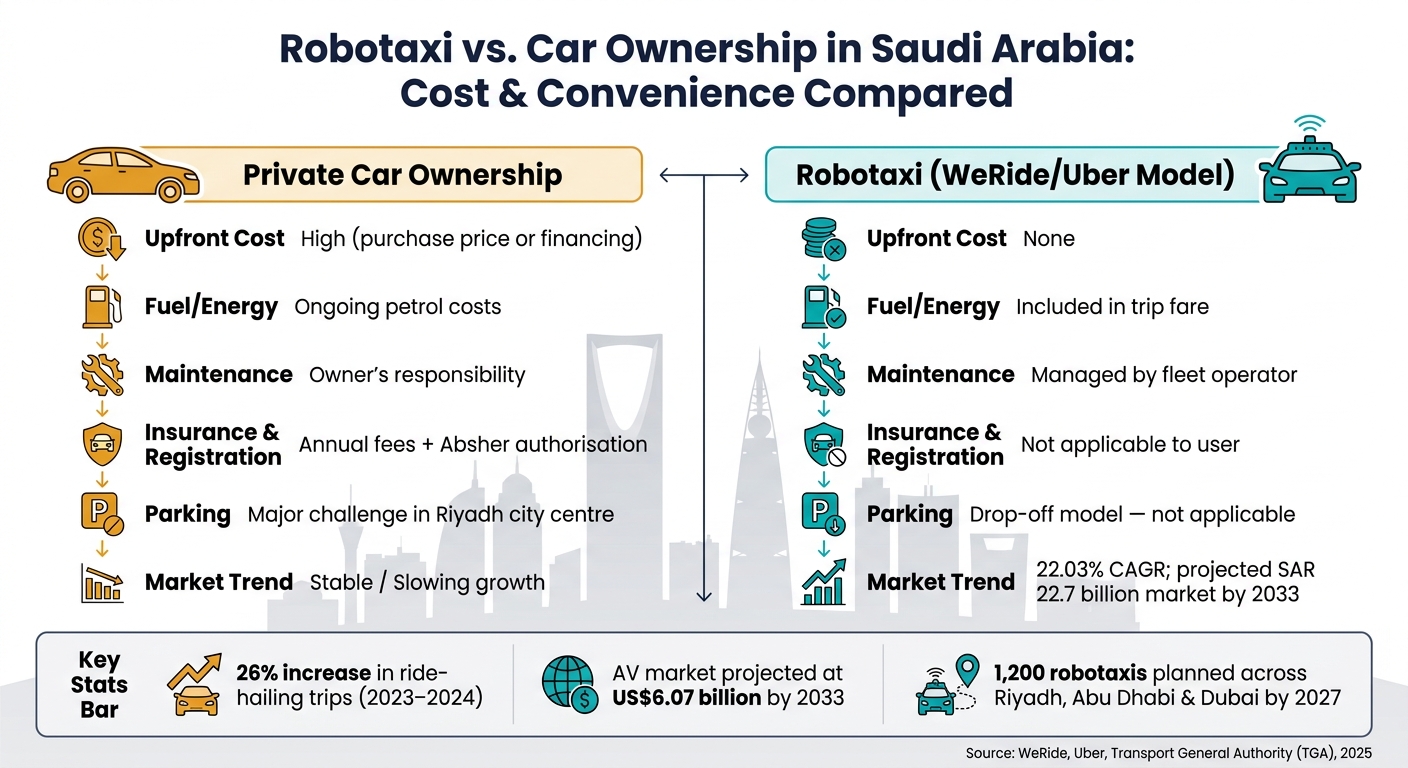
Robotaxi vs. Car Ownership in Saudi Arabia: Cost & Convenience Compared
Cost Breakdown: Owning a Car vs. Using a Robotaxi
Owning a car in Saudi Arabia involves more than just the initial purchase. Costs like fuel, insurance, registration (Istimara), maintenance, and parking quietly pile up, creating a steady financial commitment. Robotaxis flip this model on its head: you pay only for the trips you take, while the operator handles all the additional expenses.
|
Cost Factor |
Private Car Ownership |
Robotaxi (WeRide/Uber Model) |
|---|---|---|
|
Upfront Cost |
High (purchase price or financing) |
None |
|
Fuel/Energy |
Ongoing petrol costs |
Included in trip fare |
|
Maintenance |
Owner's responsibility |
Managed by fleet operator |
|
Insurance & Registration |
Annual fees + Absher authorisation |
Not applicable to user |
|
Parking |
Major challenge in Riyadh city centre |
Drop-off model - not applicable |
|
Market Growth |
Stable/slowing |
22.03% CAGR; projected SAR 22.7 billion market by 2033 |
Robotaxis not only promise cost savings but also align with shifting user behaviours. The ride-hailing market saw a 26% growth in trips between 2023 and 2024, highlighting a growing comfort with pay-per-trip models. As robotaxi fleets expand and competition drives down per-kilometre rates, urban dwellers may find that relying on robotaxis becomes cheaper than owning a car outright.
Convenience, Privacy, and Flexibility
Cost aside, the convenience of robotaxis is a major draw. They eliminate the administrative headaches of car ownership - no Absher authorisations, no renewals, no trips to the workshop. Booking a ride is as simple as tapping an app, something most users are already accustomed to with services like Uber.
That said, privacy is a trade-off. A personal car offers a private, uninterrupted space, while robotaxis come equipped with a host of sensors - over 20, including six cameras - to ensure safe navigation. For some, this monitoring might be a minor inconvenience. For others, particularly families or those who value personal space, it could be a dealbreaker.
Flexibility is another consideration. Robotaxis currently operate in designated zones, such as Riyadh, Jeddah, and Tabuk, which limits their use for spontaneous or longer intercity travel.
"This will represent a qualitative step toward a smart and sustainable future in the transportation sector." - Dr. Omaimah Bamasag, Deputy of Transport Enablement, Transport General Authority (TGA)
These factors highlight why adoption rates may vary depending on user preferences and needs.
Who Will Switch First: Different Users, Different Needs
The transition to robotaxis will likely begin with specific user groups whose needs align with the service's advantages.
Frequent airport travellers are an obvious starting point. The WeRide-Uber pilot already focuses on King Khalid International Airport, one of Riyadh’s busiest transit hubs. For these users, robotaxis eliminate the hassle of parking, airport transfers, and retrieving a car after a trip.
Residents of gated and managed communities are another likely group. Controlled environments, like Aramco residential areas where WeRide has tested Robobus services, make it easier to integrate autonomous mobility. Professionals in business hubs such as ROSHN Front are already seeing Level 4 autonomous vehicles being used for last-mile logistics.
Young urban professionals, particularly those in tech-savvy roles, may represent the next wave. With 1 in 3 organisations in the UAE already appointing Chief AI Officers, the region is embracing AI-driven services. For this group, booking a robotaxi via a familiar app feels like a natural extension of their daily routines.
However, families taking longer trips and residents outside the five designated "smart cities" are likely to stick with private car ownership well beyond 2030.
How Robotaxis Could Change the Auto Market in Saudi Arabia and the GCC
Changes in Buyer Demand and Market Patterns
The introduction of robotaxis is set to reshape the auto market in Saudi Arabia and the GCC. Instead of focusing on individual car buyers, the market will lean heavily towards large commercial fleet operators. Imagine a single operator managing an entire fleet instead of thousands of individual sales - a concept already being tested through the Riyadh pilot by WeRide and Uber.
Saudi Arabia has ambitious goals, aiming for 25% of all goods transport vehicles to be fully autonomous by 2030. The autonomous vehicle (AV) market in the region is expected to grow at an impressive annual rate of 22.03%, reaching a market value of US$6.07 billion by 2033. While fleet operators will drive much of this growth, private car ownership is likely to continue in areas outside the five designated "self-driving friendly" cities for the foreseeable future. This shift in buyer behaviour introduces new challenges and opportunities for businesses in the automotive sector.
What This Means for Dealers, OEMs, and Insurers
The shift in demand requires industry players to rethink their strategies. For Original Equipment Manufacturers (OEMs), the focus must shift from traditional designs to vehicles tailored for robotaxi operations. Standard four-seat sedans may not meet the demands of high-mileage, sensor-heavy autonomous fleets. Instead, manufacturers are now developing vehicles specifically engineered for these intensive commercial applications.
Dealers and service providers also have new opportunities. Autonomous fleets will need specialised services, including EV charging depots, predictive maintenance, and automated cleaning systems. These services, though not traditionally offered at scale, present a chance for dealerships to tap into emerging revenue streams by adapting early.
Insurers face a different challenge: redefining liability. With the responsibility moving from individual drivers to fleet operators and technology providers, insurance models must evolve. As BCG highlights:
"Waymo together with Swiss Re, for instance, has reported that its robotaxis are involved in fewer injuries, accidents reported to police, and air-bag deployments per million miles than human-driven cars."
This shift in risk dynamics will likely lead to the creation of new insurance products designed to cover fleet-level and product liability.
How YallaMotor Supports Buyers and Sellers Through This Shift
In a market undergoing rapid change, access to reliable data is critical. YallaMotor provides tools to help both buyers and sellers navigate these shifts. Their AI-powered valuation tools and professional inspections ensure vehicles meet new standards and provide accurate value assessments. For dealers, YallaMotor's real-time data across 75+ brands offers insights into evolving buyer trends, helping them adjust inventory to cater to both individual and fleet buyers.
"The AV market's expansion is not just about vehicles - it's about creating jobs in fleet management, maintenance, and customer service, while solving urban mobility challenges." - Saudi Mobility Consulting
The transformation of the automotive market in the GCC reflects a broader commitment to smart mobility. While the pace of change will vary across the region, businesses that start adapting to these trends now will be in a stronger position as the shift accelerates.
Conclusion: Will Saudis Stop Buying Cars by 2030?
What to Expect Between Now and 2030
The road ahead for mobility in Saudi Arabia is becoming clearer, and while car ownership is unlikely to disappear by 2030, shifting attitudes are already evident.
Robotaxi services made their debut in Riyadh in October 2025, following the issuance of the first autonomous permit in July of the same year. By 2030, plans are in place to grow these fleets to tens of thousands. Additionally, Saudi Arabia has set an ambitious target - ensuring 25% of all goods transport vehicles are fully autonomous by 2030. This suggests that the logistics sector will likely see the most immediate impact from automation, with personal travel evolving more gradually.
For daily commuters, the transformation will take time. Currently, robotaxis operate on designated routes, such as those connecting King Khalid International Airport to central Riyadh, and are limited to five 'self-driving friendly' cities. In areas outside these zones, private car ownership remains the go-to option for many. This measured shift hints at a future where private vehicles and autonomous services work together to meet mobility needs.
A Future Where Both Options Coexist
By 2030, a hybrid approach seems the most likely scenario. Many households may still own a private car for long-distance travel, family outings, or trips to areas beyond robotaxi coverage, while turning to autonomous ride-hailing services for daily urban commutes. Despite technological advancements, car ownership in Saudi Arabia remains deeply tied to cultural values, symbolising status, practicality for desert conditions, and family requirements.
"The KSA's stance towards autonomous vehicles (AVs) is overwhelmingly positive and ambitious. The government views AV technology as a key enabler of smart, sustainable transport systems." - Al Tamimi & Company
As robotaxis become more accessible and cost-effective - especially when in-vehicle safety officers are no longer required, as seen in Abu Dhabi - households may consider reducing the number of secondary vehicles. The projected growth of the autonomous vehicle market, from US$1.01 billion in 2024 to US$6.07 billion by 2033, underscores this gradual transformation.
This coexistence of private cars and autonomous options reflects the broader vision for mobility in Saudi Arabia under Vision 2030. While the way people approach car ownership may change, it will likely remain an essential part of life in the Kingdom.
FAQs
Are robotaxis safe in Riyadh?
Robotaxis in Riyadh are generally seen as safe, although detailed safety statistics specific to the city remain limited. In July 2025, Saudi Arabia introduced a pilot programme for autonomous taxis, operating across seven locations under stringent regulatory guidelines. On a global scale, autonomous vehicles are advancing steadily, but their safety relies heavily on the interplay of technology, regulations, and local operating conditions. It's a good idea for users to keep up-to-date as safety evaluations continue to develop.
Will robotaxis be cheaper than owning a car by 2030?
By 2030, robotaxis could become a much more affordable option compared to owning a private car. Projections indicate a sharp decline in the cost per kilometre for autonomous ride-hailing services, thanks to improvements in technology and larger-scale operations. For instance, estimates suggest that by 2035, these costs might drop to around €0.80 per kilometre. This shift could make robotaxis a budget-friendly alternative for many people across various regions.
Where in Saudi can I book a robotaxi?
Robotaxis have made their debut in Riyadh, with a pilot route now running along key corridors between King Khalid International Airport and central Riyadh. This development represents a major leap forward in the city's push towards autonomous transportation.