If I were buying tyres in the UAE today, I’d check three things first: GCC compliance, tyre age under 5 years, and tread depth above 1.6 mm. That matters more than brand talk when road heat can pass 50°C and surface temperatures can go past 60°C.
Here’s the short version: I’d pick a summer tyre for daily city and E11 driving, an all-terrain tyre for road-plus-desert use, and an EV-rated tyre for electric cars that need the right load support, lower noise, and better range control. The article reviews 11 tyres across those three groups and looks at the things most UAE drivers care about: heat handling, tread life, noise, grip, and price in AED.
If you want the article in one glance, this is it:
Summer tyres: Michelin Primacy 4+, Bridgestone Turanza 6, PremiumContact 7, Hankook Ventus Prime4
All-terrain tyres: BFGoodrich KO2, Yokohama Geolandar A/T G015, Bridgestone Dueler A/T 002
EV tyres: Michelin e.Primacy, Michelin Pilot Sport EV, Hankook iON evo, Pirelli P Zero Elect
Best by use: comfort, off-road grip, range, or EV handling
Buying checks: size, load index, speed rating, fitted price, and local stock
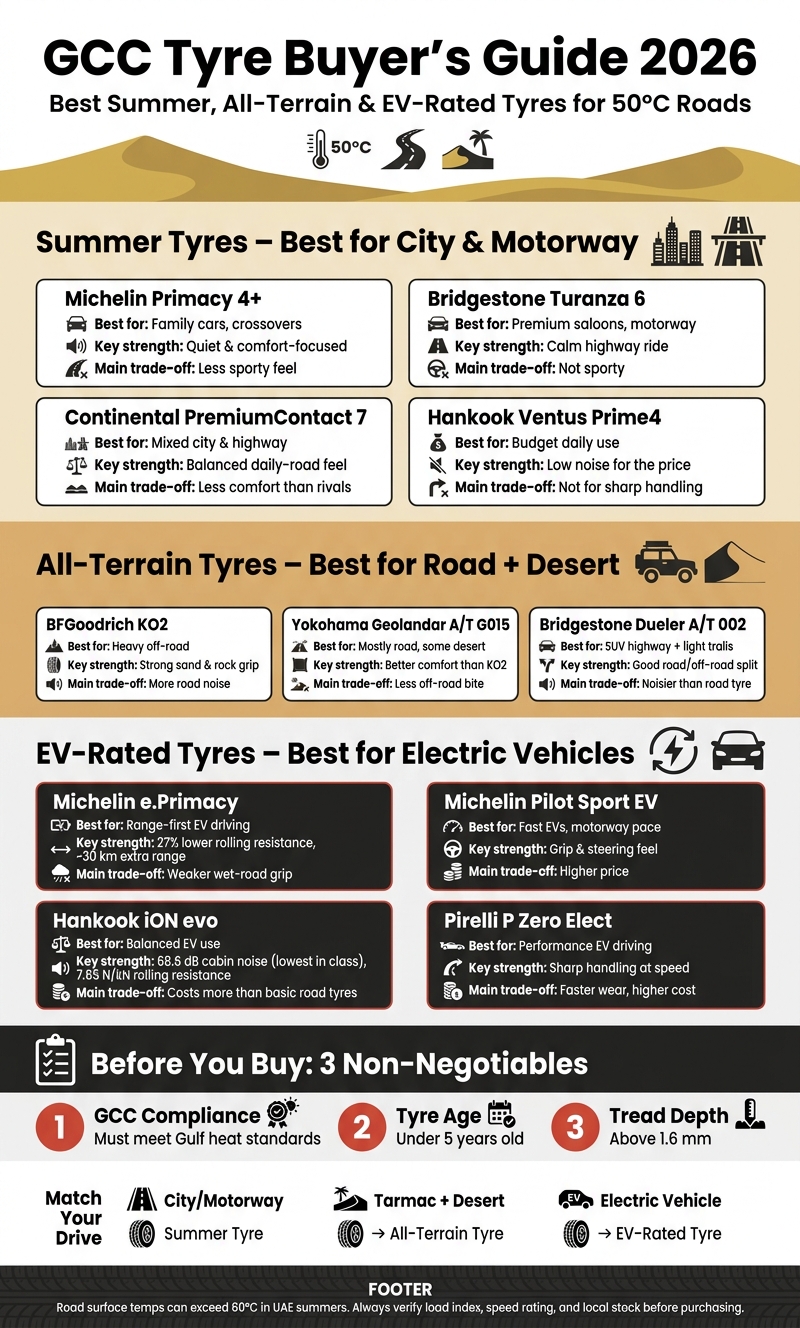
GCC Tyre Buyer's Guide 2026: Best Tyres for UAE Roads at a Glance
Quick Comparison
Tyre | Type | Best for | Main plus point | Main trade-off |
|---|---|---|---|---|
Michelin Primacy 4+ | Summer | Family cars, crossovers, long commutes | Quiet and comfort-focused | Less sporty feel |
Bridgestone Turanza 6 | Summer | Premium saloons, motorway use | Calm highway ride | Not the top pick for sporty driving |
PremiumContact 7 | Summer | Mixed city and highway use | Balanced daily-road feel | Less comfort-led than some rivals |
Hankook Ventus Prime4 | Summer | Lower-cost daily use | Low noise for the price | Not for sharp handling |
BFGoodrich KO2 | All-terrain | Heavy off-road use | Strong sand and rock grip | More road noise |
Yokohama Geolandar A/T G015 | All-terrain | Mostly road, some desert | Better comfort than KO2 | Less off-road bite than tougher A/T tyres |
Bridgestone Dueler A/T 002 | All-terrain | SUV drivers mixing highway and light trails | Good road/off-road split | Still noisier than a road tyre |
Michelin e.Primacy | EV-rated | Range-first EV driving | Lower rolling resistance | Weaker wet-road results |
Michelin Pilot Sport EV | EV-rated | Fast EVs, motorway pace | Grip and steering feel | Higher price |
Hankook iON evo | EV-rated | Balanced EV use | Low noise, grip, and range mix | Costs more than basic road tyres |
Pirelli P Zero Elect | EV-rated | Performance EV driving | Sharp handling at speed | Faster wear and higher spend |
My takeaway is simple: buy for your actual driving, not the look of the tyre. If I mostly drove in Dubai or Abu Dhabi, I’d stay with a comfort-led summer tyre. If I split time between tarmac and desert, I’d move to a road-biased A/T. If I drove an EV, I’d check for the correct HL or EV load spec before anything else.
That’s the core of the guide below.
1. YallaMotor tyre listings and buyer tools

Before you compare tread performance, check fitment first and make sure you understand the total fitted price. YallaMotor connects drivers with more than 115 tyre and car service providers across the Emirates, and you can search listings by city and service type. That gives you a clean starting point instead of jumping between random offers.
YallaMotor’s tyre listings also help narrow options based on your car. You can search by vehicle make, model, year, and engine to find tyres that match the manufacturer-recommended size, load index, and speed rating. If you already have the size from the sidewall, you can search directly by width, rim diameter, and aspect ratio instead. In the GCC, that matters more than many drivers think. Heat and load can expose the wrong tyre size or rating very fast.
Once fitment is sorted, model-by-model comparison gets much easier.
Then use the size and load filters to trim the list down to tyres that suit your car exactly. For example, a published Michelin 225/55 R17 listing shows AED 1,350 fitted. When you compare offers, check if the price is all-in or if it only covers the tyre itself. That small detail can change the final bill by a fair bit.
For installation, you can use the nearest installer search or pick mobile fitting for your home or office. Provider pages show opening hours, contact details, and online booking options.
Confirm fitment, compare fitted prices, then book installation.
2. Michelin Primacy 4+
The Michelin Primacy 4+ is made for day-to-day driving in the UAE, especially for city commutes and long motorway runs. It’s a premium touring summer tyre for saloons, family SUVs, and crossovers where comfort, low noise, and steady braking matter more than sharp, sporty handling. Compared with more performance-focused summer tyres, it gives up some crisp turn-in for a quieter and more settled drive.
Its GCC edge is heat stability, with enough wet grip for sudden downpours.
On the road, that means a calm ride and strong mileage, which suits high-mileage commuters and families who spend a lot of time behind the wheel.
Best for comfort-first saloons, crossovers, and family SUVs in hot-weather daily use. Next, compare it with the Bridgestone Turanza 6 for a similar comfort-led summer option with a different road feel.
3. Bridgestone Turanza 6
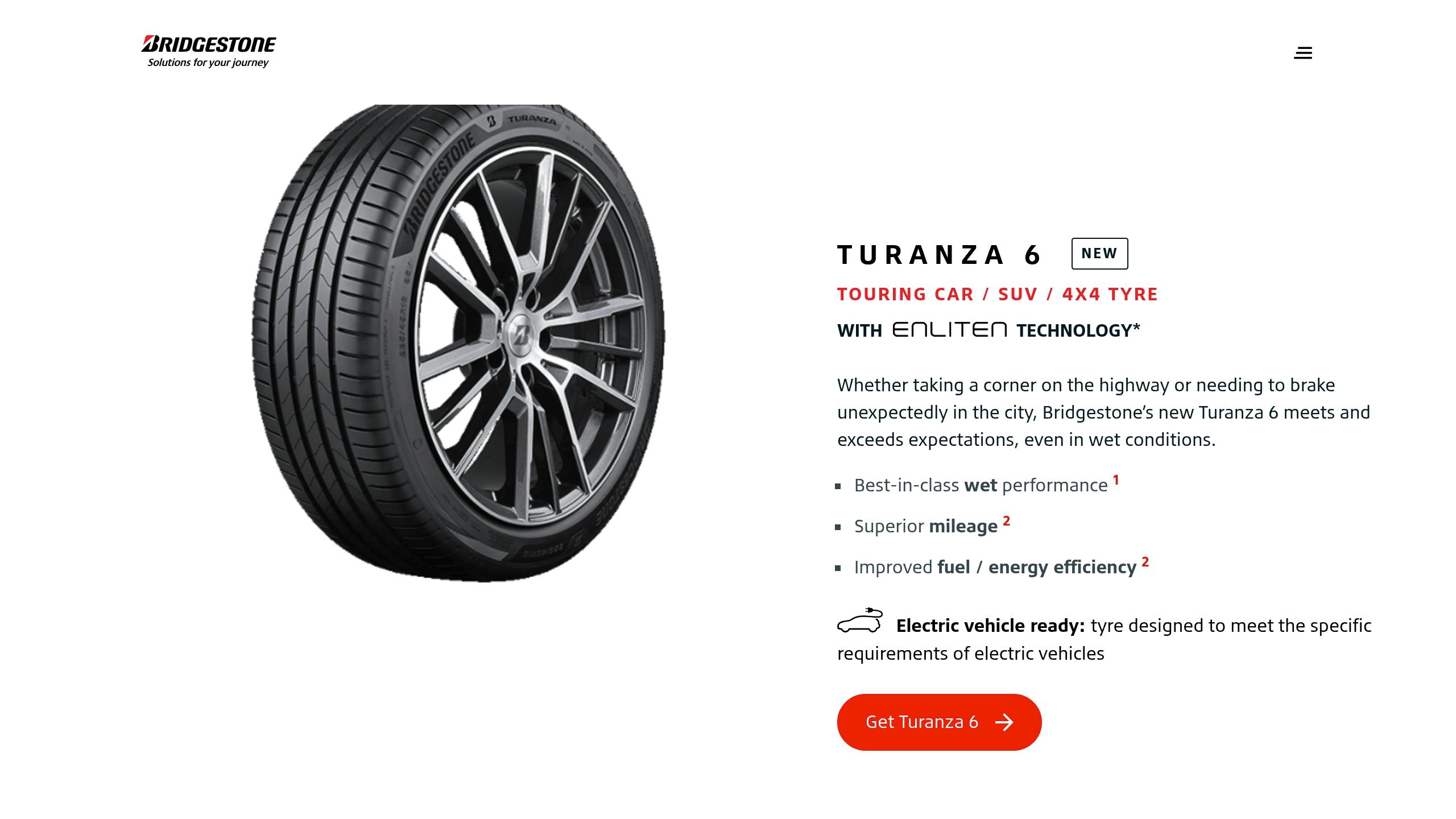
The Bridgestone Turanza 6 is a good fit for GCC drivers who care most about quiet comfort and steady motorway performance, especially in premium saloons and crossovers. If you're buying one, go for GCC-spec stock from official channels. That version is made for high-heat motorway driving and offers better heat resistance in Gulf conditions.
That regional setup also helps the tyre deal with humidity and salt exposure, which matters more than many drivers think in the GCC. If you cover a lot of distance each year, a practical benchmark in this market is 3–4 years or around 60,000 km.
Pricing usually falls between AED 250 and AED 1,500 per tyre, depending on size. It makes the most sense for premium saloons and long-distance commuting. If your top priority is fuel economy or a more sporty feel, this probably isn't the right pick.
Next, compare it with the Continental PremiumContact 7 and Hankook Ventus Prime4 if you want other comfort-led summer tyre options.
4. Continental PremiumContact 7
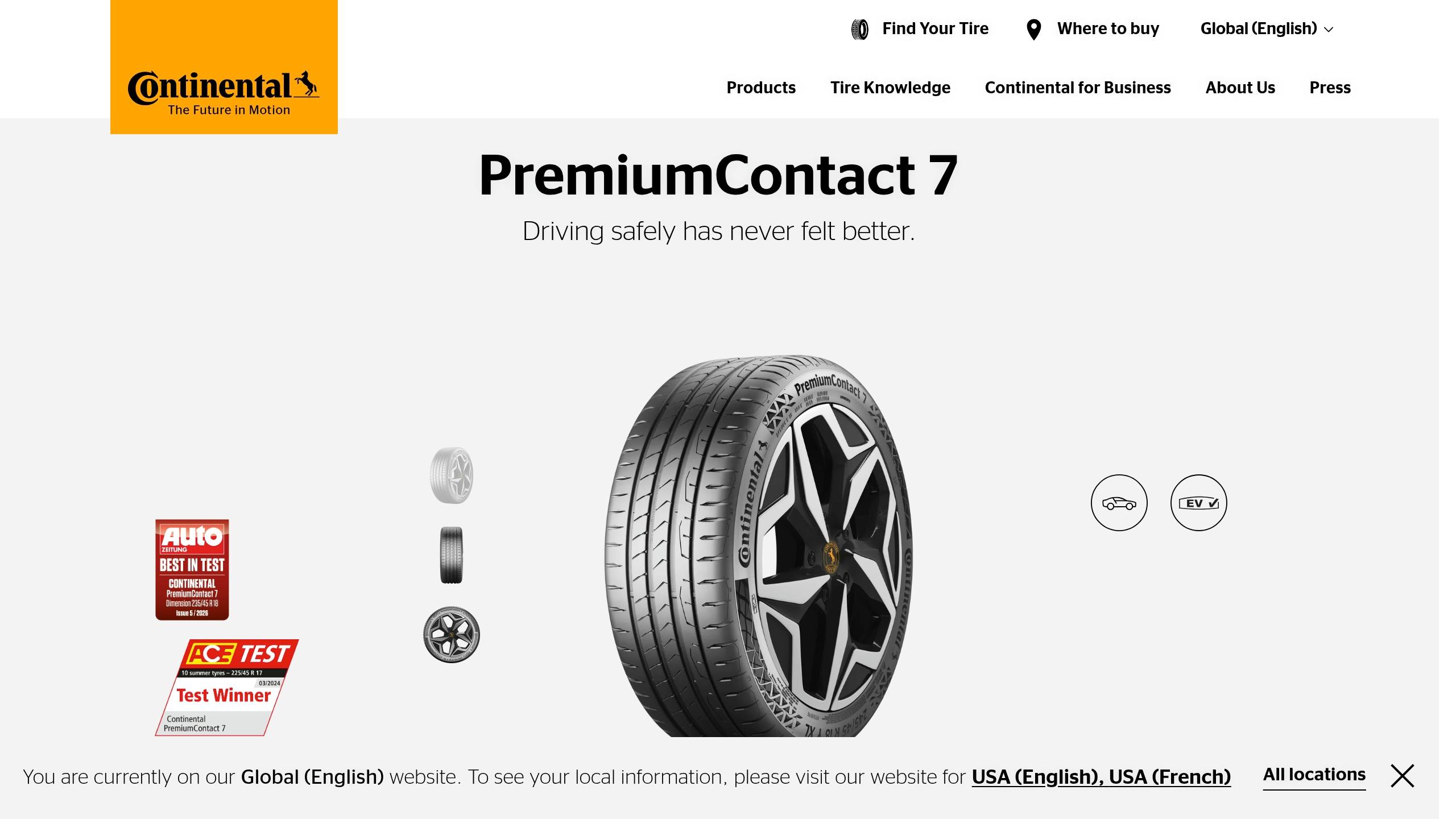
The Continental PremiumContact 7 is a good fit for daily saloons and city SUVs that handle a mix of highway and urban driving in the UAE. It sits between the comfort-first Turanza 6 and Primacy 4+, giving you a more even mix for both long motorway stretches and stop-start city traffic. That makes it a sensible middle-ground pick for the way many people drive across the UAE.
In GCC heat, heat resistance and tread life should be near the top of your list. If you cover around 15,000–20,000 km per year, this tyre has the kind of balance that puts it firmly on the shortlist.
Next, compare it with the Hankook Ventus Prime4 for another daily-driver summer option.
5. Hankook Ventus Prime4
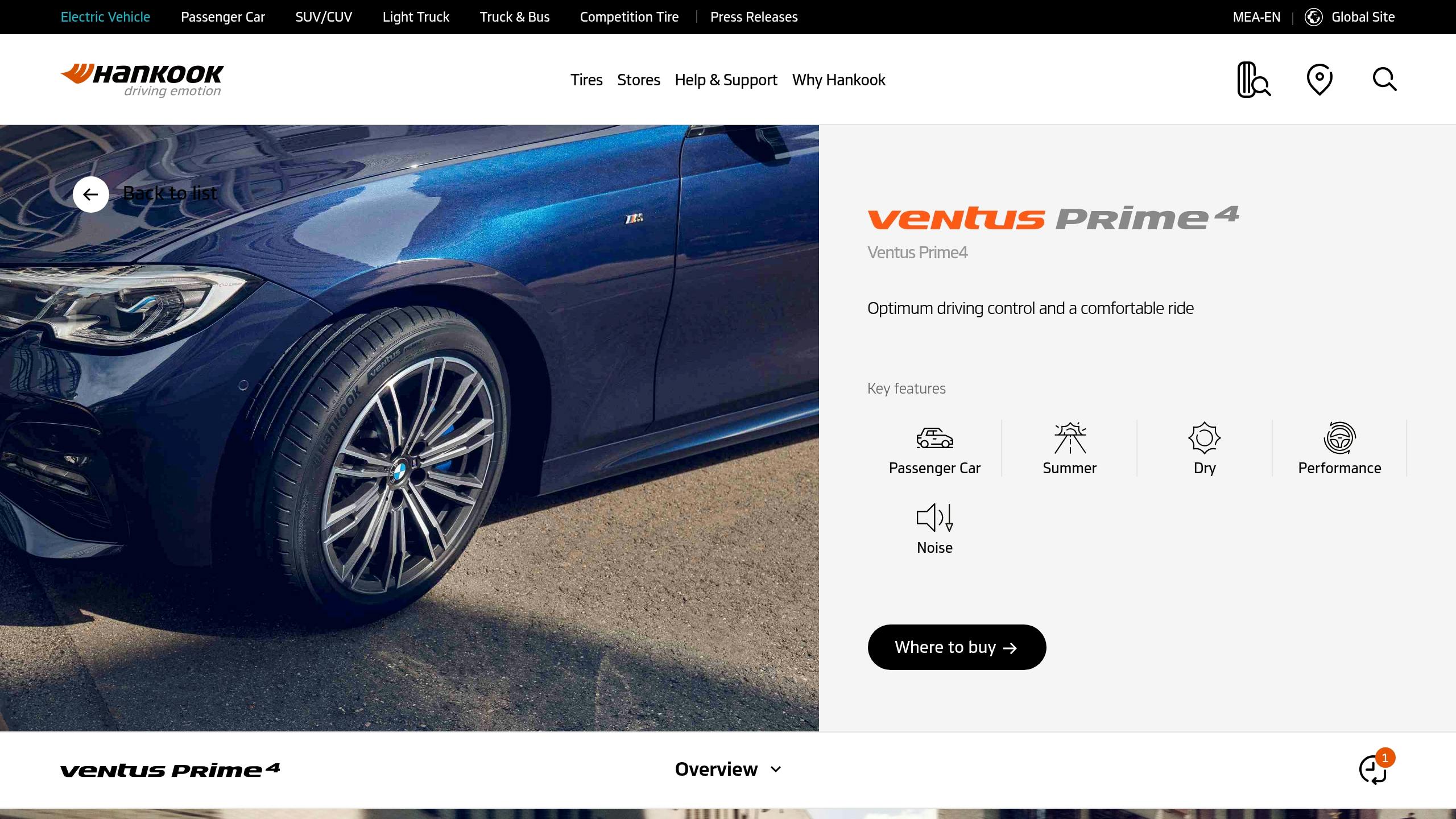
The Hankook Ventus Prime4 is a value-led summer tyre aimed at GCC drivers who care more about comfort and low road noise than sporty handling. It’s a good fit for daily commuters, family saloons, and SUVs that need a quieter, lower-cost option than premium touring tyres on hot UAE roads.
It works best for daily driving and long motorway trips, where a calm, low-noise ride matters more than sharp steering feel.
Next, the guide shifts from road-focused summer tyres to all-terrain options for mixed tarmac and off-road use.
6. BFGoodrich All-Terrain T/A KO2
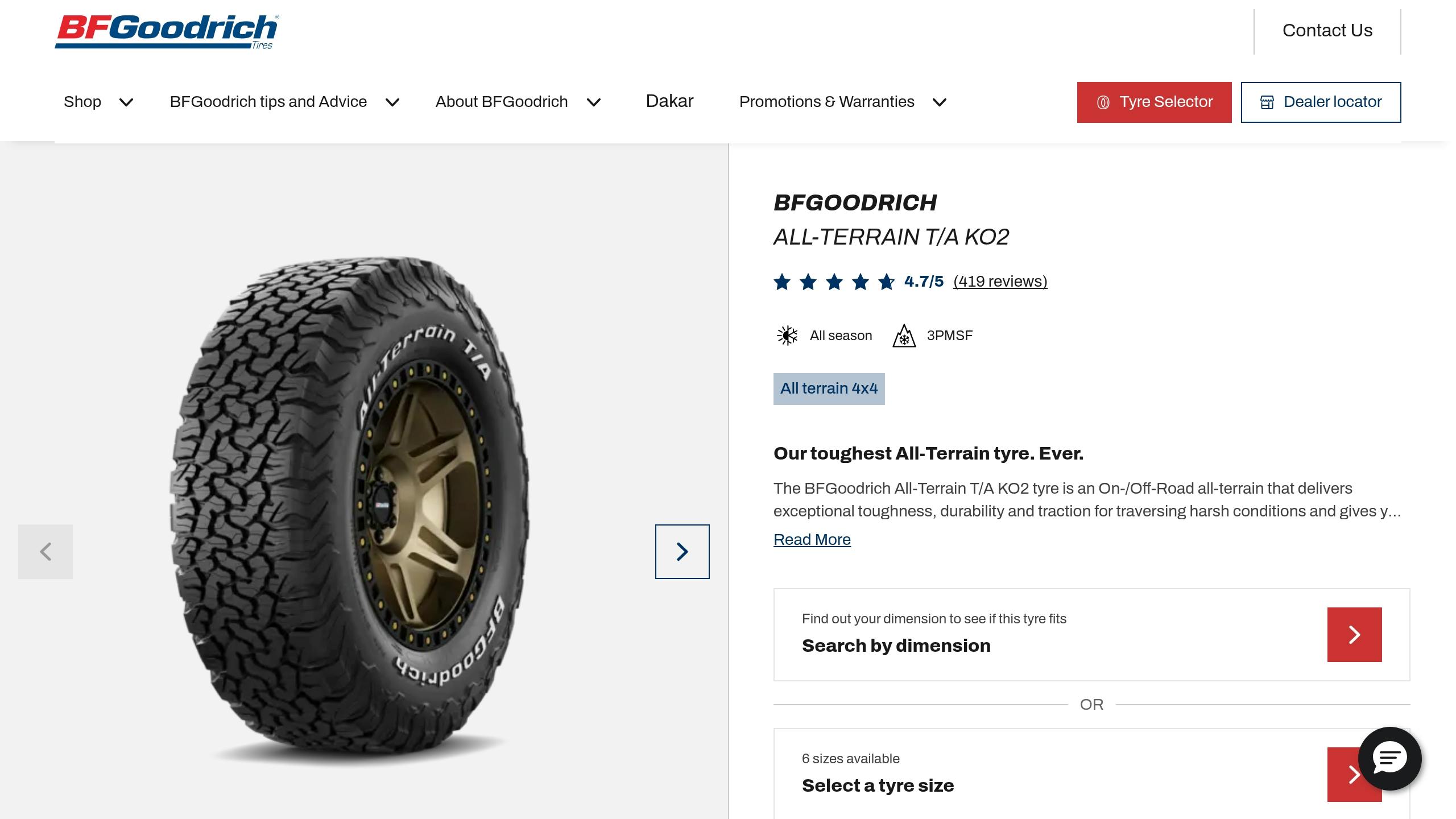
The BFGoodrich All-Terrain T/A KO2 is a strong fit for drivers who spend a lot of time off-road. If your usual route includes Liwa dunes, Hatta tracks, or gravel roads, this tyre makes more sense than a road tyre. It handles sand, rock, and steep climbs with more grip and confidence. The downside is simple: more road noise and a firmer ride on asphalt.
It also suits adventure-focused 4x4s like the Wrangler, Bronco, and Patrol. Off-road, the KO2 gives you stronger traction. On-road, though, it’s louder and less polished than a summer tyre. So if most of your driving happens on city streets, a road-focused summer tyre or a milder all-terrain tyre will usually make more sense.
Before you buy, check the load index, sidewall strength, and heat rating. If you want a milder all-terrain option with better comfort on-road, move next to the Geolandar A/T G015.
7. Yokohama Geolandar A/T G015
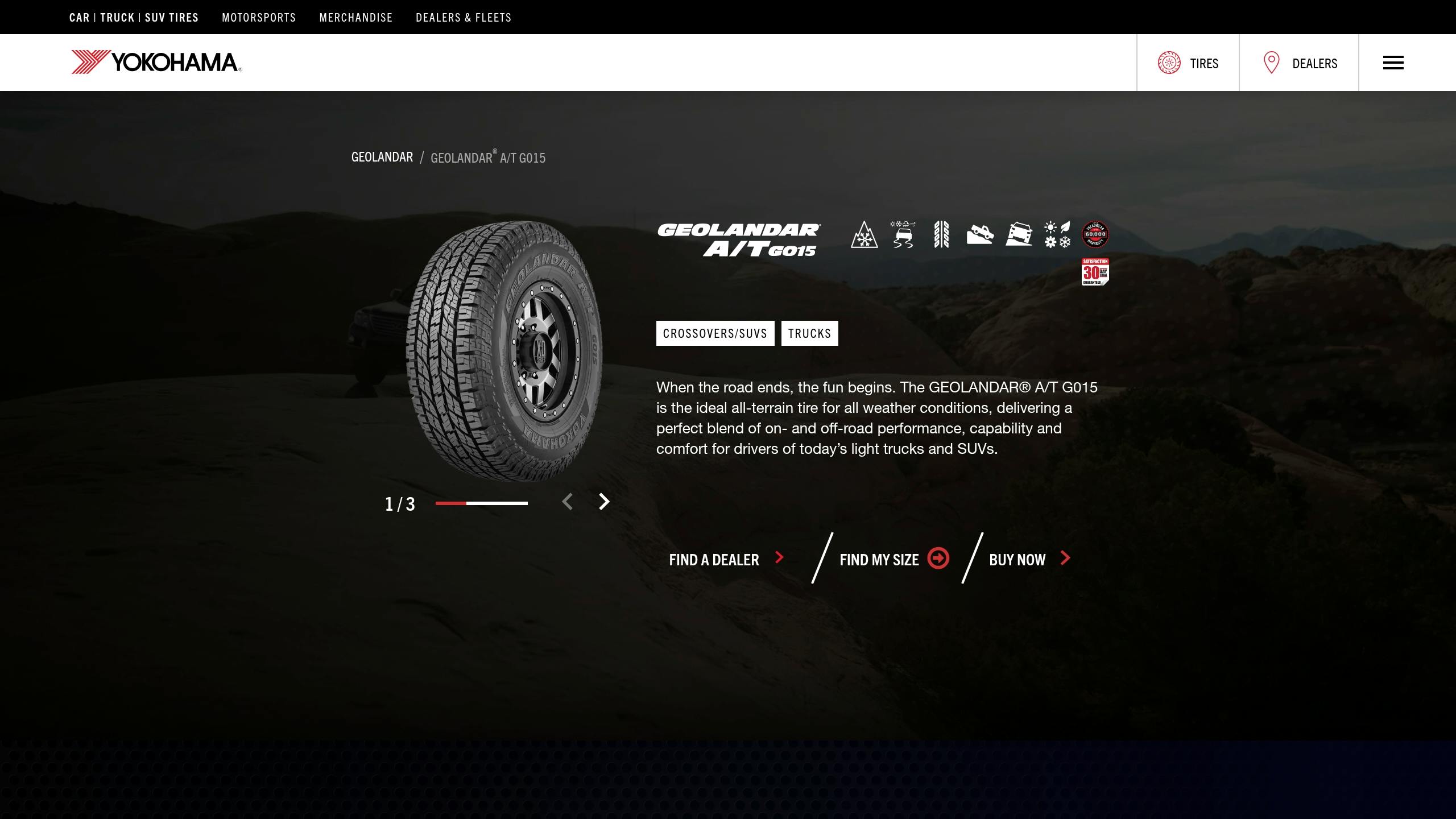
The Yokohama Geolandar A/T G015 is a softer all-terrain pick for drivers who want less road noise and better day-to-day comfort than the BFGoodrich KO2.
It makes sense for people who split their time between city commuting and weekend desert drives. Put simply, it’s the natural step down from the KO2 if you spend more time on the road than off it.
In GCC heat, the G015’s heat-resistant compound helps it resist drying, cracking, and early wear on tarmac, gravel, and light off-road routes such as the Hatta tracks.
This tyre suits drivers who want one set for weekday highway use and weekend trail runs. Families and crossover owners will likely find the best balance here. Next, compare it with the Bridgestone Dueler A/T 002 if you want a newer all-terrain option with a different road-and-trail mix.
8. Bridgestone Dueler A/T 002
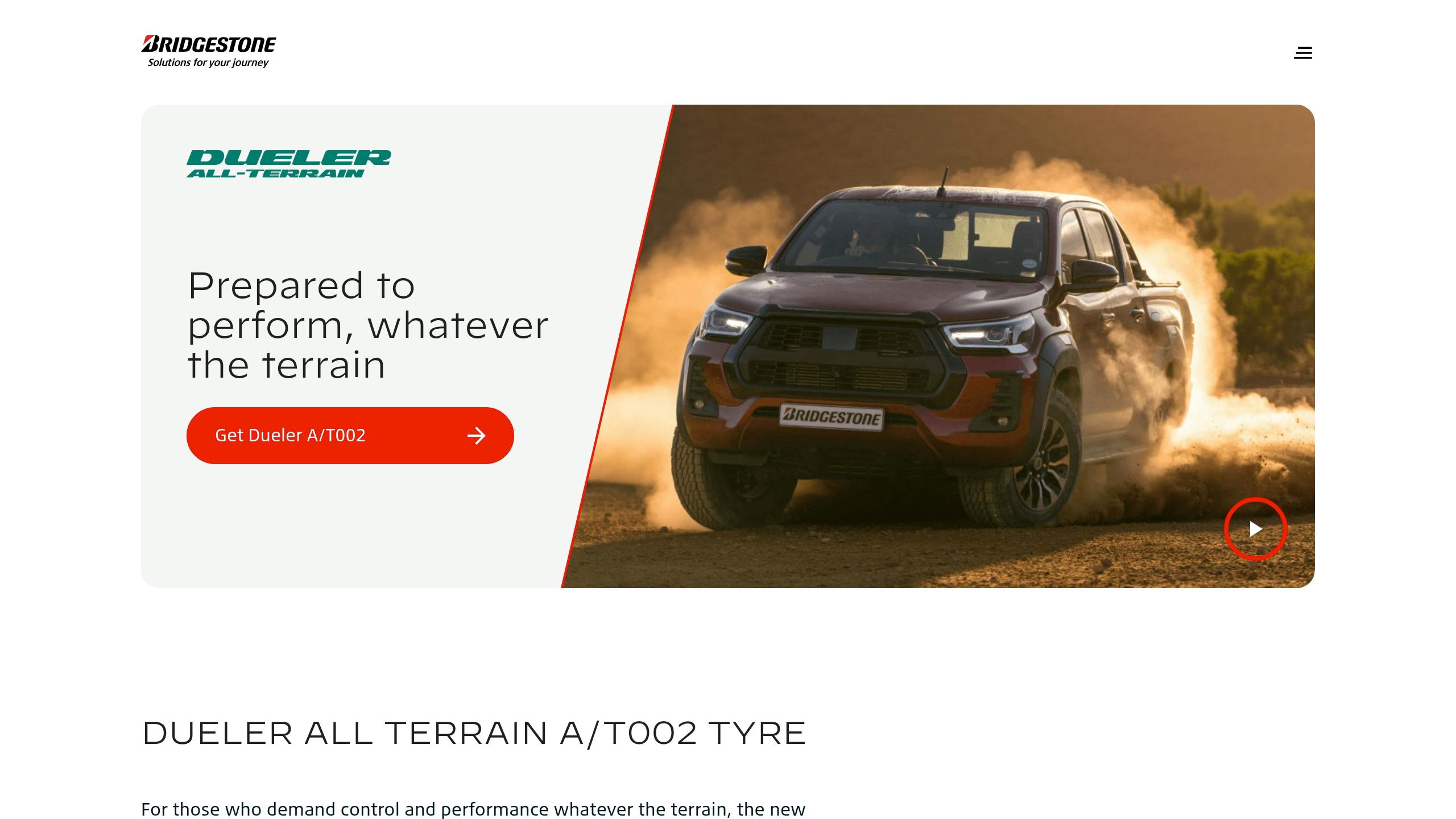
Compared with the more comfort-led G015, the Dueler A/T 002 leans further toward stability and traction. It’s a good fit for GCC drivers who divide their time between highways and light off-road use, especially SUV and 4x4 owners who spend most of the week on asphalt and only head off it now and then.
In the UAE, summer road temperatures can climb past 60°C, so heat resistance matters just as much as traction. That’s where the Dueler A/T 002 makes sense. It sits between road comfort and off-road grip for drivers who want one set of tyres for mixed GCC use.
Put simply, it’s a sensible middle-ground pick. You get more off-road ability than a road tyre, but without as much noise and harshness as a full mud-terrain tyre.
For a softer, more road-focused all-terrain option, compare it next with the Yokohama Geolandar A/T G015.
9. Michelin e.Primacy
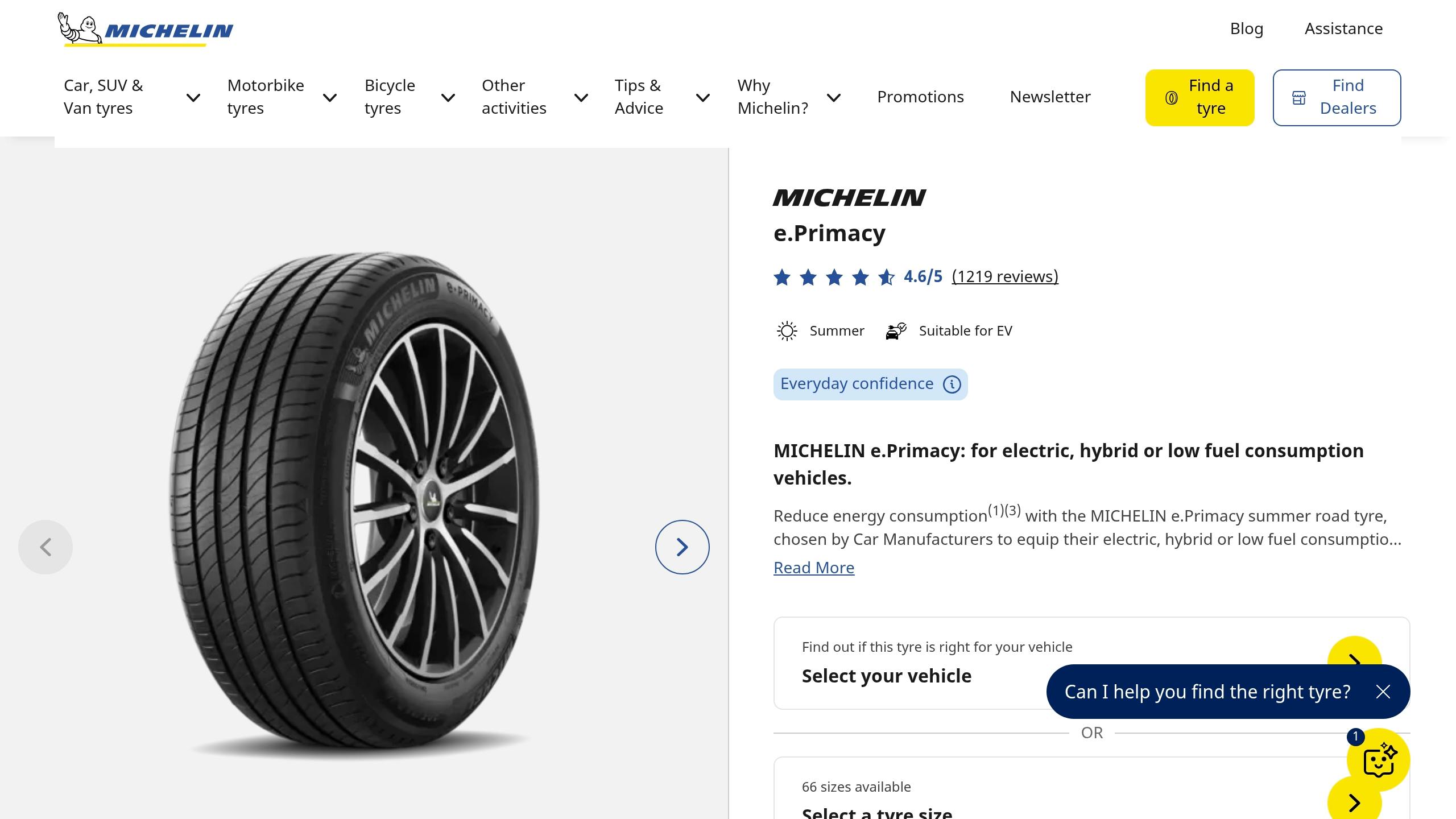
For EVs, the focus changes. It’s less about outright traction and more about efficiency, low noise, and load capacity.
The Michelin e.Primacy is a summer tyre made with EVs and hybrids in mind. Its job is simple: cut rolling resistance, help stretch range, and lower energy use. In GCC summer heat that can hit 50°C, though, low rolling resistance only matters after two basics are covered: heat stability and the right load rating. Michelin says the tyre delivers about 27% lower rolling resistance than similar tyres. For EV drivers, the brand also estimates about a 7% range increase - or roughly 30 km extra from a 400 km range.
On hot GCC roads, the e.Primacy leans toward range rather than sporty grip. That makes sense. If your main goal is to get more distance from each charge, this tyre fits the brief.
Noise is another area where it stands out. Independent tests have recorded road noise as low as 69.3 dB, and the tyre has placed first for noise in comparison tests. In an EV, where there’s less engine sound to mask tyre hum, that can make the cabin feel much calmer.
The trade-off shows up in the wet. Test results keep pointing to longer wet braking distances and weaker aquaplaning resistance. So if wet-road confidence matters more to you than squeezing extra kilometres from the battery, other EV-rated tyres may give you a better mix.
Size availability usually runs from 195/65 R15 to 245/45 R18. Before buying, check the handbook or the driver’s door-jamb placard for the correct:
Rim size
Width and aspect ratio
Load index
Speed rating
For heavier EVs, go with XL versions where required. It also pays to check tyre pressures often during summer. Under-inflation builds more heat and can cut range at the same time.
10. Michelin Pilot Sport EV
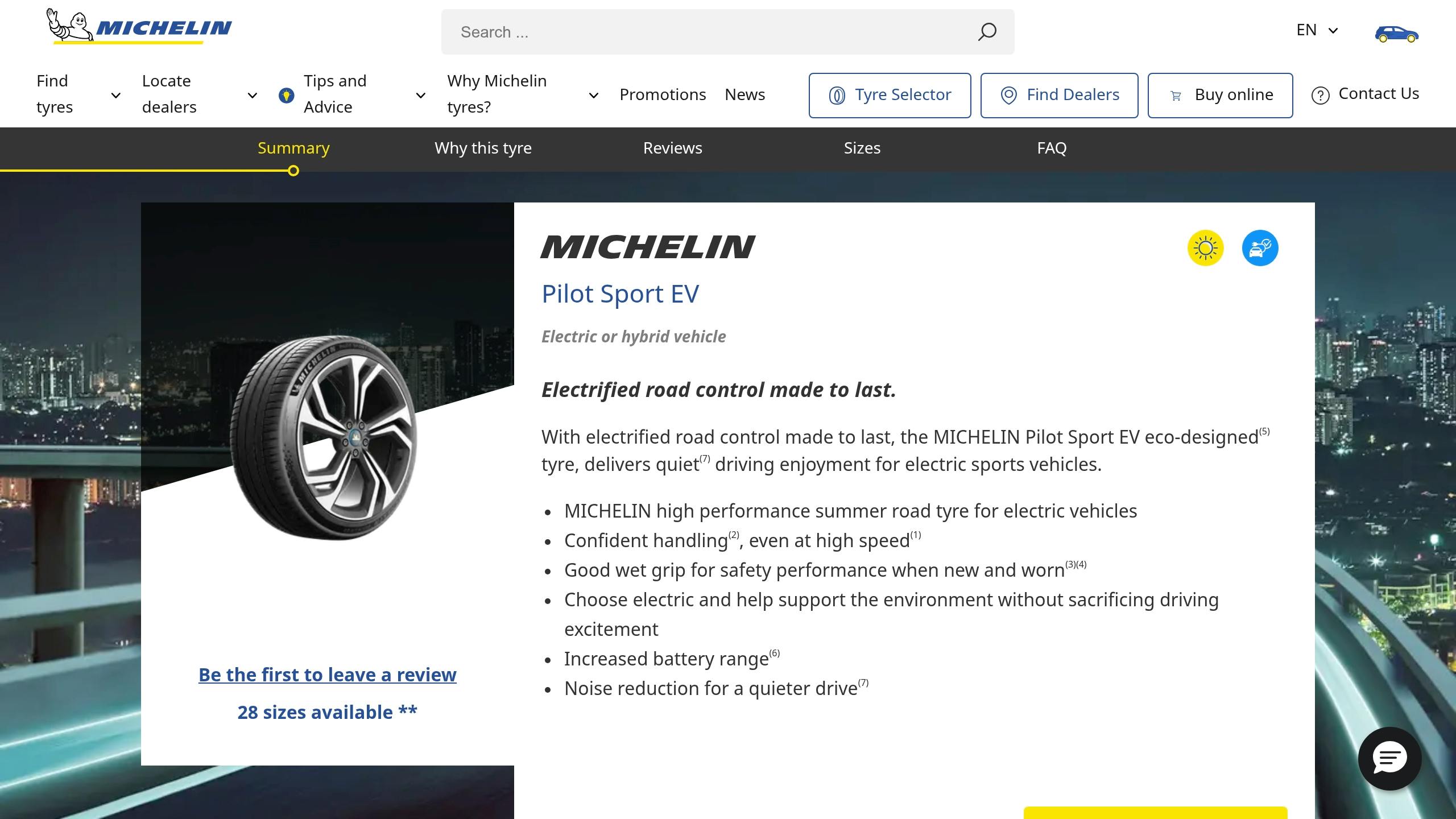
The Michelin Pilot Sport EV is built for performance EVs that need strong grip, steady handling, and low cabin noise. If the e.Primacy is the better match for range-first driving, this tyre is aimed at drivers who want sharper steering feel and more confidence at higher speeds.
Its reinforced build is designed to deal with EV weight and the instant torque these cars deliver under hard acceleration. Michelin also says the acoustic foam helps cut cabin noise, while the tyre is made to support range. On UAE motorways, where cars often cruise at high speed and road surfaces heat up fast, that mix of load support and stability can make a clear difference.
Sizes range from 18 to 22 inches, with a focus on larger performance fitments. UAE retailer listings show prices from about AED 1,349 for a 235/45 R20 100H AO to AED 1,598 per tyre for a 295/40 R21 111Y. Before you buy, check the exact OEM code. Fitments can vary from one car to another, and that matters more than many drivers expect.
This places the Pilot Sport EV in the premium performance segment, with a very different focus from EV tyres built mainly around efficiency. It makes more sense for UAE drivers who want a performance EV tyre for fast motorway driving, while the e.Primacy remains the better pick for smaller EVs or range-first use.
11. Hankook iON evo
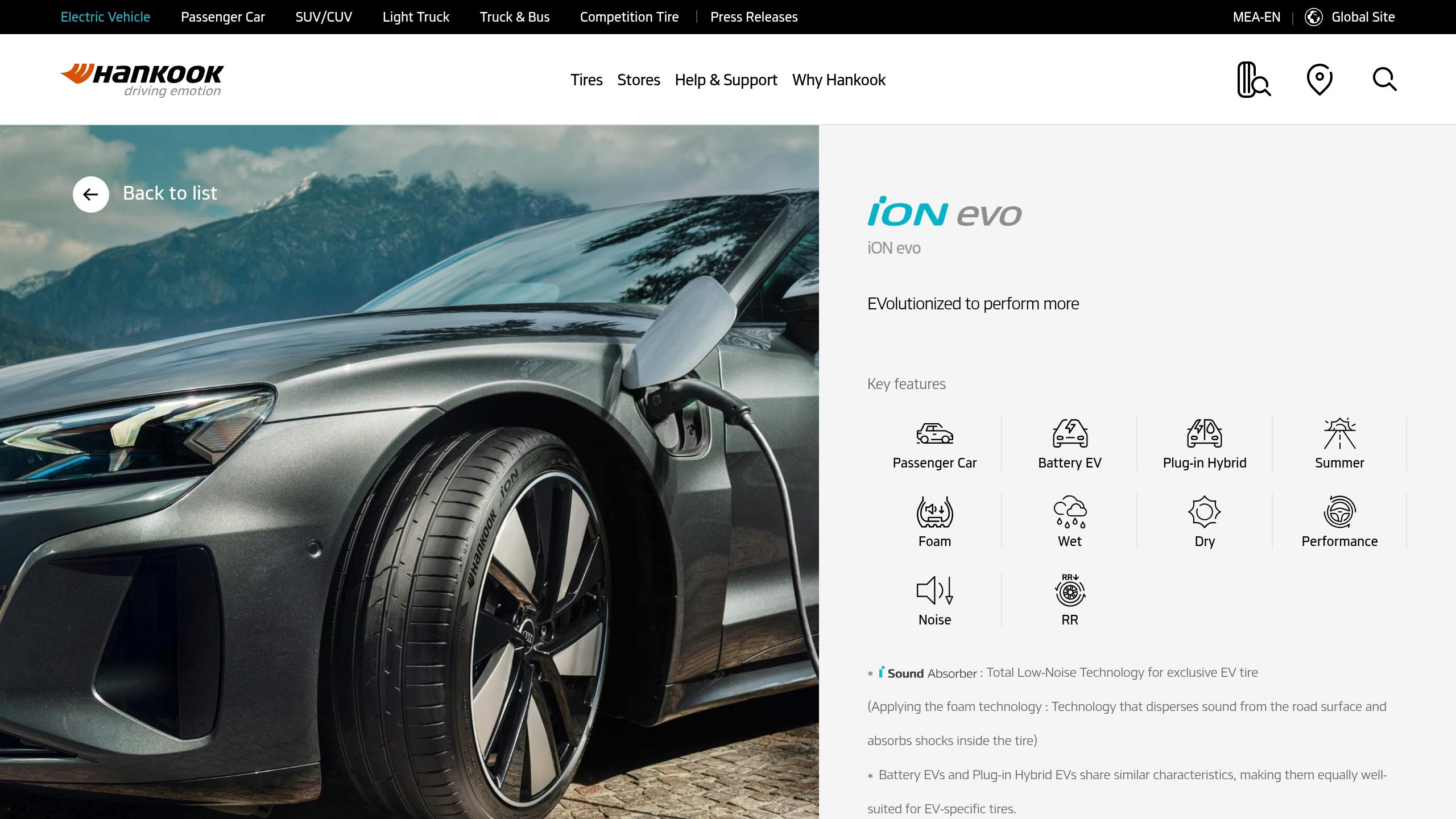
If the Michelin e.Primacy leans toward range and the Pilot Sport EV leans toward performance, the Hankook iON evo lands right between them. It’s Hankook’s EV-focused summer tyre, built for drivers who want low rolling resistance, less road noise, and strong wet and dry grip without giving up day-to-day comfort. On 50°C GCC roads, that matters. The goal isn’t just saving energy. It’s also keeping noise, wear, and range in check during long motorway runs with a heavy battery pack on board.
Hankook uses its EVolution compound, Sound Absorber technology, and EV Contour Technology to reduce rolling resistance, cabin noise, and load stress. In a TÜV Süd test, the iON evo posted the lowest cabin noise at 68.6 dB and the lowest rolling resistance at 7.65 N/kN among the tyres tested. Hankook also says that cutting rolling resistance by 1 kg/t can increase range by about 4%, which worked out to roughly 30 km of extra driving distance in one Auto Bild EV tyre test.
That’s only part of the story. Independent tests also place the iON evo near the top for wet and dry grip, braking, and handling, and one major comparison named it the overall winner among EV summer tyres. Braking performance is strong too: about 39–40 m in the wet and 33–34 m in the dry from 100 km/h. That puts it among the better performers in its class. It also carries an EU label grade A for wet grip across available sizes. In places like Dubai or Abu Dhabi, where rain can show up out of nowhere and turn roads slick fast, that’s a big plus. Hankook also says the iON evo was fitted as OE on the updated Porsche Taycan.
In the UAE, listings put it at around AED 1,008 to AED 1,290 fitted, depending on size. Sizes span 18 to 22 inches in some markets, so it covers a wide spread of EV fitments, including heavier SUVs and crossovers. That makes it a good match for:
daily commuters in Dubai and Abu Dhabi
family SUV owners
corporate fleets
If you often drive off-road or head onto desert tracks, the all-terrain options covered earlier in this guide make more sense. If you want a sportier EV option, the next stop is the Pirelli P Zero Elect.
12. Pirelli P Zero Elect
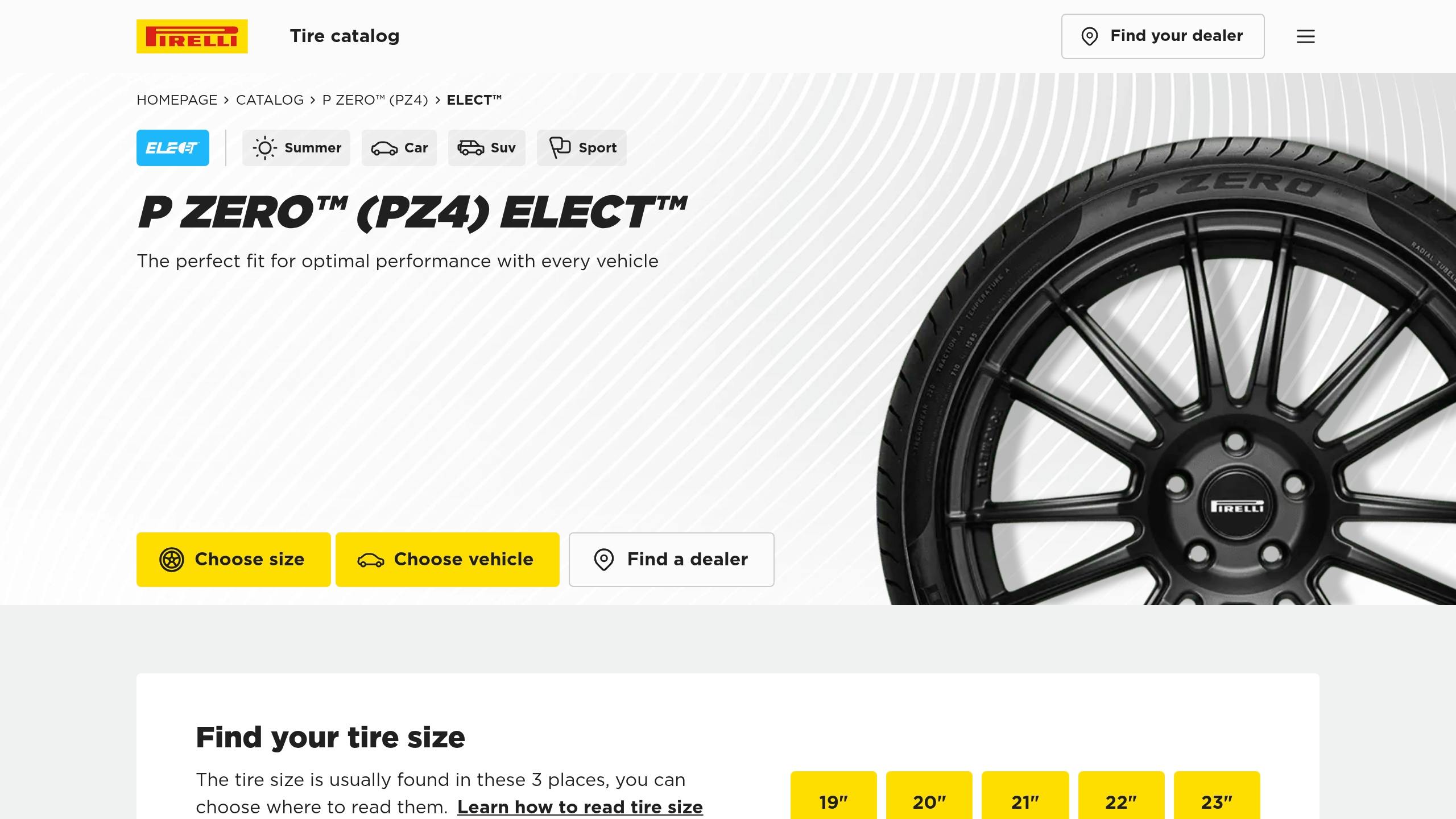
The Pirelli P Zero Elect is the performance-first option in Pirelli’s EV tyre range. It’s a premium summer tyre for paved roads, aimed at UAE drivers who care most about sharp steering, steady high-speed behaviour, and strong dry-road grip during fast motorway driving in 50°C heat. This is not an all-terrain tyre. On scorching tarmac, it’s built to stay planted at speed, not wander off-road. If you want the sportiest EV tyre in this group, this is the one to look at.
While the Michelin e.Primacy and Hankook iON evo put more weight on efficiency, the P Zero Elect leans harder into handling. Pirelli says its Elect technology is made to deal with EV weight, instant torque, noise control, and lower rolling resistance. In the same family, the newer P Zero E Elect adds stronger efficiency credentials and became the first ultra-high-performance tyre to earn an A-A-A EU label rating across its 17 launch sizes. Even so, the core P Zero Elect remains the sharper-driving choice.
It’s a good fit for premium EVs, but the exact size, load index, and speed rating still have to match the specific trim. Available sizes run from 18 to 23 inches, with UAE-relevant examples such as 255/35 R20, 255/45 R19, and 305/30 R21.
There’s a trade-off here. You give up some price and tread-life value to get better steering response and more confidence on the motorway. That sportier setup can wear the tread faster, especially if you drive hard and use the EV’s instant acceleration often.
Choose it over the Michelin e.Primacy if handling matters more. Choose it over the Hankook iON evo only if driving feel matters more than price. Skip it if your main goal is the lowest price, the longest tread life, or any kind of off-road use.
Next, compare all tyre groups by heat resistance, tread life, noise, grip, and value.
How These Tyres Compare on the 4 Key Buying Factors
Picking the right tyre for UAE roads comes down to four things: heat resistance, tread life, road noise, and value. On roads that can climb past 50°C in summer, the smart pick has less to do with brand badge and more to do with how you drive day to day. This comparison cuts through the noise and focuses on the trade-offs that matter in GCC heat.
Factor 1: Heat Resistance
For most city and motorway driving, summer tyres are the right fit. If your routine includes both tarmac and desert runs, all-terrain tyres make more sense. And if you drive an electric car, EV-rated tyres are built to deal with the extra weight and instant torque that come with it.
That’s the first filter. Brand comes after.
Factor 2: Tread Life and Wear
EVs can wear tyres faster because they put more force through the tyres from a standstill, and they usually carry more weight too. That’s why regular tyre checks matter more than many drivers think.
All-terrain tyres can also wear faster on asphalt when they’re used mostly on-road. So if you rarely leave the road, they may not be the best match. They make more sense for drivers who actually need off-road grip, not just the rugged look.
Factor 3: Road Noise and Comfort
EV tyres are made to help cut road noise, which matters more in electric cars because there’s less engine sound to mask it. If most of your driving is in the city or on highways, comfort-led summer tyres usually give the quieter, smoother drive.
All-terrain tyres give up some cabin comfort for stronger off-road grip. That trade-off is worth it when traction matters more than keeping the cabin quiet.
Factor 4: Value and Best-Fit Buyer Profile
Value isn’t about buying the cheapest tyre. It’s about buying the right one for your driving habits.
Daily commuters and family drivers usually get the best mix of comfort and wear from comfort-led summer tyres.
SUV owners who split their time between city roads and desert trips should look at all-terrain tyres.
EV owners should put EV-rated tyres at the top of the list for lower noise and better load support.
If comfort is your main goal, look at Michelin Primacy 4+, Bridgestone Turanza 6, Continental PremiumContact 7, and Hankook Ventus Prime4.
For mixed road and desert use, go with BFGoodrich KO2, Yokohama Geolandar A/T G015, or Bridgestone Dueler A/T 002.
For EVs, choose Michelin e.Primacy for range, Hankook iON evo for balance, or Pirelli P Zero Elect for performance.
Use these trade-offs to match each tyre type to your driving profile in the next section.
Pros and Cons by Tyre Type and Buyer Profile
The models above fall into three practical buying groups. This matrix makes the match-up simple for GCC driving.
Tyre Type | Best For | Key Strengths | Main Drawbacks |
|---|---|---|---|
Summer / Highway | Family crossovers, daily commuters | Quiet ride, strong wet grip, better fuel economy | Poor traction in soft sand; sidewalls vulnerable off-road |
All-Terrain (A/T) | Nissan Patrol, Land Cruiser 300, Prado | Puncture resistance on rocks, better sand traction, heat durability | Noisier on motorways; higher fuel spend due to rolling resistance |
EV-Rated | Tesla Model Y, BYD Seal, Mercedes EQ | Supports heavy battery loads, extends range, cuts cabin noise | Higher upfront price; can wear faster with hard acceleration |
For mixed-use 4x4s, the decision comes down to one thing: how much time the vehicle spends on tarmac versus sand. For Nissan Patrol and Land Cruiser 300 owners who live on the highway most days and head into the desert only now and then, a road-biased all-terrain tyre is the middle option that makes the most sense.
It gives you some off-road toughness without turning every motorway drive into a noisy, fuel-hungry slog. If desert use is rare, this type of tyre keeps ride comfort and fuel economy closer to a summer tyre, while still giving you basic off-road protection when the route gets rough.
EVs need a different filter. Here, load and range matter more than the name on the sidewall. EV drivers should always check for the "HL" (High Load) marking or an EV-specific designation on the tyre sidewall. That part isn’t optional. Vehicles like the Tesla Model Y and BYD Seal carry much more weight, and the tyre needs to support that load while coping with instant torque over time, especially on long summer runs along the E11.
For family crossover drivers - Ford Everest, Jetour X70, Tank 300 - a summer tyre is almost always the right move. Most of these vehicles never see serious off-road use, so the comfort, fuel savings, and wet-grip edge of a summer tyre stand out on inter-city trips. In the UAE, that difference is easy to feel. Try to pick tyres with a high heat-resistance rating, especially for long high-speed motorway driving in 45–50°C summer heat, where delamination becomes a real risk.
Conclusion
For UAE tyre buying in 2026, start with the non-negotiables: GCC compliance, a tyre built for extreme Gulf heat, and a recent manufacture date.
After that, it’s mostly about how and where you drive.
If you spend most of your time on city roads and motorways, summer touring tyres make the most sense. They’re built for comfort, lower road noise, and steady daily driving. If your route includes both tarmac and desert tracks, all-terrain tyres are the better fit. And if you drive an electric car, EV tyres are the smart pick because they’re made to handle extra vehicle weight, keep noise down, and help with range.
Use this shortlist to line up the tyre type with your driving pattern and budget.
Use Case | Buyer Need | Recommended Models |
|---|---|---|
Urban / Motorway | Comfort and quiet | Michelin Primacy 4+, Bridgestone Turanza 6 |
Urban / Motorway | Lower cost | Hankook Ventus Prime4, Continental PremiumContact 7 |
Mixed Tarmac / Desert | Off-road traction | BFGoodrich All-Terrain T/A KO2 |
Mixed Tarmac / Desert | Road-biased balance | Yokohama Geolandar A/T G015, Bridgestone Dueler A/T 002 |
Electric Vehicle | Handling and speed | Michelin Pilot Sport EV, Pirelli P Zero Elect |
Electric Vehicle | Range and efficiency | Hankook iON evo, Michelin e.Primacy |
Before you pay, check three things:
Make sure the tyre size matches the sidewall spec on your car.
Check that the load index and speed rating meet your vehicle manufacturer’s requirements.
Confirm local stock before you buy.
If two options fit your car, go with the one that suits your daily route best. A tyre can look good on paper and still be the wrong fit for your commute. In the UAE, the best choice is the one that matches your car, your roads, and the heat it has to deal with.
FAQs
How do I know if a tyre is GCC-compliant?
In the UAE, the main legal check is tyre age: tyres older than five years can’t be used on the road.
You also need tyres that can handle extreme heat. In summer, road surfaces can hit 70–80°C, which is no joke. On top of that, the tyre size and speed rating should match your vehicle’s requirements. You’ll usually find those details on the sticker inside the driver’s door jamb.
One more thing: don’t use the maximum PSI printed on the tyre sidewall as your normal running pressure. That number is not your day-to-day setting.
Should I choose summer tyres or all-terrain tyres?
Choose summer tyres for daily city and highway driving. They’re made to handle hot asphalt, with strong grip and heat resistance even when road surfaces hit 50°C+.
Go with all-terrain tyres only if you spend a lot of time off-road on dunes, rocky tracks, or gravel. They’re built for rough ground, but on normal roads they can be noisier and use more fuel.
Do EVs really need EV-rated tyres?
Yes. EV-rated tyres matter for electric vehicles in the UAE.
EVs are often heavier than petrol cars, and they deliver instant torque. That combination puts more strain on tyres from the moment you press the accelerator.
These tyres are made to deal with that extra load while keeping rolling resistance low, which helps battery efficiency. In UAE summer, road surfaces can hit 70–80°C. At those temperatures, good heat resistance can help cut early wear, sidewall damage, and the risk of blowouts.