UAE Fuel Prices April 2026: Will Petrol and Diesel Rates Rise, Drop, or Stay the Same?
Will UAE petrol prices rise or fall in April 2026? Get the latest fuel price predictions for Super 98, Special 95, E-Plus 91 & diesel. Learn more on YallaMotor.

Will UAE petrol prices rise or fall in April 2026? Get the latest fuel price predictions for Super 98, Special 95, E-Plus 91 & diesel. Learn more on YallaMotor.
Discover the latest car news, expert reviews and new launches on YallaMotor.

EU proposes classifying carbon fiber as hazardous—threatening sports cars, EVs, and aerospace. Learn how this impacts automakers like BMW, Tesla, and supercar brands. | YallaMotor

How automakers like Audi, BMW, and Ford are responding to Trump's 25% tariffs on imported vehicles. Learn about price changes, production pauses, and strategies.

The global electric vehicle revolution is accelerating, and China is leading the charge. Industry analysts predict that by 2025, electric and hybrid vehicle sales in China will surpass those of petrol-powered cars for the first time. With Chinese automakers introducing cutting-edge EVs, many of these models are expected to make their way to the UAE market.

As the year comes to a close, automakers are preparing to unveil some of their most exciting models, ensuring a thrilling end to 2025. One of the most anticipated releases is the all-new BMW iX3, an electric SUV introducing the cutting-edge Neue Klasse platform, which will serve as the foundation for all future BMW EVs.

Honda and Nissan cancel their $50B merger at the last minute. Discover the reasons behind the fallout and what’s next for both automakers.

Canada's iZEV Program is temporarily suspended due to funding issues. Learn how automakers and government plan to address the shortfall. Learn more on YallaMotor.

Discover how Geely stacks up against competitors in the budget-friendly car market.

President Trump's proposed tariffs on Canada and Mexico could significantly impact U.S. car prices, automakers, and the economy. Learn more about the implications on YallaMotor.

The UAE’s automotive market has witnessed a remarkable transformation over the past decade, with Chinese cars carving out a significant niche. As we look ahead to 2025, the future of Chinese automakers in the UAE appears brighter than ever. Here’s a closer look at the trends and predictions shaping their continued success in the region.

The UAE has been making remarkable strides toward sustainable transportation, and electric vehicles (EVs) are at the forefront of this transformation. Among the growing players in this field, Chinese automakers are emerging as key contributors, offering cutting-edge EV technology, affordability, and eco-friendly solutions tailored to the UAE market. Let’s explore why Chinese electric vehicles are set to drive the future of sustainability in the region.

In the dynamic and competitive UAE automotive market, Chinese automakers have quickly risen to prominence, challenging established brands and winning over consumers with their unique value propositions. But what exactly is driving this shift, and why are Chinese cars becoming a preferred choice for UAE residents? Let’s dive into the key factors contributing to their success.

The automotive world is abuzz with the groundbreaking news of a potential merger between three of Japan's biggest automakers: Honda, Nissan, and Mitsubishi Motors. If successful, this historic collaboration will reshape the global car industry, including significant impacts on the UAE market. Talks have officially begun, with the aim of completing the merger by 2026.

There are often times when we get to see mainstream automakers promoting the comfort and performance aspects of their cars.

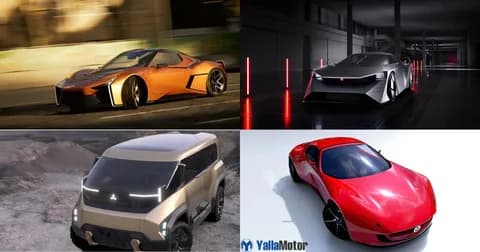
The 2023 Tokyo Auto Show has set the automotive world abuzz with a stunning array of concept cars, presenting a vision of the future that is both electrifying and exhilarating. From Toyota's bold FT-Se to Mazda's smooth Iconic SP, automakers have left no stone unturned in their pursuit of the ultimate electric sports car.

For a while now, Korean automakers have been killing it. The outstanding brands here include Hyundai, its posh arm Genesis, and Kia. The whole group has been striving to do its best by putting out some of the best products in almost every category. Over the years, the auto giant has come to perfect the recipe without making too many crucial errors in any department.

The pace at which the automobile industry has been growing in the realms of electric in the recent years has been nothing short of fascinating. There are more than enough contenders who can lay claim to one or more achievements in this field. With such levels of competition, automakers have to continue pushing boundaries that were previously unexplored. One of the brands that has long been making noise in this genre is none other than General Motors.

Since the mid-2010s, GAC Motor has become one of the most popular Chinese automakers in the Middle East. And in 2016, the GS8 was launched and is still the largest SUV the brand makes – one of its flagship offerings even.

Laurels are as important to automakers as they are to film stars. Every product and step a company makes has a lot of bearing on their shoulders. Products have to be connected, maintain poise between the crucial parameters a potential consumer would delve into and function in such a way that environmental quality is anything but pejorative.

Magazines are publishing with electrifying velocity, the reveals, launches and progress of electric cars and other forms of electric mobility. Throwing a Javelin hard to smitten on the word ‘sustainability,’ automakers are shifting their focus towards electric mobility with profound impact and aplomb to assuage the sepulchral aftermath of environment degradation owing to impetuous extraction of resources and using those to create products and appliances which vilipend our future generation’s quality of life.

Automakers are racing towards ‘electrifying’ their cars as rapidly as EVs propel from zilch to 100 Km/h. This has compelled auxiliary industries to make a profound shift from conventional oil products to those which befit electric vehicles. This comes as a result of the fact that EVs rely on different hardware for their movement and distinction in technology requires such oil which can support mobility for the future.