-
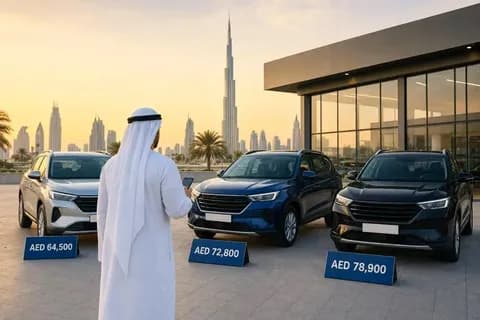
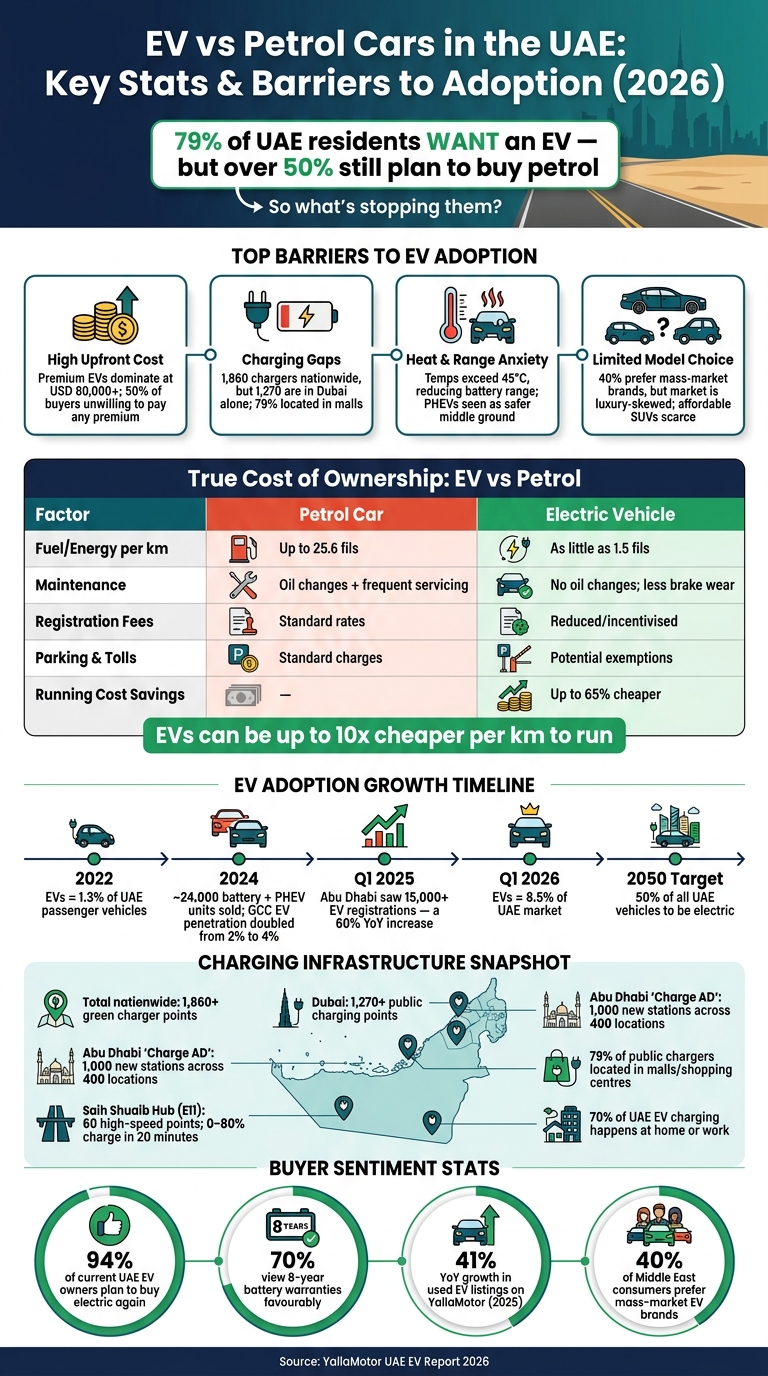
79% of UAE residents want an EV, but over half still prefer petrol cars for their next purchase. Why? High upfront costs, limited charging infrastructure, and doubts about performance in UAE conditions are key barriers.
-
EV adoption is growing, with EVs making up 8.5% of the market in Q1 2026, but challenges remain.
-
Charging stations are unevenly distributed. Dubai has over 1,270, while other emirates lag behind.
-
Cost is a major concern. Premium EVs dominate the market, leaving few options for middle-income buyers.
-
Range anxiety and heat concerns also deter buyers, especially for long-distance and off-road travel.
Efforts to address these issues include government initiatives, expanded charging networks, affordable EV models, and buyer-friendly programs like extended test drives and leasing. UAE buyers can save significantly on running costs, but the gap between interest and ownership persists.
EV vs Petrol Cars in the UAE: Cost, Infrastructure & Adoption Stats 2026
Why UAE Buyers Are Not Switching to EVs
Not Enough Charging Stations
By February 2026, the UAE had over 1,860 active green charger points. However, their distribution is far from balanced. Dubai alone hosts more than 1,270 public charging points, leaving other emirates like Ras Al Khaimah and Umm Al Quwain with significantly fewer options.
For many apartment residents, installing home chargers involves costly retrofitting, making them reliant on public charging stations. Compounding the issue, 79% of these public chargers are located in malls and shopping centres. This uneven availability creates a major hurdle for widespread EV adoption.
High Purchase Prices and Uncertain Long-Term Costs
The high initial cost of EVs remains a significant barrier. In the UAE, premium EV models priced above USD 80,000 dominate the market, leaving middle-income buyers with limited options. This is reflected in a survey showing that half of potential buyers are unwilling to pay any premium for an EV compared to a petrol car.
Although EVs can offer up to 65% savings in running costs compared to petrol vehicles, the steep upfront price and uncertainty around resale values make buyers hesitant. Even though 70% of buyers view battery warranties of up to eight years favourably, this reassurance alone isn't enough to sway them. Limited model choices further dampen enthusiasm, especially for those seeking affordable options.
Limited Model Choice and Low Brand Familiarity
Beyond cost and infrastructure, the lack of model variety also discourages potential buyers. Around 40% of Middle East consumers prefer vehicles from well-known, mass-market manufacturers, but the UAE's EV market is heavily skewed toward luxury and premium brands. This mismatch becomes even more pronounced when considering body type preferences - more than half of likely EV buyers want an SUV, yet affordable electric SUVs remain scarce.
Brands like Zeekr and Polestar are starting to attract tech-savvy customers by focusing on digital integration and connected features. However, for buyers loyal to familiar brands, switching to lesser-known names adds another layer of uncertainty.
"The luxury segment is no longer just about traditional automotive heritage. It now includes a competitive mix of heritage brands such as Mercedes, BMW, and Audi alongside new tech‐forward players like Tesla and Polestar." - Aryaman Tandon, Managing Partner, Praxis Global Alliance
How UAE Conditions Affect EV Performance
The UAE's extreme summer heat, which often exceeds 45°C, poses unique challenges for EVs. High temperatures accelerate battery wear and reduce driving range, which intensifies range anxiety, particularly for inter-emirate travel. As a result, many buyers lean toward plug-in hybrid electric vehicles as a middle ground.
Additionally, popular activities like wadi trips and desert driving highlight another limitation. Current EV models lack options tailored for these rugged conditions, leaving off-road enthusiasts with few viable choices.
What Is Being Done to Support EV Adoption
Government Initiatives and Charging Network Expansion
Efforts to boost electric vehicle (EV) adoption in the UAE are gaining momentum, thanks to initiatives led by government bodies and industry players. Federal and emirate-level authorities are addressing the gap between interest in EVs and actual ownership. For instance, in May 2025, Abu Dhabi Mobility (ITC) introduced the "Charge AD" network. This unified public charging system, featuring standardised pricing, includes 1,000 new charging stations spread across 400 key locations in Abu Dhabi Island, Al Ain, and Al Dhafra. These stations were developed through public-private partnerships, with pricing set at AED 0.70 per kilowatt-hour for AC chargers and AED 1.20 per kilowatt-hour for fast DC chargers.
"This investment underscores Abu Dhabi's commitment to sustainable mobility and positions Abu Dhabi Mobility as a leader in transport innovation." - Dr. Abdulla Hamed Al Ghfeli, Acting Director General, Integrated Transport Centre
Electrification of highways is also advancing rapidly. ADNOC Distribution is working on electrifying UAE national highways, with plans for 15 hubs by the end of 2026 and 20 hubs by 2027. A major milestone was achieved in January 2026 with the launch of the world's sixth-largest superfast EV charging hub at Saih Shuaib on the E11 highway between Abu Dhabi and Dubai. This facility includes 60 high-speed charging points and a coworking space for commuters, allowing most EVs to charge from 0% to 80% in just 20 minutes.
On a broader scale, the Ministry of Energy and Infrastructure has set an ambitious goal for EVs to make up 50% of all vehicles on UAE roads by 2050.
"Expanding the high-speed charging network is central to our strategy to cut energy consumption in transport and drive the transformational 'Global EV Market' initiative, which aims to see electric vehicles represent 50% of all cars on UAE roads by 2050." - Eng. Sharif Al Olama, Undersecretary for Energy and Petroleum Affairs, Ministry of Energy and Infrastructure
While infrastructure development is crucial, automakers and dealers are also stepping up to make EV ownership more appealing.
New EV Models and Dealer Support Programs
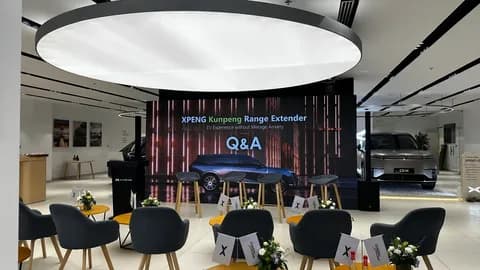
To meet the growing demand for affordable and dependable EVs, automakers are introducing more options. Chinese brands like BYD, Xpeng, and Zeekr are establishing showrooms and discovery centres in major UAE cities. This shift addresses the need for mid-range EVs in a market that has been historically dominated by luxury models priced above USD 80,000.
Dealerships are also introducing buyer-friendly programs, such as extended test drives, short-term leasing, and buy-back guarantees, aimed at reducing the perceived risks of switching to an EV. These efforts appear to be paying off - Abu Dhabi saw over 15,000 EV registrations in Q1 2025, a 60% increase compared to the same period in 2024. This trend reflects growing buyer confidence, with many consumers showing interest in repeat EV purchases.
"The conversation has moved from 'why I should buy an EV' to 'why I want to buy an EV.' Performance, design, and alignment with a modern, tech-forward lifestyle now play a central role." - Roberto Colucci, Director of EVs, AW Rostamani Group
How YallaMotor Helps Buyers Make Informed EV Decisions
In tandem with these dealer initiatives, YallaMotor provides resources to help buyers navigate the EV market. The platform simplifies the decision-making process by offering updated EV listings, price comparison tools, and trusted vehicle inspection services. Used EV listings have seen a 41% year-on-year growth in 2025, allowing buyers to compare models side by side. Additionally, AI-powered valuation tools and battery health inspection services offer extra reassurance for those considering pre-owned EVs.
With over 1.4 million unique monthly visitors and coverage of more than 75 automotive brands, YallaMotor equips UAE buyers with the tools and insights needed to make confident choices as they transition to more sustainable transportation options.
How UAE Buyers Can Make the Switch to an EV
How to Calculate the True Cost of Owning an EV
Switching to an electric vehicle (EV) in the UAE starts with understanding the total cost of ownership. While the upfront price of an EV might seem high, the long-term savings on running costs can be substantial. In fact, EVs can be up to 10 times cheaper per kilometre to operate compared to popular petrol SUVs. For instance, conventional internal combustion engine (ICE) vehicles like the Ford Ranger or Toyota HiLux cost between 16.7 fils and 25.6 fils per kilometre to run, while EVs such as the BYD Atto 3 or Tesla Model Y can cost as little as 1.5 fils per kilometre.
Beyond fuel savings, EVs cut down on maintenance expenses by eliminating the need for oil changes and reducing brake wear. UAE residents also benefit from incentives like lower vehicle registration fees, potential free parking, and Salik toll exemptions, making EV ownership even more appealing.
Since around 70% of EV charging in the UAE happens at home or work, installing a certified AC charger (ranging from 7kW to 22kW) at your residence is a practical step. Be sure to include this installation cost in your overall calculation. Compare these figures with your current petrol and maintenance costs to pinpoint your break-even point.
| Cost Factor | Petrol Car | Electric Vehicle |
|---|---|---|
| Fuel / Energy per km | High (up to 25.6 fils) | Low (as little as 1.5 fils) |
| Routine Maintenance | Oil changes, frequent servicing | No oil changes; less brake wear |
| Registration Fees | Standard rates | Reduced or incentivised |
| Parking & Tolls | Standard charges | Potential exemptions available |
Once you've calculated these costs, you’ll have a clearer picture of the savings and can confidently choose an EV that suits your lifestyle.
Picking the Right EV for How You Drive
Choosing the right EV depends heavily on how and where you drive. If most of your trips are within the city, nearly any modern EV will work, especially since the UAE's growing charging infrastructure supports urban use. Those who frequently travel between emirates should check for charging hubs along their routes and consider models with a longer range. For drivers venturing into remote areas, a Plug-in Hybrid Electric Vehicle (PHEV) might be a good compromise, offering the flexibility of petrol backup to reduce range anxiety.
The UAE market is also seeing an influx of affordable EV models from Chinese manufacturers, giving buyers more options to match their budget and driving patterns.
How to Reduce the Risk of Buying an EV
After understanding costs and selecting a model, focus on minimising risks to secure your investment. To address concerns like battery degradation and resale value, opt for models with at least an eight-year battery warranty. Look for guaranteed future value (GFV) or buy-back programmes, which ensure a minimum resale price and shield you from market fluctuations.
For used EVs, a professional battery inspection is essential. Services like YallaMotor's vehicle inspections include battery health checks, helping you assess the remaining capacity. Verifying the balance of the manufacturer’s warranty adds another layer of security.
If you're uncertain about committing to an EV, consider leasing one for two to three years. Leasing keeps you within the warranty period, avoids depreciation risks, and gives you hands-on EV experience. Interestingly, over 70% of consumers in the Middle East already view current EV battery warranties as reliable, suggesting that concerns about risks may be less significant than they seem.
Conclusion: Closing the Gap Between EV Interest and EV Ownership
The gap between wanting an EV and actually owning one often comes down to a few persistent challenges: high upfront costs, inconsistent charging infrastructure, limited familiarity with available models, and concerns about how these vehicles perform in UAE-specific conditions. In 2022, EVs made up only 1.3% of passenger vehicles in the UAE, but things have been changing quickly since then.
Recent numbers highlight this progress. In 2024, nearly 24,000 battery and plug-in hybrid units were sold across the UAE, while the GCC's EV sales penetration rate jumped from 2% to 4% in the same year. Dubai’s charging network now boasts over 1,270 public charging points, and there are more than 1,860 green charging points nationwide, all supported by the UAE’s Net Zero 2050 strategy, which promises even more infrastructure growth.
However, this shift isn’t evenly distributed. Buyers in Dubai and Abu Dhabi are far more likely to adopt EVs compared to those in Ras Al Khaimah or Umm al Quwain, where charging networks and awareness still need improvement. To fully close the gap, similar levels of investment and focus must extend to less urbanised emirates.
Thanks to government initiatives and growing market options, individual buyers now have more tools to confidently explore EV ownership. Digital platforms make it easier to compare models and calculate total costs, addressing concerns like cost uncertainty and lack of model knowledge. YallaMotor plays a key role in this journey, offering tools to compare EVs, estimate ownership costs, and even access services like battery health checks. With 94% of current UAE EV owners planning to stick with electric for their next purchase, the experiences of these early adopters make a compelling case for the future of EVs in the region.
FAQs
How much can I save per month with an EV in the UAE?
While there isn’t precise data on the monthly savings of owning an electric vehicle (EV) in the UAE, EVs are generally known for lower running costs compared to petrol-powered cars. This is largely due to reduced fuel expenses and less frequent maintenance needs. However, how much you save depends on factors like local electricity rates, your driving habits, and the cost of installing or using charging infrastructure.
Can I own an EV if I live in an apartment with no home charger?
Yes, owning an electric vehicle (EV) while living in an apartment without a personal charger is entirely doable in the UAE, though it might require a bit more planning. With more than 1,270 public charging stations in Dubai by 2025, the infrastructure supports EV owners who don’t have home charging access. Thanks to government initiatives and private investments, the charging network continues to grow, making it easier for apartment residents to depend on public stations. However, having your own charging point remains the most convenient option for daily use.
Which EVs handle UAE heat and long highway drives best?
Electric vehicles that handle the UAE's intense heat and long highway stretches effectively often come equipped with advanced thermal management systems and batteries designed to perform well in high temperatures. They also boast impressive driving ranges, ensuring reliability on extended journeys. Brands like Tesla and BYD are recognised for their ability to withstand hot climates, making them solid choices for both daily city commutes and longer road trips.