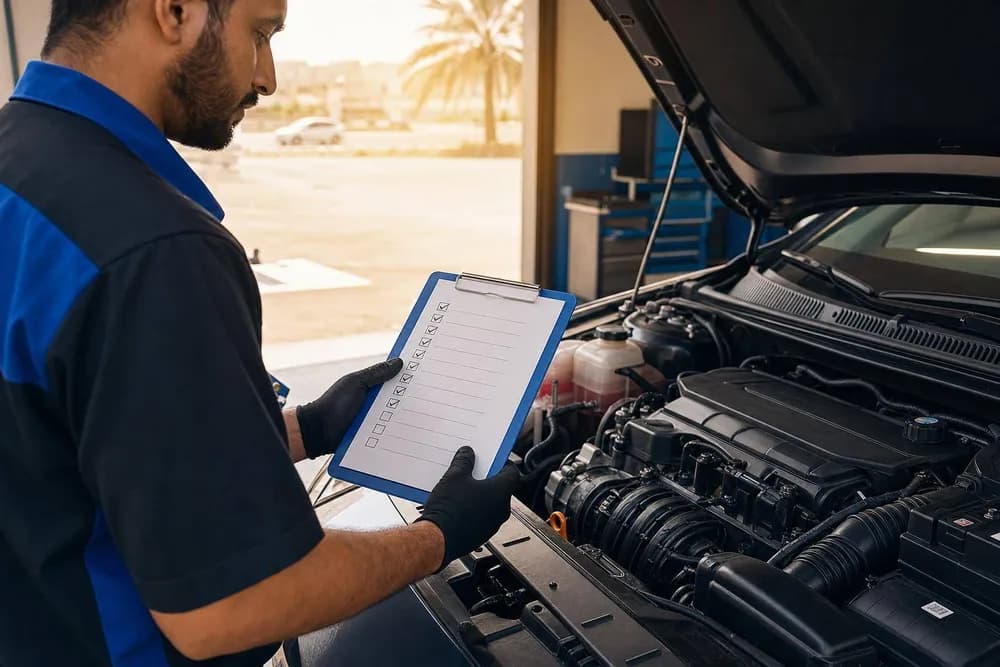
If I had to do only one thing before July in the UAE, I’d book a full June car check. With road surfaces reaching 70–80 °C, parked cabins hitting about 70 °C, and engine bays running far hotter, small faults in AC, coolant, oil, battery, tyres, and brakes can turn into breakdowns fast.
Here’s the short version: I’d check 12 things before peak heat - AC performance, coolant system, engine oil, battery, tyre pressure and age, brakes, wipers, washer fluid, cabin air filter, window tint, emergency kit, and service history. Some jobs are easy at home in 5 minutes. Others need a garage, and a June inspection at around AED 150–350 is usually far cheaper than a summer repair bill.
What this article covers at a glance:
-
Cooling first: AC, radiator, coolant, hoses, belts, fan, and oil
-
Road safety next: battery, tyres, and brakes
-
Visibility and cabin checks: wipers, washer fluid, air filter, and tint
-
Final prep: emergency kit and service records
-
Best timing: book before end of June, before workshop demand climbs
| Check area | What I’d look for | Best action |
|---|---|---|
| AC | Weak cooling, warm air in traffic, bad smells, odd noises | Workshop check |
| Coolant system | Low level, dirty coolant, residue, weak hoses, worn belt | DIY check + workshop if needed |
| Engine oil | Low level, dark gritty oil, burnt smell, service due soon | DIY check / oil service |
| Battery | Slow start, clicking, dim lights, swelling, corrosion | Battery test |
| Tyres | Wrong pressure, low tread, cracks, bubbles, old tyres | DIY check + tyre shop if needed |
| Brakes | Dark fluid, squeal, grinding, spongy pedal, vibration | Workshop check |
| Wipers/washer | Streaking, skipping, low fluid | DIY check |
| Cabin filter | Weak airflow, dusty cabin, musty smell | Inspect/replace |
| Window tint | Peeling, bubbling, faded film, too-dark tint | Repair or replace |
| Emergency kit | Missing water, triangle, inflator, power bank, extinguisher | Restock now |
| Service history | Overdue coolant, brake fluid, battery, AC, oil, tyres | Review and book |
That’s the full game plan: fix heat-sensitive parts first, sort safety items next, then finish with visibility, cabin comfort, and emergency prep before July starts.
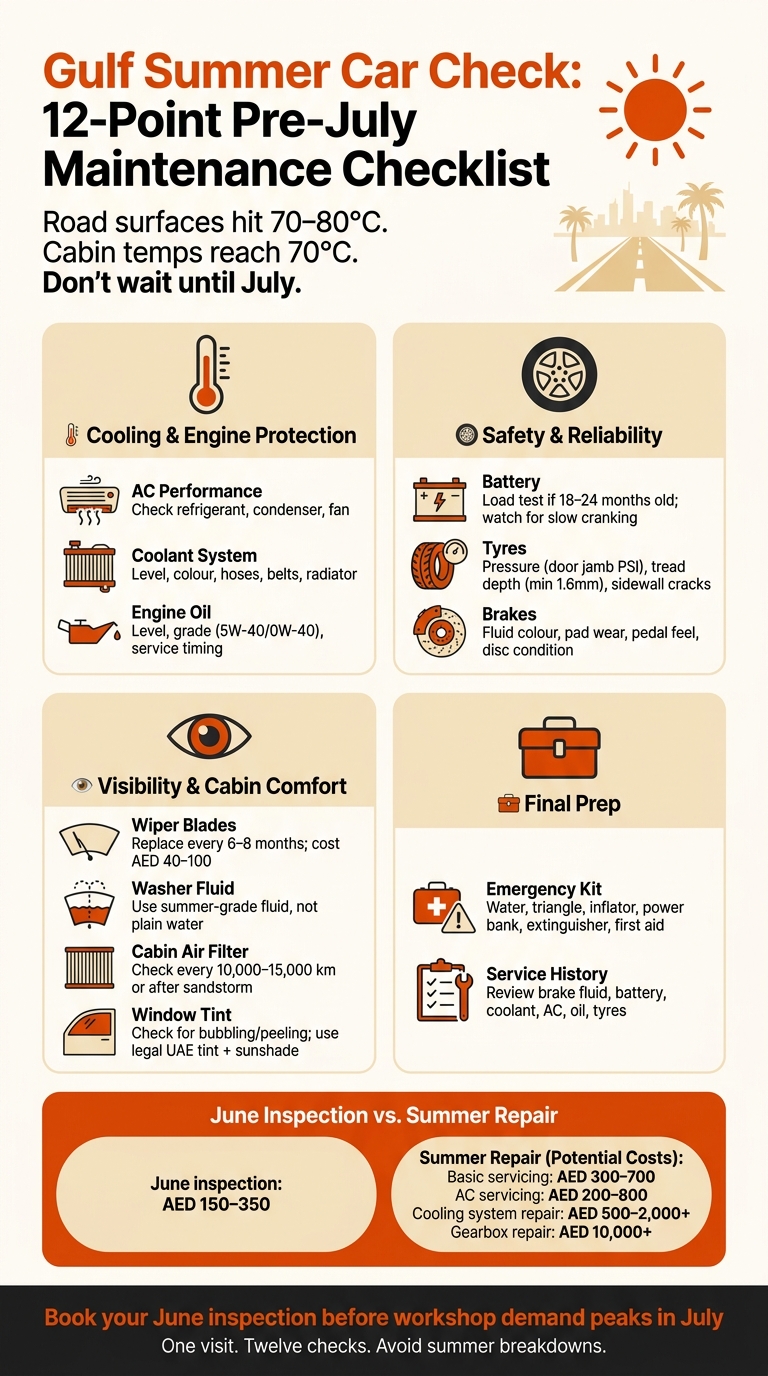
Gulf Summer Car Check: 12-Point Pre-July Maintenance Checklist
Cooling and engine protection checks
These three systems - AC, coolant, and engine oil - take the hardest hit in Gulf summer. If one is already weak in June, July traffic can bring the problem out fast. So it makes sense to start here.
1) AC performance and cabin cooling
AC trouble often shows up first in slow traffic. If the car cools well on the highway but starts blowing warm air when you stop, that usually points to poor airflow, a fan issue, or a dirty condenser.
Ask the workshop to:
-
check the refrigerant charge for leaks
-
inspect the condenser and radiator for sand or debris
-
confirm the condenser fan switches on when the AC is set to max
Newer models usually use R-1234yf, while most pre-2020 cars use R-134a. The workshop needs to use the right refrigerant.
| Normal AC operation in June | Warning signs to fix before July |
|---|---|
| Cabin reaches a comfortable temperature within ~5 minutes | AC blows warm air while stopped in traffic |
| Consistent airflow from all vents | Clicking, rattling, or squealing noises when AC is on |
| Odourless air | Musty or damp smells (indicates mould or a clogged filter) |
| Stable engine temperature gauge while AC is running | Temperature gauge climbs when AC is turned to max |
2) Coolant, radiator, hoses, belts, and cooling fan
With engine bay temperatures going well above 100 °C in 50 °C heat, the cooling system has almost no room for mistakes. A minor hose issue or slightly low coolant level that seems harmless in winter can turn into overheating in July traffic.
Check the coolant reservoir when the engine is cold. The level should sit between MIN and MAX, and the fluid should look clean. Brown or murky coolant is a bad sign. So is white, green, or pink residue around hoses, clamps, or the radiator cap, which often points to a leak.
Squeeze the radiator hoses only when the engine is cold. They should feel firm with a bit of give. If they feel spongy, too soft, brittle, or cracked, they may not hold up in summer heat. Then look at the serpentine belt. Glazing, fraying, or cracking means trouble. If that belt fails, both the water pump and AC compressor stop working.
| Healthy coolant and hoses | Change-now signs |
|---|---|
| Bright fluid - pink, blue, or green | Brown, murky, or rusty-looking fluid |
| Hoses feel firm and elastic when squeezed | Hoses feel spongy, very soft, brittle, or cracked |
| Level stays consistent between MIN and MAX | Frequent top-ups needed (indicates a leak) |
| No visible residue around connections | White, green, or pink residue on hoses or radiator |
3) Engine oil level, grade, and service timing
UAE driving falls under severe service. Extreme heat, fine sand, and stop-start traffic all make oil break down faster. Oil that seemed fine in February can already be struggling by June.
Pull the dipstick and check the level and the condition. The oil should sit between the MIN and MAX marks and look amber or clear. If it looks black and gritty, smells burnt, or appears milky, book an oil change before July.
If you are within 1,000 km of your next service, bring it forward now instead of waiting. For Gulf conditions, synthetic oils rated 5W-40 or 0W-40 are often recommended, along with shorter change intervals of 7,000–10,000 km, because they handle heat better.
Once cooling and oil are sorted, move to battery, tyres, and brakes.
Safety and reliability checks for hot roads
Once you’ve checked cooling and oil, turn to the parts that keep the car starting, gripping, and stopping. In UAE summer heat, the battery, tyres, and brakes take a beating. They also tend to give small warning signs before they fail, which is good news if you catch them early.
4) Battery health and charging system
Heat cuts battery life fast in the UAE. That’s why batteries older than two years should be tested before July. In Dubai heat, many batteries need replacement within 18 to 24 months. If your battery is already past the two-year mark, get a load test done and have the charging system checked before July.
Watch for signs like:
-
Slow cranking
-
Clicking when you try to start
-
Dim lights at idle
-
A swollen battery case
-
Corrosion on the terminals
If the battery is weak, replace it before peak summer. Waiting until it refuses to start usually means getting stranded at the worst time.
5) Tyre pressure, tread depth, and tyre age
UAE road surfaces can hit 70–80 °C on summer afternoons. That kind of heat is brutal on tyres. If a tyre is underinflated or getting old, the risk of a blowout goes up fast.
Check tyre pressure in the morning, before driving. Use the pressure listed on the driver’s door jamb sticker, not the maximum PSI printed on the tyre sidewall. That sidewall number is not your day-to-day target.
Tread depth matters too. Use a gauge to check it. The legal minimum in the UAE is 1.6 mm, but a tyre that’s close to that limit should be replaced before summer. Thin tread on scorching asphalt leaves less margin for error.
Look closely at the sidewalls as well. Cracks, bubbles, or bulging are signs of heat and UV damage. If you see any of those, replace the tyre at once.
6) Brake fluid, pads, and heat-safe stopping
Heat and moisture can lower the boiling point of brake fluid, which means old fluid can fade under hard braking.
Start with the reservoir under the bonnet. The fluid level should sit between MIN and MAX. Then check the colour. If it looks dark or dirty, it may have absorbed moisture and should be flushed. Brake fluid should be flushed every two years, even if the car has low mileage.
Pay attention to how the brakes sound and feel on the road. Squealing or grinding when braking can point to worn pads or dirty discs. A spongy pedal - one that sinks too far before braking starts to bite - can mean air in the lines or fluid that has broken down. Vibration through the steering wheel during braking often points to warped discs, and heat can make that worse. Any of these signs means it’s time for an immediate workshop visit.
After brakes, the next trouble spots are visibility and cabin airflow, especially with dust and glare in the mix.
Visibility, cabin comfort, and summer protection
After brakes, check visibility and cabin airflow. In the UAE, both matter a lot when dust rolls in or rain starts out of nowhere.
7) Wiper blades and washer fluid for dust and sudden rain
UAE heat is tough on wiper rubber. Blades can dry out, crack, or go hard in just 6 to 8 months. When that happens, they don't clear the windscreen properly. Instead, they can smear dust into a muddy film, which is the last thing you want during a sandstorm or sudden rain.
Run the washers and watch the blades as they move. If you see streaking, skipping, or blurry patches, change them. A decent pair usually costs AED 40 to AED 100.
Also look at the washer fluid reservoir. Use summer-grade washer fluid. Plain water can lead to rust in the system, and it doesn't deal well with oily dust.
Next up is the filter that helps stop that same dust from getting into the cabin.
8) Cabin air filter and airflow
The cabin air filter catches the fine dust that builds up fast in Gulf driving. In UAE conditions, it can clog sooner than many standard service schedules suggest. In many cases, it may need replacing every 10,000 to 15,000 km. A simple rule is to check it every 6 months or every 10,000 km.
When the filter is clogged, airflow from the vents drops and AC cooling can suffer. If the air feels weak, or you notice a musty smell when the AC starts, the filter is a likely culprit. After a major sandstorm, inspect it within 48 hours.
Once the airflow is in good shape, move to what helps the cabin stay cooler when the car is parked.
9) Window tint condition and interior heat protection
A car left in direct UAE sun can hit 70 to 80 °C inside. That's brutal on both people and the interior. Good window tint helps slow that heat build-up, but tint film doesn't last forever.
Look closely for bubbling, peeling, or a faded purple shade. Those signs usually mean the film is no longer blocking heat and UV as it should, even if the glass still looks dark.
Make sure the tint stays within UAE legal limits. If the film is peeling or too dark, sort it out before peak summer. A legal tint, plus a reflective windscreen sunshade, can help cut cabin heat and reduce wear inside the car.
Final pre-July checks: fluids, emergency kit, and service booking
10) Brake fluid recheck, 11) emergency kit, and 12) service record review
Once you've dealt with cooling, tyres, and brakes, there are still a few easy-to-miss jobs left. And these are often the ones that come back to bite in July.
10) Recheck brake fluid age and moisture. If the fluid is two years old or older, test it for moisture before July.
11) Pack a summer emergency kit. Keep these in the car:
-
Water
-
First aid kit
-
Torch
-
Reflective triangle
-
Reflective vest
-
Tyre inflator
-
Charged power bank
-
Basic hand tools
-
Fire extinguisher
Store water and electronics away from direct sun. Keep the reflective triangle and fire extinguisher somewhere easy to grab. Also, check expiry dates on first aid supplies and the fire extinguisher before you need them.
Then take a few minutes to go through the paperwork so nothing slips past you.
12) Review your service history. Check your service log and make sure the key items above are up to date: brake fluid, battery, coolant, AC, oil, and tyres. In Gulf heat and dust, service intervals can shrink fast, so anything overdue needs attention now.
Book one June inspection instead of several July repairs
One workshop visit in June can handle a lot in one go: the AC check, coolant inspection or flush if due, battery load test, tyre inspection, brake check, oil service, cabin filter replacement, and wiper replacement if needed.
Basic servicing usually costs AED 300 to AED 700, while AC servicing tends to fall between AED 200 and AED 800, depending on the work needed. That is far easier to deal with than a cooling system repair at AED 500 to AED 2,000+, or a gearbox repair that can go beyond AED 10,000 if transmission fluid gets too thin.
Book that June inspection now, before July workshop demand goes up.
Conclusion: 12 checks that lower summer breakdown risk
Go through cooling, AC, oil, battery, tyres, brakes, visibility items, cabin protection, emergency supplies, and service history before July starts. Peak Gulf heat does not leave much room for delay.
"The Gulf summer rewards drivers who plan and punishes those who react." - Bahrain Confidential
A small pre-summer maintenance spend is almost always cheaper than roadside recovery, an overheated engine, or a failed AC in 45°C heat. Twelve checks. One June visit. That's the plan.
FAQs
Can I do these checks myself?
Yes. You can handle a few simple checks on your own, such as:
-
tyre tread and sidewalls
-
fluid levels like engine oil and coolant
-
wiper blades and any visible leaks
-
tyre pressure and the temperature gauge
That said, some jobs are better left to a professional garage. This includes cooling system pressure testing, AC refrigerant recharging, battery diagnostics, and checking internal belts or hoses.
Which checks are most urgent before July?
Before July, focus on your car’s cooling system, battery, and tyres. In Gulf heat, these are the parts most likely to give you trouble.
Start with the cooling system. Check the coolant level, inspect the radiator hoses, and look for dust build-up on the radiator. Heat puts extra strain on the battery too, so test its health and charge before it lets you down at the worst time.
Tyres need a close look as well. Check for sidewall cracks and make sure the pressure is set correctly. On top of that, confirm the AC is working as it should and that all engine fluids are topped up.
How long does a June inspection take?
There’s no fixed timeframe for a pre-summer inspection. A basic vehicle service usually takes a few hours. If the workshop finds bigger issues, repairs can take one to two days.
For Gulf summer prep, it’s smart to book a workshop check before July. Ask them to pay close attention to the cooling system, air conditioning, and battery health.